Dinner · Part 2 of 3: Instructions
Classic Beef Lasagna Roll-Ups for Easy Weeknight Dinners Step-by-step instructions
- Prep
- Cook
- Total
- Serves
- 6
Before you start
Before beginning the assembly, ensure the oven is preheated if you plan to bake the rolls, though this recipe focuses on a quick broiler finish. Have all ingredients measured and ready, including the cooked lasagna noodles.
Ensure the meat sauce is prepared and slightly cooled so it is easier to handle during the rolling process. Clean your workspace and have your baking dish nearby to minimize movement once the assembly begins, ensuring a smooth transition from rolling to the final broiling phase.
Ingredients at a glance (6)
- 6 sheets lasagna noodles, cooked al dente
- 1 lb ground beef
- 2 cups marinara sauce
- 1 cup ricotta cheese
- 1 cup mozzarella cheese, shredded
- fresh basil, for serving
Instructions
Meat Sauce Preparation
- Prepare the meat sauceBrown the ground beef in a large skillet over medium-high heat until fully cooked. Ensure the meat reaches an internal temperature of 160°F (71°C) to ensure safety. Drain any excess fat from the pan. Pour in the marinara sauce and stir to combine, letting the mixture simmer for a few minutes until heated through.Look for The sauce should be bubbling and thick.Safe temperature 160°F (71°C) internal temperature (ground meat)Tip Do not overcook the meat before adding the sauce to keep it tender.
The sauce should be thick, rich, and fragrant, with the ground beef fully browned and integrated into the marinara. It should be bubbling gently in the skillet. Check the temperature of the meat to ensure it is thoroughly cooked before proceeding to the next phase, as the subsequent steps will not provide enough heat to safely cook raw meat.
Assembly of Rolls
- Assemble the rollsLay the cooked lasagna noodles flat on a clean surface. Spread a generous tablespoon of ricotta cheese over each noodle. Spoon a portion of the meat sauce over the ricotta, then carefully roll each noodle up tightly to secure the filling inside.Look for The rolls should be compact but not bursting.Tip Pat the noodles dry slightly before adding the filling to prevent slipping.
The noodles should be pliable and easy to handle. When finished, the rolls should appear uniform in size, with the ricotta and meat filling neatly tucked inside.
Ensure the ends are tucked slightly so the filling stays contained. They should be arranged snugly in the baking dish, ready for the final topping of cheese and the subsequent broiling process.
Final Broil and Serve
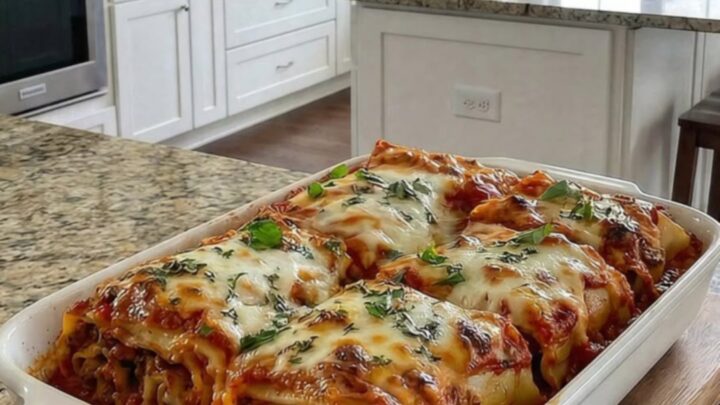
- Bake and servePlace the rolls into a baking dish. Top with the remaining shredded mozzarella cheese. Place the dish under the broiler until the cheese is melted, bubbling, and golden brown. Remove from the oven and garnish with fresh basil leaves before serving while hot.Look for The cheese should be golden and browned.Tip Watch the broiler closely to prevent the cheese from burning.
The dish should smell aromatic, with the cheese appearing bubbly and showcasing deep golden-brown spots. The edges of the noodles might be slightly crisp from the heat. Before serving, let the dish rest for a few minutes to allow the cheese to set slightly, making it easier to lift each roll out with a spatula without losing the internal structure.
Common mistakes
A common mistake is overcooking the lasagna noodles, which can lead to them tearing when you attempt to roll them. Aim for a firm al dente texture. Another error is overfilling the noodles, which makes them difficult to roll and causes the filling to leak into the baking dish.
Finally, ignoring the broiler can lead to pale cheese; monitor the process closely, as the transition from perfectly melted to burnt happens very quickly in a high-heat environment.
How to tell it’s done
The lasagna roll-ups are done when the mozzarella cheese on top is fully melted and golden brown. Since the meat sauce is pre-cooked and the noodles are already boiled, the primary goal of the final step is to heat the assembly through and achieve the perfect texture on the cheese.
Ensure the internal temperature of the ground beef reaches at least 160°F (71°C) during the initial cooking phase to ensure it is safe to consume before final assembly.
- Ground meat: 160°F (71°C) in the thickest part
Up next · Part 3 of 3
2 variations · storage & make-ahead · 3 answers · printable card
Tips, FAQ & printable recipe (Part 3)← Back to the ingredients (Part 1)