Dinner · Part 2 of 3: Instructions
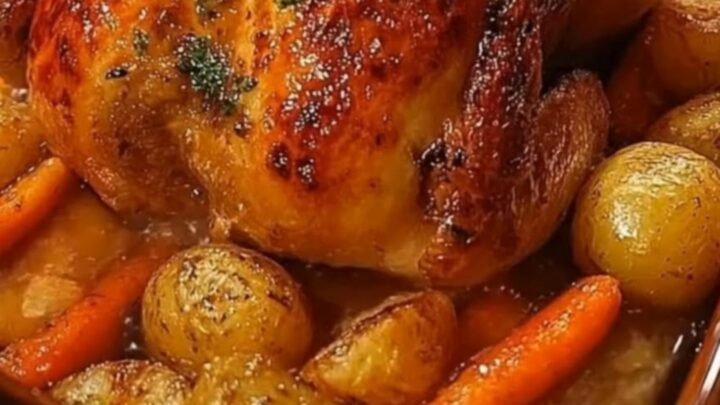
Christmas Honey-Roasted Chicken with Root Vegetables Step-by-step instructions
- Prep
- Cook
- Total
- Serves
- 4
Before you start
Ensure the oven is fully preheated to 375°F (190°C) before placing the roasting pan inside. Prepare the vegetables by washing and chopping them into uniform bite-sized pieces.
Check that the chicken is fully defrosted if it was previously frozen and pat it dry with paper towels to ensure the honey glaze adheres properly to the skin for the best possible caramelization during roasting.
Ingredients at a glance (4)
- 1 whole chicken, about 4 lbs
- 1/4 cup honey
- 1 lb baby potatoes, scrubbed
- 1 lb carrots, peeled and sliced
Instructions
Preparation
- Prepare the VegetablesPreheat the oven to 375°F (190°C). Place the baby potatoes and carrots into the roasting pan. Ensure they are spread in an even layer to allow for uniform roasting during the cooking process.Look for Vegetables should be clean and evenly sized.Tip Cut the carrots into large, uniform chunks so they cook at the same rate as the potatoes.
The roasting pan should be ready with the bed of vegetables prepared.
The oven must be at the correct temperature to ensure immediate heat transfer, which is vital for starting the caramelization process of the honey glaze and the browning of the chicken skin as soon as the pan enters the hot oven.
Roasting
- Roast the ChickenPlace the whole chicken on top of the vegetables. Drizzle the honey evenly over the skin of the chicken. Transfer the pan to the oven and roast until the juices run clear and the internal temperature reaches 165°F (74°C).Look for The skin should be golden brown and the honey glaze should be bubbling.Safe temperature 165°F (74°C) internal temperature (poultry)Tip Basting the chicken with the pan juices halfway through adds extra flavor and moisture to the meat.
The chicken will begin to sizzle, and the kitchen will fill with the aroma of roasting aromatics and sweet honey. Check that the honey is not burning; if the top browns too quickly, you can tent the chicken loosely with a piece of foil to allow it to finish cooking through safely.
Resting
- Rest and ServeRemove the pan from the oven. Let the chicken rest for at least 10 minutes before carving to ensure the juices redistribute throughout the meat. Carve into pieces and serve warm alongside the roasted vegetables.Look for The chicken should be firm and the vegetables fork-tender.Tip Use a sharp carving knife to ensure clean slices without tearing the delicate skin.
The chicken should be moved to a clean cutting board. The resting period is complete when the meat has cooled slightly and the juices have set. The vegetables should be checked for seasoning one last time before serving, ensuring everything is hot and ready for the table.
Common mistakes
A common mistake is overcrowding the roasting pan, which prevents proper air circulation and can lead to steamed rather than roasted vegetables. Another error is not letting the chicken rest after removing it from the oven.
Resting is critical because it allows the internal temperature to stabilize and the juices to redistribute, resulting in much more tender and flavorful meat.
How to tell it’s done
The chicken is considered done when a meat thermometer inserted into the thickest part of the thigh, without touching the bone, registers 165°F (74°C).
The juices should run clear when the meat is pierced, and the skin should be a deep, golden mahogany color. The potatoes and carrots should be easily pierced with a fork, indicating they are tender and fully cooked through.
- Poultry: 165°F (74°C) in the thickest part
Up next · Part 3 of 3
2 variations · storage & make-ahead · 3 answers · printable card
Tips, FAQ & printable recipe (Part 3)← Back to the ingredients (Part 1)