Dinner · Part 2 of 3: Instructions
Christmas Garlic Butter Salmon Step-by-step instructions
- Prep
- Cook
- Total
- Serves
- 2
Before you start
Before beginning, ensure all ingredients are measured and ready to go near the stovetop, as this recipe cooks very quickly. Remove the salmon fillets from the refrigerator about fifteen minutes prior to cooking to take the chill off, which helps them cook more evenly.
Pat the fillets completely dry on all sides using paper towels. Mince the garlic cloves finely, chop the fresh parsley, and slice the lemon. Having these aromatics prepped and set aside prevents the butter or garlic from burning while you manage the skillet.
Ingredients at a glance (6)
- 2 salmon fillets
- 3 tbsp unsalted butter
- 3 garlic cloves, minced
- 1 tbsp fresh parsley, chopped
- 1/4 tsp red pepper flakes
- 1 lemon, sliced
Instructions
Searing the Salmon
- Prepare the SalmonPat the salmon fillets completely dry with a paper towel to prepare them for searing.Look for The salmon surface should feel dry and ready for the hot pan.Tip Drying the salmon thoroughly is key to achieving a crispy, golden-brown crust.
- Sear the SalmonHeat a large skillet over medium-high heat. Add one tablespoon of unsalted butter to the pan. Once melted and hot, place the salmon fillets in the skillet. Sear undisturbed for three to four minutes until a golden crust forms, then carefully flip the fillets.Look for A golden-brown crust should form on the seared side of the fish.Tip Do not move the salmon around while it sears to ensure a perfect crust.
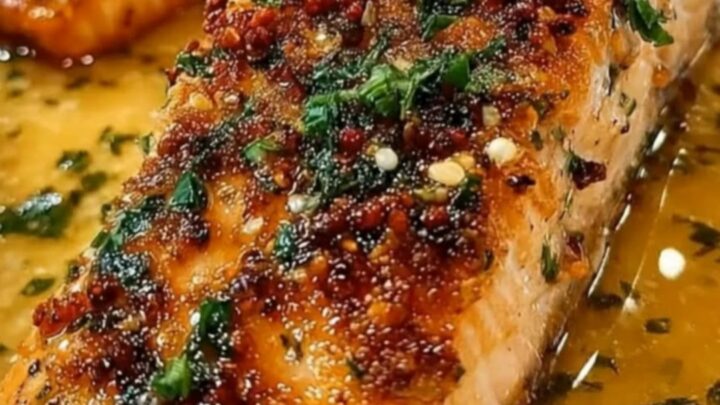
The salmon fillets should have a beautifully caramelized, golden-brown crust on the seared side, and the edges will begin to look opaque. The pan will sizzle loudly as the fish cooks, releasing a rich, savory aroma.
Infusing the Garlic Butter
- Melt and Infuse the ButterReduce the heat to medium. Add the remaining two tablespoons of unsalted butter to the skillet along with the minced garlic and chopped fresh parsley. Let the mixture bubble rapidly around the salmon fillets.Look for The butter should bubble rapidly and smell highly fragrant with garlic.Tip Keep the heat at medium to prevent the garlic and butter from burning.
The butter in the pan will melt completely and bubble rapidly around the salmon. The minced garlic and herbs will release an intense, mouthwatering aroma of toasted garlic and fresh greenery without turning brown.
Basting and Finishing
- Baste and FinishSpoon the bubbling garlic butter sauce repeatedly over the salmon fillets. Cook for another two to three minutes until the internal temperature of the fish reaches 145°F (63°C). Remove from heat, garnish with red pepper flakes and lemon slices, and serve hot.Look for The salmon should flake easily and reach its target safe temperature.Safe temperature 145°F (63°C) internal temperature (fish)Tip Basting keeps the salmon incredibly moist and infuses it with rich flavor.
The salmon fillets will be completely coated in a glossy, rich garlic butter sauce. The fish will feel slightly firm to the touch, flaking gently when pressed, and the internal temperature will reach its safe target.
Common mistakes
One common mistake is moving the salmon around too much after placing it in the hot skillet. To achieve a perfect golden crust, the fillets must remain undisturbed for the first few minutes of searing.
Another frequent error is letting the skillet get too hot when adding the butter and garlic, which can cause the butter to burn and the garlic to turn bitter.
Keep the heat at a medium level during this phase, and spoon the butter over the fish continuously to regulate the temperature and keep the aromatics from scorching.
How to tell it’s done
Salmon is perfectly cooked when the thickest part of the fillet reaches an internal temperature of 145°F (63°C) on an instant-read digital thermometer. The flesh should transition from translucent pink to an opaque, light pink color.
When gently pressed with a fork or a knife, the salmon should flake easily along its natural muscle lines. Avoid overcooking the fish, as it will continue to cook slightly from residual heat even after the skillet is removed from the stove burner.
- Fish: 145°F (63°C) in the thickest part
Up next · Part 3 of 3
2 variations · storage & make-ahead · 3 answers · printable card
Tips, FAQ & printable recipe (Part 3)← Back to the ingredients (Part 1)