Desserts · Part 2 of 3: Instructions
Chocolate Hazelnut Ganache Cheesecake with Crunchy Nut Topping Step-by-step instructions
- Prep
- Cook
- Total
- Serves
- 12
Before you start
Gather all the ingredients and equipment before you start. Soften the cream cheese and bring the eggs to room temperature so they blend smoothly into the batter. Set the oven to 350°F (175°C) and position a rack in the center. Line the outside of a 9-inch springform pan with foil, since you will set it in a water bath or on a foil-wrapped sheet to protect against leaks.
Chop the hazelnuts on a cutting board until they are coarsely crushed, and grate the dark chocolate over a box grater so the shavings are ready. Chop the 8 ounces of dark chocolate for the ganache into small, even pieces so they melt quickly. Measure the cream and the chocolate hazelnut spread, and keep the remaining ingredients close to the bowl.
Ingredients at a glance (11)
- 1 cup whole hazelnuts, roughly chopped
- 2 oz dark chocolate, for grating
- 1 1/2 cups chocolate cookie crumbs
- 5 tbsp unsalted butter, melted
- 24 oz cream cheese, softened
- 3/4 cup granulated sugar
- 3 large eggs, at room temperature
- 1 1/2 cups heavy cream
- 8 oz dark chocolate, finely chopped
- 1/2 cup chocolate hazelnut spread
- 1 tsp vanilla extract
Instructions
Crust and cheesecake base
- Chop the hazelnutsSet the whole hazelnuts on a cutting board and chop them with a large chef's knife until coarsely crushed into rough pieces. Set aside about half for the topping and reserve the rest for the ganache if you want extra crunch. Keep a few larger pieces for the finish.Look for Pieces should be rough and uneven, with some dust but no fine paste.Tip A rocking motion with the knife gives more even pieces than pressing straight down.
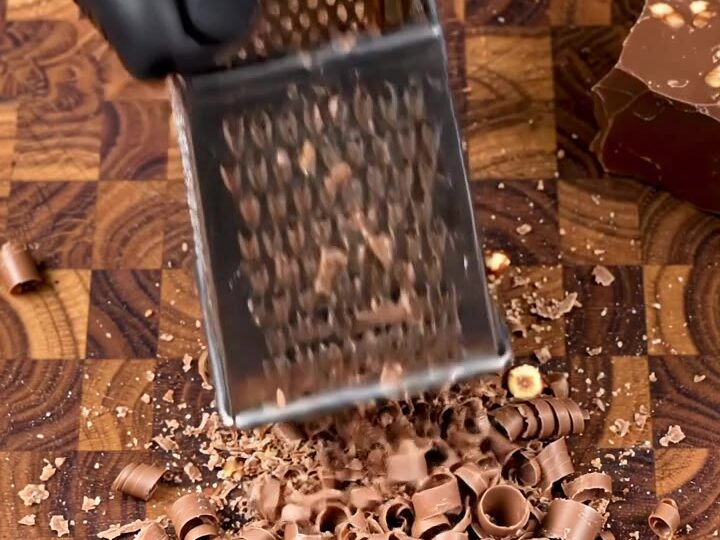
- Grate the chocolateHold the block of dark chocolate against a box grater and grate it over the board, collecting the fine curls and shavings. Keep the shavings in a small bowl, cool and covered, until you need them for the finish.Look for Fine curls and shavings should fall loosely and not melt into clumps.Tip Chill the chocolate for 10 minutes first so it grates cleanly.
- Make the cookie crustPreheat the oven to 350°F (175°C). Stir the chocolate cookie crumbs with the melted butter until evenly moistened. Press the mixture firmly into the base and 1 inch up the sides of a 9-inch springform pan, then bake for 10 minutes and cool.Look for The crust should look dark, feel firm and smell toasted and cocoa-rich.Tip Pack the crumbs with the bottom of a glass so the crust holds together when sliced.
At the end of this phase, the chocolate cookie crust should be pressed firm and lightly baked, with a dark, toasted aroma. The cream cheese batter should be smooth and pale with no visible lumps, and it should pour in a slow, thick ribbon from a spatula. Before you go on, check that the crust is level and cool, and that the batter has been scraped from the sides of the bowl. A smooth base at this stage keeps the filling even and prevents cracks as it bakes, so take a moment to correct any uneven spots now before adding the ganache layer later on.
Bake and chill the cake
- Beat the cream cheese baseBeat the softened cream cheese and sugar in a bowl until smooth and fluffy, about 3 minutes. Add the eggs one at a time, beating briefly after each, then mix in the vanilla. Scrape the bowl often so no lumps remain.Look for The batter should be smooth, pale and free of lumps, with a thick ribbon texture.Safe temperature 160°F (71°C) internal temperature (egg dishes)Tip Beat on low speed after adding the eggs to avoid trapping extra air.
- Bake the cheesecake layerPour the cream cheese batter over the cooled crust and smooth the top. Bake for 45 to 50 minutes until the edges are set and the center barely moves. Cool on a rack, then chill for at least 4 hours.Look for The edges should be set and the center should wobble only slightly when the pan is tapped.Safe temperature 160°F (71°C) internal temperature (egg dishes)Tip Place the springform pan on a foil-wrapped sheet to protect against leaks from the water bath.
- Warm the chocolate creamHeat the heavy cream in a small saucepan until steaming but not boiling. Pour it over the finely chopped dark chocolate in a glass bowl and let it sit for 2 minutes. Whisk gently until smooth, then stir in the chocolate hazelnut spread until glossy.Look for The ganache should be smooth, glossy and pourable, with no streaks of unmelted chocolate.Tip Stir slowly to avoid air bubbles that dull the surface.
At the end of this phase, the cheesecake should be set at the edges, with a center that wobbles only slightly when you tap the pan. The top should look pale and smooth with no deep cracks, and the kitchen should smell mildly sweet and creamy.
Chill the cheesecake for at least 4 hours before you proceed, since the ganache needs a cold, firm base to spread evenly. Check that the cake is fully cool to the touch before you move it. If the center still moves much, bake for a few minutes more and cool again. A properly set cake is easier to slice and keeps the ganache layer from sinking into the filling.
Ganache and final finish
- Spread the ganachePour the warm ganache over the chilled cheesecake and spread it evenly to the edges with an offset spatula. Scatter the chopped hazelnuts over the still-soft surface so they settle into the ganache.Look for The ganache should be thick, lustrous and level, with hazelnuts partly embedded.Tip Tilt the pan gently to help the ganache reach the sides evenly.
- Garnish and chillArrange the remaining whole hazelnuts around the rim and sprinkle the grated chocolate shavings and chopped nut pieces over the top. Chill for at least 2 hours until the ganache is set and the surface is firm.Look for The top should feel firm and look glossy, with garnishes that stay in place when lightly touched.Tip Set the cheesecake on a flat shelf so the surface stays level while it firms.
- Slice and serveRun a thin knife under hot water, wipe it dry, and cut the cheesecake into 12 even slices. Lift each slice with an offset spatula to reveal the layers of crust, cheesecake and ganache.Look for Clean slices should hold their shape and show distinct layers.Tip Wipe the knife between each cut for neat edges.
At the end of this phase, the ganache should be smooth, glossy and spreadable, with the hazelnuts and grated chocolate scattered evenly across a firm, level surface. The garnishes should sit in place when you lightly touch them. Before serving, check that the ganache has set firmly at room temperature for about 15 minutes, then slice with a warm, dry knife for clean edges. A few final checks here make the difference between a neat slice and a messy one, so take time with the garnish and the chilling before you cut into the cheesecake.
Common mistakes
The most common mistake is overbaking the cheesecake, which makes the filling dry and prone to cracks. Pull it from the oven when the center still wobbles slightly, then let it cool gradually. Another frequent problem is ganache that is too hot when poured over the cake.
Hot chocolate can melt the surface and slide down the sides, so let the cream and chocolate cool a few minutes before spreading. Cold cream cheese also causes lumps, so bring it to room temperature first. Finally, cutting the cheesecake before it has chilled long enough can smear the layers. Wait until the ganache is firm, then use a warm knife for clean slices.
How to tell it’s done
The cheesecake is done when the edges look set and the center moves only a little when the pan is gently tapped. The ganache is ready when it is smooth, glossy and spreadable, and it sets firm at cool room temperature.
Because this recipe uses eggs, bake the cheesecake until the filling reaches 160°F (71°C) in the center, which is the safe temperature for eggs. Use an instant-read thermometer to check the center briefly, avoiding the crust. Once the cheesecake is firm and chilled, the ganache should feel smooth and hold a clean edge when you cut it.
- Egg dishes: 160°F (71°C) in the thickest part
Up next · Part 3 of 3
4 variations · storage & make-ahead · 5 answers · printable card
Tips, FAQ & printable recipe (Part 3)← Back to the ingredients (Part 1)