Desserts · Part 2 of 3: Instructions
Chocolate-Hazelnut Filled Sugar Donuts in Paper Cones Step-by-step instructions
- Prep
- Cook
- Total
- Serves
- 8
Before you start
Before starting, make sure the milk is warm but not hot (about 110°F) to activate the yeast without killing it. Gather all ingredients and equipment. Have a clean, lightly floured surface ready for kneading. Prepare a baking sheet lined with parchment paper for the shaped donuts.
Heat the oil in a deep skillet or pot while the dough is rising. Have paper towels ready for draining the fried donuts, and a shallow dish with sugar for coating. Fit a piping bag with a small round tip and fill it with the chocolate-hazelnut spread before you start frying.
Ingredients at a glance (11)
- 2 cups all-purpose flour
- 2 tsp active dry yeast
- 1 cup whole milk, warm (110°F)
- 1 cup granulated sugar
- 1 tsp salt
- 1 large egg
- 2 tbsp unsalted butter, melted
- 4 cups vegetable oil, for frying
- 1 cup granulated sugar, for coating
- 1 cup chocolate-hazelnut spread
- 8 parchment paper cones
Instructions
Dough and Shaping
- Make the doughIn a large bowl, whisk together the flour, yeast, sugar, and salt. Add the warm milk, egg, and melted butter. Stir with a wooden spoon until a shaggy dough forms. Turn the dough out onto a lightly floured surface and knead for 5–7 minutes, until smooth and elastic. Place the dough in a lightly oiled bowl, cover with a damp towel, and let rise in a warm spot for 1 hour, or until doubled in size.Look for The dough should be soft, smooth, and spring back when poked.Tip If the dough is too sticky, add a little more flour, a tablespoon at a time.
- Shape the donut ballsPunch down the risen dough and roll it out on a lightly floured surface to about 1/2-inch thickness. Use a 2-inch round cutter to stamp out mini rounds. Gather the scraps, re-roll, and cut again. Place the rounds on a baking sheet lined with parchment paper. Cover loosely with a clean towel and let rise for 15 minutes.Look for The rounds should be puffy and slightly expanded after the rest.Tip Keep the dough pieces covered to prevent a skin from forming.
After kneading, the dough should be smooth, elastic, and slightly tacky. After the first rise, it should double in size. When shaping, the rounds should be uniform and about 2 inches in diameter. After the 15-minute rest, they should look puffy and slightly airy. If they’ve spread too much, re-roll them gently. The dough should feel light and spring back when touched. This phase sets the stage for a tender, airy donut.
Frying and Coating
- Fry the donutsPour the vegetable oil into a deep skillet or pot to a depth of about 2 inches. Heat over medium-high until a deep-fry thermometer reads 340°F (171°C). Carefully lower a few donut balls into the hot oil, without crowding. Fry for 2 minutes per side, until deep golden brown. Use a slotted spoon to transfer to a paper towel-lined plate.Look for The donuts should be golden brown with a lighter band around the middle.Tip Maintain the oil temperature between 330°F and 350°F for even cooking.
- Coat in sugarWhile the donuts are still warm, roll each one in the granulated sugar until completely coated. Shake off any excess and set aside on a wire rack. Work quickly so the sugar sticks to the warm, slightly oily surface.Look for Each donut should be evenly coated with a thin layer of sugar.Safe temperature 160°F (71°C) internal temperature (egg dishes)Tip Roll the donuts immediately after frying for the best adhesion.
The oil should sizzle gently when a small piece of dough is added. The donuts should float and bubble steadily. After 2 minutes, the bottom should be golden brown; flip and fry the other side.
The finished donuts should be evenly colored with a slightly lighter band around the middle. They should feel crisp on the outside and soft inside. After rolling in sugar, they should be coated evenly with a crunchy layer. Work in batches to keep the oil temperature steady.
Filling and Serving
- Fill the donutsFit a piping bag with a small round tip and fill it with the chocolate-hazelnut spread. Insert the tip into the side of each donut and pipe until the donut feels heavy and the filling starts to ooze out slightly. Be generous but avoid overfilling to prevent the donut from splitting.Look for A small amount of filling should squeeze out at the puncture hole.Tip If the spread is too thick, warm it slightly for easier piping.
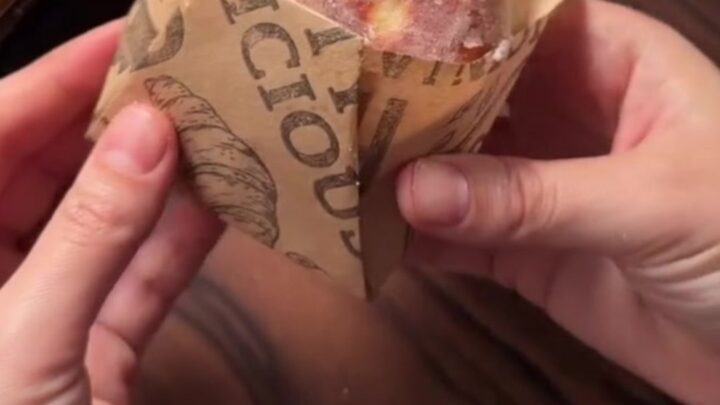
- Serve in paper conesSlide each filled donut into a parchment paper cone, with the pointed end of the cone at the bottom. Gently squeeze the donut to encourage the chocolate-hazelnut filling to ooze out onto the paper. Serve immediately while the donuts are still warm.Look for The filling should be visible and oozing slightly from the donut.Tip Use sturdy parchment cones that can hold the donut without tearing.
When piping the filling, the donut should feel heavier and the chocolate should start to peek out of the hole. The filling should be warm and gooey, not cold. As you slide the donut into the paper cone, the chocolate may ooze slightly—this is perfect. The cones should hold the donut securely without tearing. Serve immediately while the donuts are still warm. The contrast of crisp sugar, soft dough, and molten chocolate is the ultimate payoff.
Common mistakes
One common mistake is overproofing the dough, which can make the donuts collapse in the oil. Stick to the 15-minute rise after shaping. Another is frying at the wrong temperature—too hot and the outside burns, too cool and the donuts soak up oil.
Use a thermometer and adjust the heat as needed. When piping the filling, don’t overfill or the donut may split. Start with a small amount and add more if needed. Finally, roll the donuts in sugar immediately after frying, or the sugar won’t stick as well.
How to tell it’s done
The donuts are done when they are deep golden brown on both sides, about 2 minutes per side. The interior should be cooked through and springy to the touch. To test, you can break one open—it should be pale and fluffy inside, not doughy.
If using a thermometer, the oil should stay between 330°F and 350°F. The sugar coating should be crisp and slightly crackly. The chocolate filling should be warm and oozy, not cold. Serve immediately for the best texture and flavor.
- Egg dishes: 160°F (71°C) in the thickest part
Up next · Part 3 of 3
4 variations · storage & make-ahead · 5 answers · printable card
Tips, FAQ & printable recipe (Part 3)← Back to the ingredients (Part 1)