Desserts · Part 2 of 3: Instructions
Decadent Chocolate Crumble Cake with Coconut Cream Filling Step-by-step instructions
- Prep
- Cook
- Total
- Serves
- 8
Before you start
Before beginning the assembly, ensure that all components are prepared and at the correct temperatures. The chocolate sponge layers must be completely cool to the touch; if they are even slightly warm, the coconut cream filling will melt and cause the cake to slide.
Chill your mixing bowl and the whisk attachment in the freezer for ten minutes before whipping the coconut cream to ensure it reaches maximum volume and stability quickly.
Have your serving platter ready and your workspace cleared of any unnecessary clutter to facilitate a smooth assembly process.
Ingredients at a glance (3)
- 2 layers chocolate sponge cake, made ahead
- 1 cup coconut cream, chilled and whipped
- 1/2 cup chocolate crumble, prepared
Instructions
Cake Base Preparation
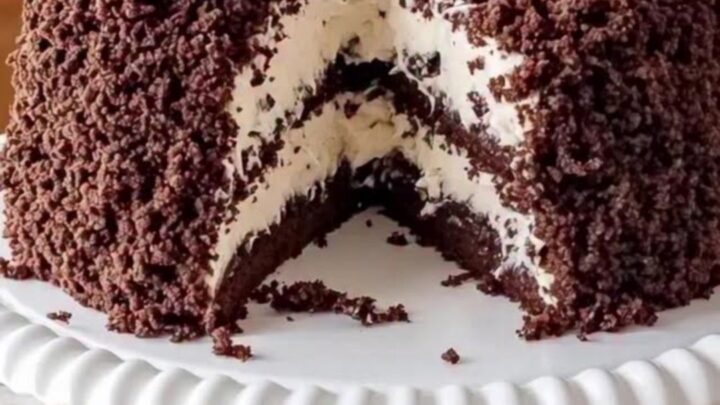
- Prepare the BasePlace the first layer of the chocolate sponge cake onto a clean white cake stand. Ensure the surface is stable before adding the filling to prevent any shifting during assembly.Look for The cake base should be level and centered on the stand.Tip Use a cake leveler if the sponge is uneven to ensure a professional appearance.
The cake base should be positioned securely on the center of the cake stand. Check that the surface is perfectly flat and that the edges of the sponge are clean and free of crumbs before applying the filling. This creates a solid foundation for the subsequent layers.
Filling Application
- Assemble the FillingSpread the chilled coconut cream evenly over the first layer of chocolate sponge, leaving a small border at the edges. Top with the second sponge layer and press down gently to secure the filling. If using an egg-based custard filling, ensure it is cooked to 160°F (71°C) before chilling.Look for The coconut cream should be thick and hold its shape without oozing out.Safe temperature 160°F (71°C) internal temperature (egg dishes)Tip Keep the coconut cream chilled until the very last second to maintain its structural integrity.
The coconut cream should be spread in an even, smooth layer, extending almost to the edges of the sponge. Ensure the cream is consistent in thickness throughout, which is essential for a balanced flavor and a professional, level appearance once the second sponge is added.
Final Topping and Serving
- Apply Topping and ServeSprinkle the chocolate crumble generously over the top of the cake. Slice the cake using a sharp knife and serve immediately on chilled dessert plates for the best experience.Look for The crumble should form an even, textured layer over the top of the cake.Tip Wipe the knife blade clean between each slice to ensure perfectly defined layers of chocolate and coconut.
The chocolate crumble should be distributed evenly across the top, covering the surface completely. Verify that the cake is ready for slicing by observing that the layers are aligned and the structure feels firm to the touch, ensuring a beautiful presentation when served.
Common mistakes
A common mistake is failing to cool the cake layers entirely before assembly, which inevitably leads to a runny filling that compromises the cake's structure. Another error is over-whipping the coconut cream, which can cause it to separate and become grainy rather than silky.
Ensure you use a gentle folding motion if adding any extra flavorings to the cream. Finally, be mindful of the amount of crumble applied; too much can make the cake difficult to slice, while too little fails to provide the necessary textural contrast.
How to tell it’s done
The cake is ready to serve when the coconut cream filling is firm and the layers are stable. If using an egg-based filling, ensure it has reached a safe internal temperature of 160°F (71°C) during the preparation phase.
You will know the cake is perfectly assembled when you can slice through the layers with a sharp knife without the filling squeezing out from the sides. The layers should appear distinct and clean, and the crumble topping should remain crisp and clearly defined on the surface of the cake.
- Egg dishes: 160°F (71°C) in the thickest part
Up next · Part 3 of 3
2 variations · storage & make-ahead · 3 answers · printable card
Tips, FAQ & printable recipe (Part 3)← Back to the ingredients (Part 1)