Dinner · Part 2 of 3: Instructions
Cheesy Skillet Spinach & Mozzarella Stuffed Garlic Focaccia Step-by-step instructions
- Prep
- Cook
- Total
- Serves
- 8
Before you start
Before starting, read through the recipe and gather all ingredients. The dough needs to rise for at least 1 hour, so plan accordingly. Bring the water to about 110°F (43°C) for the yeast. If using fresh spinach, wash and dry it. Measure the flour by weight for accuracy.
Have a 10-inch cast iron skillet ready, and coat it generously with olive oil. Prepare a clean surface and a bowl of water for wet hands during folding. The filling can be made while the dough rises, but let the spinach cool before mixing with the cheese.
Ingredients at a glance (15)
- 400 g bread flour
- 1 1/2 cups warm water
- 2 1/4 tsp instant yeast
- 1 tsp sugar
- 1 1/2 tsp fine sea salt
- 3 tbsp extra virgin olive oil, plus more for the skillet
- 10 oz fresh spinach
- 4 cloves garlic, minced
- 1 cup whole milk ricotta
- 2 cups shredded mozzarella
- 1/2 tsp kosher salt
- 1/4 tsp black pepper
- 2 tbsp extra virgin olive oil
- 1 tsp flaky sea salt
- 1 tbsp fresh rosemary, finely chopped
Instructions
Phase 1: Dough and Filling
- Make the DoughIn a large mixing bowl, combine the warm water, sugar, and instant yeast. Let sit for 5 minutes until foamy. Add the bread flour and fine sea salt. Stir with a spatula until a shaggy dough forms. Drizzle in 3 tablespoons of olive oil and mix until the oil is incorporated. Cover the bowl with plastic wrap and let rest for 10 minutes.Look for The dough is sticky and shaggy but holds together when stirred.Tip Use warm water (about 110°F/43°C) to activate the yeast without killing it.
- Fold and ProofPerform a series of folds: with wet hands, lift the dough from the edges and fold it over the center. Rotate the bowl and repeat. Do this 4 times, then cover and let rest 30 minutes. Repeat the folding process once more, then cover and let rise until doubled, about 1 hour.Look for The dough becomes smooth, elastic, and airy after folding.Tip Wet hands prevent sticking and allow gentle handling of the dough.
- Prepare the FillingWhile the dough rises, heat a small skillet over medium heat. Add the spinach and cook, stirring, until wilted, about 2 minutes. Transfer to a colander and press out excess liquid. Let cool slightly, then chop coarsely. In a bowl, combine the wilted spinach, minced garlic, ricotta, shredded mozzarella, kosher salt, and black pepper. Mix until well combined.Look for The filling is thick and creamy with visible streaks of spinach.Tip Squeeze the spinach thoroughly to avoid a soggy focaccia.
The dough should be smooth, elastic, and doubled in volume after the folds. It will feel airy and slightly sticky. The spinach filling should be thick and well combined, with the cheese evenly distributed.
The kitchen smells of garlic and herbs. Before moving on, ensure the dough has risen enough—if not, give it another 15 minutes.
Phase 2: Assembly and Second Rise
- Assemble the Stuffed FocacciaGenerously coat the bottom and sides of a 10-inch cast iron skillet with olive oil. Transfer the risen dough to the skillet. Gently stretch it to cover the bottom, then press half of the dough into an even layer. Spread the spinach-ricotta filling over the dough, leaving a 1-inch border. Fold the edges of the dough over the filling, then place the remaining dough on top. Pinch the edges to seal completely.Look for The dough is soft and pliable; the filling stays contained.Tip If the dough springs back, let it rest 10 minutes before stretching again.
- Dimple and TopDrizzle the top of the dough with 2 tablespoons olive oil. Use your fingertips to press deep dimples all over the surface, reaching almost to the filling. Sprinkle evenly with flaky sea salt and chopped rosemary.Look for The dimples hold the oil and seasoning, creating a dimpled surface.Tip Press firmly but gently to avoid tearing the dough.
- Second ProofCover the skillet loosely with plastic wrap or a kitchen towel. Let the assembled focaccia rise in a warm spot until puffy and increased in volume, about 30 minutes. Meanwhile, preheat the oven to 425°F (220°C).Look for The dough looks pillowy and has risen slightly.Tip A warm, draft-free spot speeds up the rise.
The assembled focaccia should be puffy and slightly risen after the second proof. The dimples should remain visible and the top glossy with olive oil. The edges are sealed, and the filling is hidden inside. The dough feels springy when pressed gently. The oven is preheated and ready for baking.
Phase 3: Baking and Serving
- Bake the FocacciaPlace the skillet in the preheated oven and bake for 25 minutes, until the top is deep golden brown and the edges are crisp. The internal temperature of the bread should reach at least 200°F (93°C) for a fully baked crumb. Remove from the oven and let cool in the skillet for 5 minutes.Look for The top is amber and crackly, and the cheese is bubbling at the edges.Tip If the top browns too quickly, tent loosely with foil during the last 5 minutes.
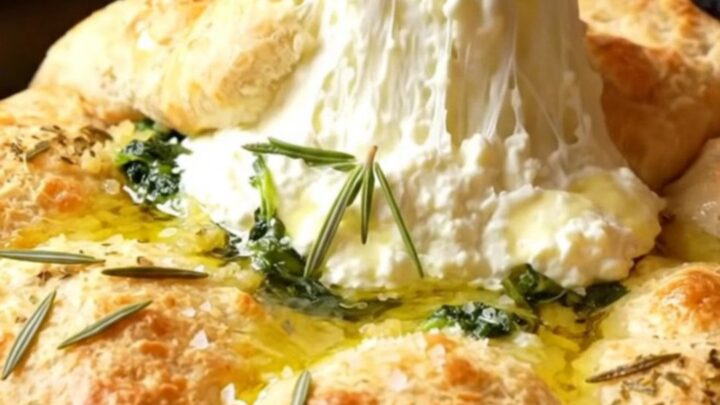
- Slice and ServeUse a serrated knife to cut the focaccia into squares or wedges. Pull apart the pieces to reveal the molten cheese. Serve warm, straight from the skillet, with extra flaky salt if desired.Look for The cheese stretches in long ribbons as the pieces are separated.Tip Letting it rest 5 minutes helps the cheese set slightly for cleaner slices.
The focaccia is golden brown and crisp on top. The cheese is bubbling at the edges and the aroma of olive oil and rosemary fills the kitchen. When sliced, the cheese pulls in long ribbons. The bread sounds hollow when tapped. Let it rest briefly before serving to allow the filling to set.
Common mistakes
A common mistake is over-flouring the dough, which makes the focaccia dense. Keep the dough sticky and use wet hands for folding. Another issue is under-proofing: if the dough hasn't doubled, the crumb will be tight. Be patient with the rise times.
When assembling, make sure the edges are sealed well, or the filling can leak out during baking. Pressing the dimples too shallowly can cause the top to dome; press deeply but gently. Finally, don't skip the resting time after baking—it helps the cheese set.
How to tell it’s done
The focaccia is done when the top is deep golden brown and the edges are crisp and slightly puffed. A thermometer inserted into the center of the bread (not the filling) should read at least 200°F (93°C).
The cheese will be bubbling at the edges and may have browned in spots. If the top browns too quickly, tent with foil. Let the bread rest for 5 minutes before slicing—this allows the cheese to set slightly, making cleaner cuts. The bottom should sound hollow when tapped.
Up next · Part 3 of 3
4 variations · storage & make-ahead · 5 answers · printable card
Tips, FAQ & printable recipe (Part 3)← Back to the ingredients (Part 1)