Dinner · Part 2 of 3: Instructions
Cheesy Potato Herb Flatbreads: Quick Stovetop Comfort Step-by-step instructions
- Prep
- Cook
- Total
- Serves
- 8
Before you start
Before starting, ensure the mashed potatoes are at room temperature. If using cold leftovers, warm them slightly to make mixing easier. Grate the cheese and chop the herbs.
Measure all ingredients. Have a large skillet or griddle ready, along with a spatula and a clean kitchen towel to cover the shaped flatbreads.
Ingredients at a glance (7)
- 2 cups mashed potatoes (about 2 large potatoes)
- 1 cup grated cheddar cheese
- 1 /4 cup chopped fresh dill
- 1 /4 cup chopped fresh parsley
- 1 large egg
- 1 1/2 cups all-purpose flour (plus more for dusting)
- 2 tbsp butter, for the skillet
Instructions
Mixing and Shaping
- Mix the DoughIn a large bowl, combine the mashed potatoes, grated cheddar, chopped dill, and chopped parsley. Add the egg and mix until well incorporated. Gradually add the flour, stirring with a fork or your hands, until a soft dough forms. Turn the dough out onto a lightly floured surface and knead gently for 1-2 minutes, just until smooth. Do not overwork.Look for The dough should be soft, slightly sticky, and hold together without crumbling.Tip If the dough is too sticky, add a little more flour, a tablespoon at a time. If too dry, add a teaspoon of water.
- Shape the FlatbreadsDivide the dough into 8 equal portions. Roll each portion into a ball, then flatten into a disk about 1/4-inch thick. Keep the shaped flatbreads covered with a clean kitchen towel while you work to prevent them from drying out.Look for Each disk should be uniform in thickness for even cooking.Tip Dust the work surface and rolling pin with flour as needed to prevent sticking.
The dough should be soft, slightly sticky, and hold together without cracking. When shaped, the disks should be about 1/4-inch thick and uniform.
The herbs should be evenly distributed, giving the dough a speckled green appearance. The dough should not stick to your hands or the work surface.
Cooking on the Skillet
- Cook the FlatbreadsHeat a large skillet or griddle over medium heat and melt 1 tablespoon of the butter. Place 2-3 flatbreads in the skillet without overcrowding. Cook for 2-3 minutes per side, until golden brown and speckled, and the bread puffs slightly. Repeat with the remaining butter and flatbreads.Look for The flatbreads should be golden brown with darker toasted spots and feel slightly firm to the touch.Safe temperature 160°F (71°C) internal temperature (egg dishes)Tip Adjust the heat as needed—if they brown too quickly, lower the heat to medium-low.
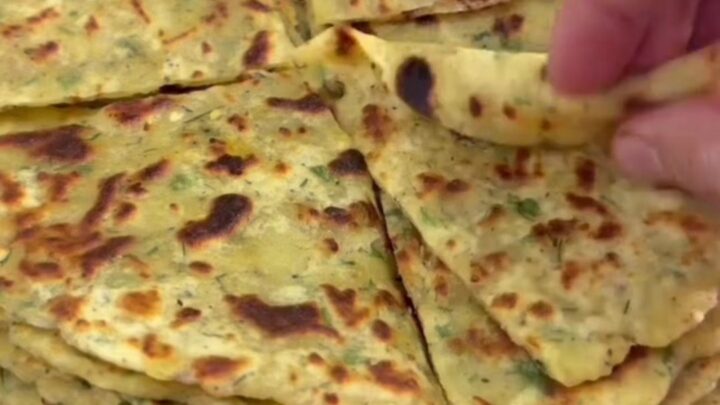
The flatbreads should be golden brown with darker toasted spots and have puffed slightly. The butter should sizzle gently when the bread hits the pan. The aroma should be buttery and herbaceous. The flatbreads should feel slightly firm to the touch but still soft when pressed.
Serving and Enjoying
- Serve WarmTransfer the cooked flatbreads to a plate and serve immediately while warm. Tear one open to reveal the steamy, cheesy interior. Enjoy as a side or as a snack.Look for The interior should be soft and pillowy with melted cheese that stretches when pulled.Tip Serve with a dollop of sour cream or yogurt if desired, though they are delicious on their own.
The flatbreads should be warm and steamy when torn open, with a soft, pillowy interior and melted cheese that stretches. The exterior should be crisp and golden. Serve immediately for the best texture, as they lose their crispness as they cool.
Common mistakes
One common mistake is overworking the dough, which can make the flatbreads tough. Mix just until the flour is incorporated and knead gently.
Another is cooking over too high heat, which burns the outside before the inside cooks. Use medium heat and adjust as needed. Also, don't overcrowd the skillet—cook in batches to ensure even browning.
How to tell it’s done
The flatbreads are done when they are golden brown on both sides with darker toasted spots and have puffed slightly. The interior should be cooked through and the cheese melted and stretchy.
To check, gently press the center—it should feel springy, not doughy. If using an instant-read thermometer, the center should read at least 160°F (71°C) to ensure the egg is fully cooked.
- Egg dishes: 160°F (71°C) in the thickest part
Up next · Part 3 of 3
4 variations · storage & make-ahead · 5 answers · printable card
Tips, FAQ & printable recipe (Part 3)← Back to the ingredients (Part 1)