Appetizers · Part 2 of 3: Instructions
Cheesy Pesto Puff Pastry Christmas Tree Pull-Apart Bread Step-by-step instructions
- Prep
- Cook
- Total
- Serves
- 8
Before you start
Before beginning, ensure the puff pastry is properly thawed according to the package instructions. If the pastry is too cold, it might crack when unfolding; if it is too warm, it will be difficult to handle. Have all your ingredients measured and ready to go.
Preheat your oven to 400°F (200°C) well in advance to ensure the oven is fully saturated with heat before the tray goes in. Clear enough space in your freezer or refrigerator to accommodate the baking sheet if the dough needs a quick chill during the shaping process.
Ingredients at a glance (6)
- 2 sheets store-bought puff pastry, thawed
- 150 grams basil pesto
- 1 cup shredded mozzarella cheese
- 2 tbsp unsalted butter, melted
- 1 clove garlic, minced
- 1/2 cup cherry tomatoes, halved
Instructions
Layering and Filling
- Assemble the Pastry BaseLay one sheet of puff pastry on a parchment-lined baking sheet. Spread the basil pesto evenly over the surface, leaving a small border at the edges. Sprinkle the mozzarella cheese over the pesto layer. Place the second sheet of puff pastry directly on top, pressing down gently to seal the edges and bond the layers together.Look for The layers should be firmly pressed together without squishing the pesto out of the sides.Tip Ensure the pastry is cold when working with it to maintain the flaky structure during baking.
At the end of this phase, you should have a solid, flat rectangle of pastry with the pesto and cheese sandwiched securely between the layers. The edges should be uniform, and the pesto should be spread evenly without reaching the very far edges, which helps in sealing the two sheets together. Check that the cheese is evenly distributed so every branch will have a consistent amount of filling.
Shaping the Tree
- Shape and Twist the TreeUsing a sharp knife or pizza cutter, cut the layered pastry into a triangle shape to mimic a Christmas tree. Cut horizontal strips along both sides of the triangle, leaving a central trunk intact. Twist each strip tightly several times to create the branch effect, ensuring the cheese and pesto remain contained within the folds.Look for The twists should be tight and uniform to ensure they hold their shape while rising in the oven.Tip If the dough becomes too soft or sticky, briefly refrigerate it for five minutes before cutting.
The tree should now have a clear central trunk with defined, symmetrical branches extending outward. Each branch should be twisted with enough tension to stay in place.
If the dough has become soft and tacky during this process, the structure might look slightly slumped. Check that all twists are oriented in the same direction to give the tree a tidy, professional appearance before it enters the oven.
Baking and Garnish
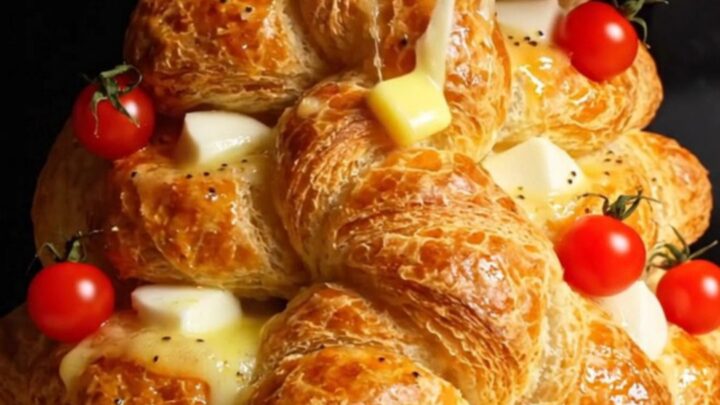
- Bake and GarnishPreheat the oven to 400°F (200°C). Bake the tree for 20 minutes until the crust is golden brown and the cheese is blistering. While baking, mix the melted butter with minced garlic. Immediately after removing the tree from the oven, brush it with the garlic butter and garnish with halved cherry tomatoes to resemble festive ornaments.Look for The pastry should be puffed and deeply golden, with the cheese bubbling through the twists.Tip Let the bread rest for five minutes before serving so the cheese can set slightly and the pastry remains crisp.
The final tree should be a beautiful, golden-brown centerpiece with crispy, flaky layers. The cheese should be melted and aromatic, with the garlic butter adding a glossy finish. The cherry tomato ornaments should be positioned securely on the branches. Ensure the bread has rested for a few minutes to allow the structure to stabilize, making it easier to pull apart without the pieces falling apart.
Common mistakes
A common mistake is using too much pesto, which can make the pastry soggy and prevent it from puffing properly. Spread the pesto in a thin, even layer to maintain the structure. Another error is not sealing the edges well enough before cutting, which may cause the filling to leak out during baking.
Ensure you press the two sheets firmly around the perimeter. Finally, avoid cutting the branches too thin; they need enough mass to hold their shape while twisting; otherwise, they will slump in the oven.
How to tell it’s done
The bread is done when the pastry has puffed significantly and achieved a deep, rich golden-brown color across the entire surface. The edges of the twists should look crisp, and the mozzarella cheese should be melted, bubbling, and slightly toasted in some areas.
A gentle tap on the top of the pastry should sound hollow and feel firm. If the bottom seems soft, return it to the oven for an additional two minutes, as the moisture from the pesto can sometimes keep the base slightly soft.
Up next · Part 3 of 3
2 variations · storage & make-ahead · 3 answers · printable card
Tips, FAQ & printable recipe (Part 3)← Back to the ingredients (Part 1)