Dinner · Part 2 of 3: Instructions
Cheesy Meat Lasagna Step-by-step instructions
- Prep
- Cook
- Total
- Serves
- 8
Before you start
Before beginning the assembly, ensure the oven is preheated to 375°F (190°C) and the baking dish is ready on a clean workspace. The lasagna noodles must be cooked to al dente and drained thoroughly to avoid excess moisture in the final dish.
Have all cheese components measured and the meat sauce prepared according to the instructions. Having everything organized will make the layering process smooth and efficient, ensuring each layer is applied evenly for the best presentation.
Ingredients at a glance (5)
- 1 lb lasagna noodles, boiled until al dente
- 24 oz meat sauce, store-bought or made ahead
- 15 oz ricotta cheese
- 3 cups shredded mozzarella cheese
- 1/2 cup grated parmesan cheese
Instructions
Meat Sauce Preparation
- Prepare Meat SauceHeat the pre-made meat sauce in a saucepan until it reaches 160°F (71°C). Ensure the sauce is heated through evenly to maintain food safety standards.Look for The sauce should be steaming and hot throughout.Safe temperature 160°F (71°C) internal temperature (ground meat)Tip Stir occasionally to prevent the sauce from sticking to the bottom of the pan.
The meat sauce should be rich, fragrant, and have a thick consistency that coats the back of a spoon. The sauce must be heated to 160°F (71°C) before it is combined with the noodles and cheese, ensuring a safe and flavorful foundation for the lasagna layers.
Layering the Lasagna
- Assemble the LayersSpread a thin layer of meat sauce on the bottom of a 9x13 inch baking dish. Arrange a layer of cooked lasagna noodles over the sauce. Evenly spread a portion of ricotta cheese, followed by a sprinkle of mozzarella and parmesan. Repeat these layers until all ingredients are used, finishing with a generous layer of mozzarella on top.Look for The dish should be filled with distinct, even layers.Tip Do not overstuff the layers to ensure the lasagna maintains its structure when sliced.
Each layer should be spread evenly to the edges of the dish. The ricotta should be distributed in thin, consistent dollops, and the cheese blend should cover the entire surface of each pasta layer.
The final assembly should look uniform and structured, ready for the oven without any overflowing ingredients.
Baking and Finishing
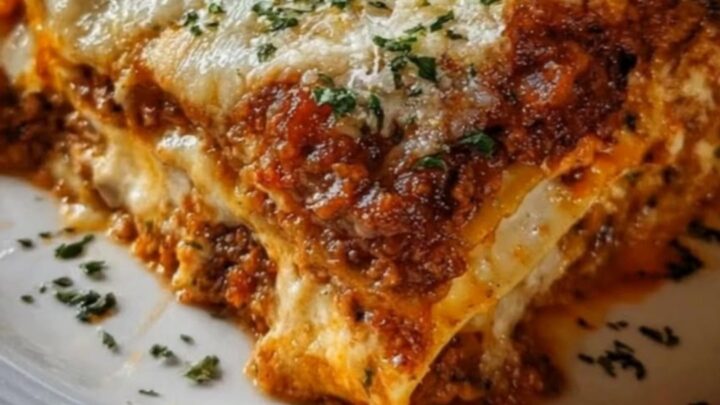
- Bake and ServeCover the baking dish with aluminum foil and bake in a preheated oven at 375°F (190°C) for 30 minutes. Remove the foil and bake for an additional 15 minutes until the cheese is melted, bubbly, and slightly golden. Let the lasagna rest for 15 minutes before cutting and serving.Look for The cheese should be melted, bubbling, and golden brown.Tip Allowing the lasagna to rest is crucial for clean, beautiful slices.
The lasagna should emerge from the oven with a golden, bubbly cheese top and a steaming, aromatic center. The edges should be slightly browned and pulled away from the sides of the dish. After the resting period, the lasagna should be firm enough to slice into perfect, clean squares.
Common mistakes
A common error is overcooking the noodles before baking, which causes them to disintegrate into a mushy texture. Another mistake is failing to heat the meat sauce properly, which can lead to a watery, unstable lasagna that does not hold its shape.
Avoid adding too much sauce per layer, as this can cause the lasagna to slide apart when sliced. Finally, skipping the resting time is a significant oversight, as it prevents the layers from bonding, resulting in messy, collapsed portions upon serving.
How to tell it’s done
The lasagna is done when the internal temperature of the center reaches 165°F (74°C) and the cheese on top has melted into a bubbly, golden-brown crust. Use a knife to check that the noodles are tender and that the sauce has thickened sufficiently.
The edges should appear slightly crisp, and the entire dish should feel firm when gently nudged. Letting the lasagna rest for at least 15 minutes is vital to allow the layers to settle properly.
- Ground meat: 160°F (71°C) in the thickest part
Up next · Part 3 of 3
2 variations · storage & make-ahead · 3 answers · printable card
Tips, FAQ & printable recipe (Part 3)← Back to the ingredients (Part 1)