Dinner · Part 2 of 3: Instructions
Cheesy Honey Mustard Chicken Skillet Step-by-step instructions
- Prep
- Cook
- Total
- Serves
- 4
Before you start
Before starting, ensure all ingredients are measured and ready to go, as the cooking process moves quickly. Take the chicken out of the refrigerator about 15 minutes before you plan to cook, but keep it covered.
Prepare the honey mustard sauce in a small bowl so it is ready to pour the moment the chicken is seared. Ensure the skillet is clean and dry, and have your meat thermometer and a pair of tongs within easy reach on the counter.
Ingredients at a glance (4)
- 4 boneless, skinless chicken breasts
- 1/3 cup honey
- 1/4 cup dijon mustard
- 1 cup shredded mozzarella cheese
Instructions
Sauce and Prep
- Prepare the sauce and chickenIn a small bowl, whisk together the honey and dijon mustard until fully combined and smooth. Ensure the chicken breasts are patted dry with paper towels to help with searing. Keep the raw chicken chilled in the refrigerator until ready to cook.Look for The sauce should be uniform in color and consistency.Tip Whisking thoroughly prevents separation during the cooking process.
At the end of this phase, the honey and mustard should be whisked into a perfectly smooth, golden-brown emulsion. The chicken breasts should be patted completely dry, which is critical for achieving a good sear later.
Everything should be organized and within reach so the cooking phase can proceed without interruption, ensuring that the honey mustard glaze is ready to be applied exactly when the chicken needs it.
Searing and Glazing
- Sear the chickenHeat a cast-iron skillet over medium-high heat. Place the chicken breasts into the hot skillet. Sear the chicken until golden brown on one side, then flip. Pour the prepared honey mustard sauce over the chicken, coating each piece thoroughly. Reduce heat to medium and simmer until the chicken reaches an internal temperature of 165°F (74°C).Look for The chicken should be golden brown and the sauce should thicken slightly.Safe temperature 165°F (74°C) internal temperature (poultry)Tip Use a meat thermometer to ensure the chicken is cooked safely.
The chicken should now be golden brown on both sides and coated in a glossy, slightly thickened honey mustard glaze. The aroma in the kitchen will be sweet and tangy, signaling that the sauce has begun to reduce properly. Check the internal temperature of the thickest breast to ensure it is nearing the safe threshold of 165°F (74°C) before moving on to the final melting step.
Melting the Cheese
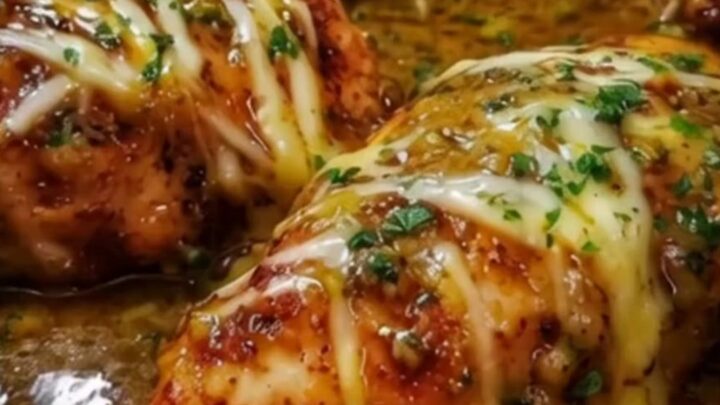
- Melt the cheese and restSprinkle the shredded mozzarella cheese over the chicken breasts in the skillet. Cover the skillet briefly or place it under a broiler if necessary to melt the cheese until it is bubbly and slightly browned. Remove from heat and let the chicken rest for 5 minutes before serving to ensure tenderness.Look for The cheese should be completely melted and stretching when pulled.Tip Resting allows the juices to redistribute, keeping the chicken tender.
The cheese should be completely melted and bubbly, creating a cohesive, golden layer over the chicken. The sauce should be syrupy and clinging to the sides of the skillet. Once the cheese reaches this state, remove the skillet from the heat immediately. The chicken must rest for five minutes, which allows the juices to settle and ensures that the final result is as tender and juicy as possible.
Common mistakes
A common mistake is overcrowding the skillet, which causes the chicken to steam rather than sear, leading to a pale color and less flavor. Another issue is cooking the chicken over heat that is too high, which can burn the honey in the sauce before the chicken is cooked through.
Always monitor the heat closely and adjust if the sauce begins to darken too rapidly, ensuring a balanced, caramelized finish without any bitter, burnt notes.
How to tell it’s done
The chicken is perfectly cooked when it reaches an internal temperature of 165°F (74°C) as measured by a meat thermometer inserted into the thickest part of the breast.
At this stage, the meat should be opaque throughout and release clear juices when pierced. The cheese on top should be fully melted, bubbling, and slightly golden in spots, indicating that the final phase is complete and the dish is ready to be served.
- Poultry: 165°F (74°C) in the thickest part
Up next · Part 3 of 3
2 variations · storage & make-ahead · 3 answers · printable card
Tips, FAQ & printable recipe (Part 3)← Back to the ingredients (Part 1)