Dinner · Part 2 of 3: Instructions
Cheesy Hamburger Potato Casserole Step-by-step instructions
- Prep
- Cook
- Total
- Serves
- 6
Before you start
Before beginning, preheat the oven to 375°F (190°C) and lightly grease a 9x13-inch ceramic casserole dish with cooking spray or butter. Wash, peel, and thinly slice the russet potatoes to about one-eighth of an inch thick using a sharp chef's knife or a mandoline slicer for uniform thickness.
Measure out the creamy cheese sauce, and grate the sharp cheddar cheese from the block. Having all components prepped and arranged on your countertop makes the assembly process smooth and efficient.
Ingredients at a glance (4)
- 1 1/2 lb ground beef
- 4 large russet potatoes, peeled and thinly sliced
- 2 cups creamy cheese sauce
- 2 cups shredded cheddar cheese, divided
Instructions
Browning the Beef and Preparing Potatoes
- Brown the Ground BeefHeat a large skillet over medium-high heat. Add the ground beef, breaking it up with a spatula. Cook, stirring occasionally, until the beef is fully browned and no pink remains, about 6 to 8 minutes. Ensure the ground beef reaches a safe internal temperature of 160°F (71°C). Drain any excess grease from the skillet and set the beef aside.Look for The beef is completely browned, crumbly, and savory.Safe temperature 160°F (71°C) internal temperature (ground meat)Tip Use a slotted spoon to transfer the beef to a bowl, leaving the excess grease behind.
- Prepare the PotatoesWash and peel the russet potatoes. Using a sharp chef's knife or a mandoline slicer, slice the potatoes thinly and evenly into rounds about one-eighth of an inch thick. Keep the sliced potatoes covered with a damp paper towel to prevent them from browning while you assemble the other components.Look for The potato slices are uniform in thickness and ready for layering.Tip Using a mandoline slicer ensures perfectly even slices, which helps the potatoes cook at the same rate.
The ground beef should be fully browned, crumbly, and deeply savory, with no pink remaining, having reached a safe internal temperature of 160°F (71°C). The potatoes should be sliced into thin, uniform rounds and ready for layering.
Assembling the Layers
- Assemble the Casserole LayersArrange half of the thinly sliced russet potatoes in an overlapping layer at the bottom of the prepared 9x13-inch ceramic casserole dish. Evenly distribute the browned ground beef over the potato layer. Pour half of the creamy cheese sauce over the beef, spreading it evenly with a spatula to ensure coverage.Look for The bottom layer of potatoes and beef is evenly covered with sauce.Tip Press down gently on the layers to compact them slightly before adding the next layer.
- Add the Top Potato and Sauce LayersLayer the remaining sliced potatoes over the beef and sauce. Pour the remaining creamy cheese sauce evenly over the top potato layer, using a spatula to smooth it out and coat all the potato slices.Look for The top layer of potatoes is completely coated in cheese sauce.Tip Make sure the potatoes are fully covered with sauce so they steam and cook properly in the oven.
The casserole dish should contain beautifully arranged, overlapping layers of tender potato slices, seasoned ground beef, and velvety cheese sauce. The layers should look compact and even, with the sauce settling down into the crevices to ensure every ingredient is well-lubricated before baking.
Bake and Rest
- Bake Covered and UncoveredCover the casserole dish tightly with aluminum foil. Bake in the preheated oven at 375°F (190°C) for 40 minutes. Remove the foil, sprinkle the shredded cheddar cheese evenly over the top, and return to the oven uncovered for an additional 15 to 20 minutes.Look for The cheese is melted, golden brown, and bubbling.Tip Spray the underside of the foil with non-stick cooking spray to prevent the cheese from sticking if it rises.
- Rest Before SlicingRemove the casserole from the oven. Place it on a heat-safe surface and let it rest for 10 minutes before slicing and serving. This resting period allows the cheese sauce to cool slightly and set, making it much easier to lift clean, beautiful slices with a spatula.Look for The bubbling has subsided and the sauce has set slightly.Tip Use a sharp knife to cut clean portions before lifting them out with a wide spatula.
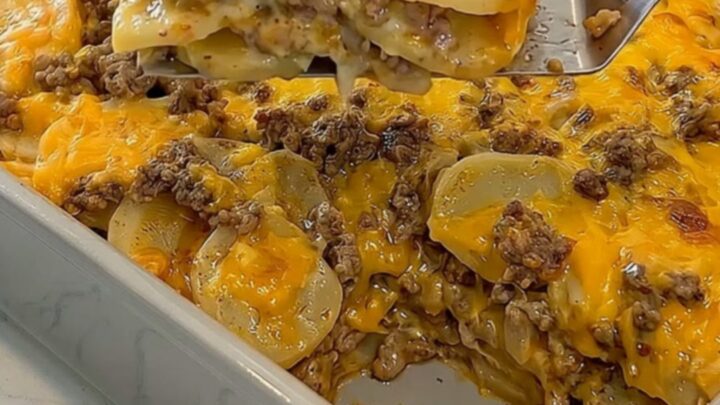
The casserole is ready when the cheese on top is completely melted, golden brown, and bubbling vigorously around the edges.
When a knife is inserted into the center, the potatoes should feel incredibly soft and yield easily with no resistance, releasing a comforting, steamy aroma of beef and melted cheese.
Common mistakes
One common mistake is slicing the potatoes too thickly, which results in a crunchy, undercooked texture even after a long baking time. To avoid this, keep slices thin and uniform.
Another pitfall is failing to drain the excess fat from the browned beef, which can cause the cheese sauce to split and leave an oily layer on top of the finished casserole. Always drain the beef thoroughly before starting the assembly.
How to tell it’s done
The casserole is perfectly cooked when the potatoes are completely tender and can be easily pierced with a fork or knife with absolutely no resistance. The ground beef must be cooked to a safe internal temperature of 160°F (71°C) during the initial browning phase.
The top should display a beautifully browned, bubbling cheese crust, and the sauce should be thick, bubbly, and consolidated, rather than thin or watery.
- Ground meat: 160°F (71°C) in the thickest part
Up next · Part 3 of 3
2 variations · storage & make-ahead · 3 answers · printable card
Tips, FAQ & printable recipe (Part 3)← Back to the ingredients (Part 1)