Dinner · Part 2 of 3: Instructions
Cheesy Cabbage Roll Casserole for Weeknight Comfort Step-by-step instructions
- Prep
- Cook
- Total
- Serves
- 6
Before you start
Before beginning, ensure all ingredients are measured and ready. Chop the cabbage into bite-sized pieces, ensuring you remove the tough core. Cook the rice in advance so it is cooled and ready to be mixed with the other ingredients.
Preheat the oven to the required temperature and lightly grease your baking dish with a small amount of oil or cooking spray to prevent sticking during the baking process.
Ingredients at a glance (4)
- 1 head green cabbage, chopped
- 1 lb ground beef
- 1 cup cooked white rice
- 2 cups shredded cheddar cheese
Instructions
Browning the protein
- Prepare the BasePreheat the oven to 375°F (190°C). In a large skillet over medium-high heat, brown the ground beef thoroughly. Ensure the meat is cooked through, reaching an internal temperature of at least 160°F (71°C) to ensure safety. Drain any excess grease from the pan before proceeding to combine the ingredients.Look for The beef should be browned and no longer pink.Safe temperature 160°F (71°C) internal temperature (ground meat)Tip Break the beef into small crumbles with a spatula for even cooking.
The beef should be deeply browned and fragrant, with all pink color gone. The skillet should contain the rendered fat from the beef, which will carry the flavor throughout the dish. Ensure the meat is broken into small, uniform crumbles using a spatula, and verify that the internal temperature has reached at least 160°F (71°C) to ensure it is safe to eat.
Mixing the components
- Assemble the CasseroleIn a large mixing bowl, combine the browned ground beef, cooked rice, and chopped green cabbage. Toss everything together until well incorporated. Transfer the mixture into a 9x13 inch baking dish, spreading it out into an even layer to ensure it bakes consistently.Look for The mixture is evenly distributed in the dish.Tip Use a sturdy spoon to mix the ingredients thoroughly.
The mixture should look well-combined, with the rice and cabbage evenly distributed among the beef crumbles. The bowl should feel heavy, and the ingredients should appear moist.
If the mixture looks too dry, ensure the cabbage is properly chopped, as it will release significant water during baking. The goal here is a uniform consistency that will bake evenly in the oven.
Baking to perfection
- Bake and ServeTop the mixture with the shredded cheddar cheese. Place the dish in the oven and bake for 25 to 30 minutes, or until the cabbage is tender and the cheese is bubbly and golden. Remove from the oven and let it rest for 10 minutes before serving, allowing the juices to settle.Look for The cheese is melted and bubbling at the edges.Tip Place the dish on a baking sheet to catch any potential drips.
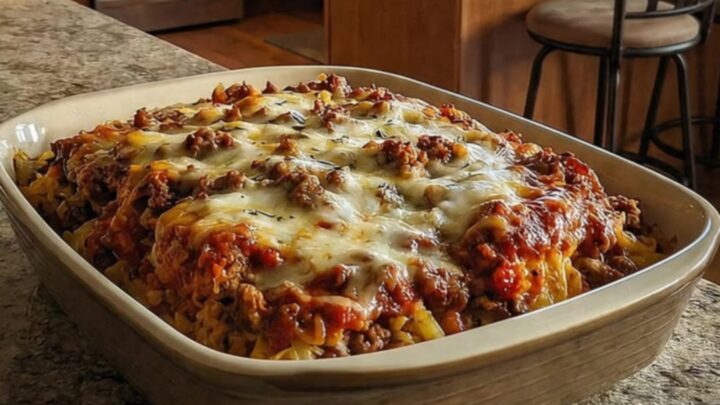
The casserole is ready when the cheese is fully melted and showing golden-brown spots on the surface. The cabbage should be soft and tender throughout. The entire dish should be bubbling around the edges, indicating that the internal temperature is high and all components are thoroughly cooked. Let the dish sit for 10 minutes to allow the layers to settle.
Common mistakes
A common mistake is failing to brown the beef sufficiently before adding it to the mix, which results in a lack of depth and flavor. Another error is leaving the cabbage pieces too large, which prevents them from cooking through and leaves them with an unpleasant, raw texture.
Finally, do not skip the resting period after removing the dish from the oven, as this allows the casserole to set and makes it much easier to portion.
How to tell it’s done
The casserole is done when the cabbage is fork-tender and the cheese topping is melted, bubbly, and slightly browned in spots. The internal temperature of the beef mixture should reach at least 160°F (71°C) to ensure it is thoroughly cooked.
Use an instant-read thermometer to check the center of the casserole if you are uncertain, ensuring you are measuring the meat mixture directly.
- Ground meat: 160°F (71°C) in the thickest part
Up next · Part 3 of 3
2 variations · storage & make-ahead · 3 answers · printable card
Tips, FAQ & printable recipe (Part 3)← Back to the ingredients (Part 1)