Dinner · Part 2 of 3: Instructions
Cheesy Baked Chicken Spaghetti Casserole Step-by-step instructions
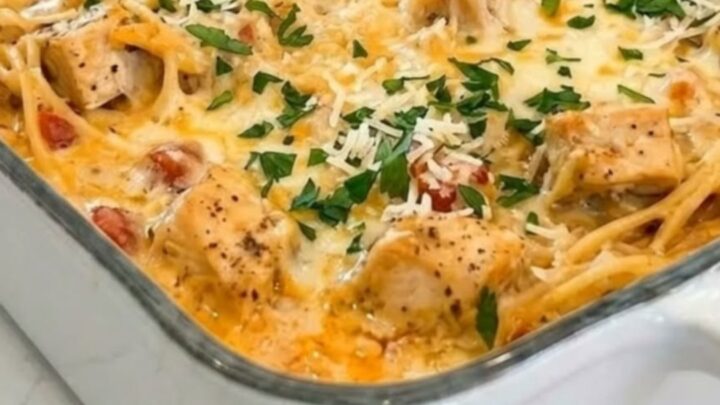
- Prep
- Cook
- Total
- Serves
- 6
Before you start
Before you begin cooking, organize all your ingredients and equipment to ensure a smooth and efficient process. Fill a large pot with water and set it on the stove to boil for the spaghetti. Chop the raw chicken breasts into uniform, bite-sized cubes and set them aside.
Measure out the cream cheese, allowing it to soften slightly at room temperature so it melts easily. Grate the mozzarella and parmesan cheeses. Preheating your oven to 375°F (190°C) now ensures it is ready as soon as the pasta is assembled.
Ingredients at a glance (6)
- 12 oz spaghetti
- 1 lb boneless, skinless chicken breasts, cut into bite-sized cubes
- 8 oz cream cheese, cubed and softened
- 1/2 cup grated parmesan cheese
- 2 cups shredded mozzarella cheese
- 2 tbsp chopped fresh parsley
Instructions
Boiling the Spaghetti and Searing the Chicken
- Boil the SpaghettiBring a large pot of water to a rolling boil over high heat. Add the spaghetti and cook according to the package instructions, but stop cooking 2 minutes before the recommended al dente time. The pasta should still have a firm bite in the center. Reserve 1 cup of the pasta cooking water, then drain the spaghetti thoroughly in a colander and set it aside.Look for The spaghetti is ready when it is flexible but still has a distinct firm bite.Tip Stir the pasta occasionally during the first few minutes of boiling to prevent sticking.
- Cook the ChickenHeat a large non-stick skillet over medium-high heat. Add the cubed raw chicken breasts to the hot skillet. Sauté the chicken, stirring occasionally, for 6 to 8 minutes until the pieces are beautifully cooked through, golden brown, and reach a safe internal temperature of 165°F (74°C). Transfer the cooked chicken to a plate and set aside.Look for The chicken is done when it is opaque throughout and registers 165°F (74°C) on a thermometer.Safe temperature 165°F (74°C) internal temperature (poultry)Tip Do not crowd the skillet so the chicken sears rather than steams.
At the end of this first phase, the spaghetti should be cooked just under al dente, showing a tiny white core when bitten, and drained thoroughly with some cooking water reserved.
The chicken cubes should be beautifully seared on the outside, completely opaque, and cooked to a safe internal temperature. The kitchen should smell savory and rich from the browned chicken. The seared chicken and par-boiled pasta are now ready to be combined with the cream sauce in the next step.
Creating the Creamy Cheese Sauce and Tossing
- Melt the Cheese SauceIn the same skillet over medium heat, add the cubed cream cheese and 1/2 cup of the reserved pasta cooking water. Whisk constantly as the mixture heats, allowing the cream cheese to melt completely into a smooth liquid. Stir in the grated parmesan cheese, whisking until fully melted and emulsified into a velvety sauce. If the sauce is too thick, whisk in a little more pasta water.Look for The sauce is ready when it is completely smooth, free of clumps, and coats the back of a spoon.Tip Whisk vigorously to help the cream cheese emulsify smoothly into the warm liquid.
- Combine Pasta, Chicken, and SauceAdd the drained spaghetti and the cooked chicken pieces back into the skillet with the creamy cheese sauce. Gently toss all the ingredients together using tongs or a large wooden spoon until the pasta and chicken are completely and evenly coated with the rich, velvety sauce.Look for The mixture should look incredibly creamy and the pasta should be evenly distributed.Tip If your skillet is too small, combine everything in the large pasta pot instead.
At the conclusion of this phase, the cream cheese, parmesan, and reserved pasta water should be fully melted and emulsified into a thick, velvety, and completely smooth sauce. When the drained spaghetti and seared chicken are tossed into this mixture, every single strand of pasta and piece of meat should be generously coated. The entire mixture will look incredibly creamy and smell intensely of rich cheese before it is transferred into the baking dish.
Baking to Golden Perfection and Garnishing
- Assemble and Bake the CasserolePreheat your oven to 375°F (190°C). Transfer the creamy chicken and spaghetti mixture into a 9x13-inch baking dish, spreading it out into an even layer. Evenly sprinkle the shredded mozzarella cheese over the top, covering the pasta completely. Place the dish in the preheated oven and bake for 15 to 20 minutes until the cheese is melted, bubbly, and beautifully golden brown.Look for The casserole is ready when the cheese is bubbling vigorously and has golden-brown spots.Tip For an extra golden crust, broil on high for the last 1 to 2 minutes of baking.
- Garnish and RestRemove the baking dish carefully from the oven and place it on a heatproof surface. Let the casserole rest for 5 to 10 minutes to allow the sauce to set slightly. Sprinkle the finely chopped fresh parsley over the top for a vibrant finish. Serve warm, enjoying the dramatic and gooey cheese pull as you scoop out each portion.Look for The parsley should look bright green against the bubbly golden cheese.Tip Resting the pasta prevents the creamy sauce from running to the bottom of the dish.
By the end of this final phase, the mozzarella cheese topping should be fully melted, bubbling vigorously around the edges, and speckled with beautiful golden-brown patches. The entire casserole will be hot and steaming throughout. After resting for a few minutes, a fresh sprinkle of green parsley will provide a vibrant color contrast against the golden cheese. Lifting a portion with a fork will yield a dramatic, gooey cheese pull.
Common mistakes
One of the most common mistakes in making baked pasta is overcooking the spaghetti during the initial boil. Because the pasta undergoes a second cooking process in the oven, boiling it to full tenderness beforehand will result in a mushy, soft texture in the finished dish. Always drain the pasta when it still has a firm bite.
Another mistake is using cold cream cheese, which can clump and struggle to melt smoothly into the sauce. Finally, failing to let the casserole rest for a few minutes after baking can cause the creamy sauce to run, rather than cling beautifully to the spaghetti when served.
How to tell it’s done
To determine if your cheesy baked chicken spaghetti is perfectly done, observe the cheese topping and check the internal temperature of the poultry. The chicken must reach a safe internal temperature of 165°F (74°C) when checked with a meat thermometer.
The cheese on top should be completely melted, bubbling actively, and displaying a gorgeous golden-brown crust. When you gently shake the baking dish, the center should feel set rather than liquid, indicating that the pasta has absorbed the excess moisture from the rich cream sauce.
- Poultry: 165°F (74°C) in the thickest part
Up next · Part 3 of 3
2 variations · storage & make-ahead · 3 answers · printable card
Tips, FAQ & printable recipe (Part 3)← Back to the ingredients (Part 1)