Dinner · Part 2 of 3: Instructions
Cheesy Baked Cabbage Steaks for a Quick Crispy Dinner Step-by-step instructions
- Prep
- Cook
- Total
- Serves
- 4
Before you start
Before cooking, preheat the oven to 400°F (200°C) and position an oven rack in the center. Strip away any damaged or leathery outer leaves from the head of green cabbage, then rinse the exterior thoroughly under cold running water.
Pat the cabbage completely dry with clean kitchen towels, as any excess surface moisture will cause the vegetable to steam rather than develop crisp, roasted edges. Set your heavy cast iron skillet or large rimmed baking sheet on the work counter along with a sharp chef knife and a sturdy cutting board.
Ingredients at a glance (3)
- 1 green cabbage, cut into 1-inch thick rounds
- 1 tsp freshly cracked black pepper
- 2 cups shredded mozzarella cheese
Instructions
Slicing and Seasoning
- Prepare and season the cabbage roundsPreheat the oven to 400°F (200°C). Slice the trimmed cabbage crosswise into four 1-inch thick rounds, making sure each slice retains a portion of the central core so the steaks stay intact during cooking. Arrange the cabbage rounds in a single layer inside the cast iron skillet or on a baking sheet, and season the top surfaces generously with freshly cracked black pepper.Look for The cabbage slices should sit flat and sturdy in a single layer with visible core segments intact.Tip Keep the root core firmly attached to each round so individual leaves do not separate while handling.
At the end of this phase, the cabbage steaks should be evenly cut to an identical 1-inch thickness, with the central core clearly visible holding each disk securely together.
The slices should sit flat in a single layer without overlapping in the skillet, dusted evenly across their surfaces with fragrant flecks of freshly cracked black pepper, fully prepared for dry-heat roasting.
Tenderizing and Roasting
- Roast until tender and caramelizedTransfer the skillet to the preheated oven and bake the cabbage rounds for 20 to 25 minutes. During this initial roast, the high heat softens the dense central core while caramelizing the delicate outer edges into a deep golden brown. Check that a paring knife inserts into the center with only mild resistance before moving on to the cheese topping.Look for Edges should look browned and caramelized while the center gives easily to the tip of a knife.Tip If the outer leaves darken too fast, tent a piece of foil loosely over the skillet for the remaining roast time.
The cabbage rounds should appear visibly softened and slightly shrunken around the exterior perimeter, with the thin outer leaf tips displaying a rich caramelized amber shade. A warm, sweet roasted aroma should fill the kitchen, and a fork or knife tip inserted into the thickest part near the core should meet gentle resistance without feeling hard or rubbery.
Cheese Melting and Browning
- Melt mozzarella to golden perfectionCarefully remove the hot skillet from the oven and scatter the shredded mozzarella cheese in an even, thick layer across the top of each cabbage steak. Return the pan to the oven and bake for an additional 5 to 7 minutes until the cheese is completely melted, rapidly bubbling, and speckled with golden spots. Dust with additional freshly cracked black pepper, then rest for 5 minutes before serving.Look for The cheese should be completely fluid, bubbling actively, with toasted golden-brown speckles across the top.Tip Broil on high for the final 60 seconds if a deeper blistered cheese crust is desired.
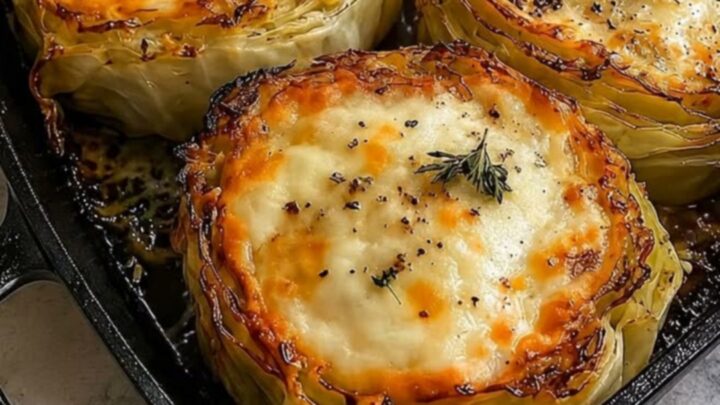
The mozzarella should be thoroughly melted into a cohesive, molten layer covering the tops of the cabbage steaks, actively bubbling from the residual skillet heat with attractive golden-brown patches across the crust. The edges of the cheese meeting the hot skillet surface should form a savory, crisp rim, confirming the dish is finished and ready to rest.
Common mistakes
The most common mistake when making cabbage steaks is removing the core before slicing. Without the solid core anchoring the leaves, the rounds will immediately fall apart into loose shreds that burn easily.
Another frequent error is slicing the steaks too thinly, which causes them to overcook and turn mushy before achieving a caramelized crust. Aim for an even thickness of at least one full inch. Finally, avoid crowding the steaks too closely in the pan, as trapped steam prevents the edges from achieving their signature roasted crispness.
How to tell it’s done
Test doneness by sliding the tip of a paring knife into the thickest section of the cabbage steak near the core; it should pierce through smoothly with only slight firmness remaining. The underside and exposed edges of the cabbage should be deeply golden and slightly charred in spots, demonstrating complete caramelization.
On top, the mozzarella must be entirely liquefied, bubbling vigorously across the surface with distinct toasted golden speckles, indicating optimal heat penetration throughout the entire steak.
Up next · Part 3 of 3
2 variations · storage & make-ahead · 3 answers · printable card
Tips, FAQ & printable recipe (Part 3)← Back to the ingredients (Part 1)