Dinner · Part 2 of 3: Instructions
Cheese Puff Crusted Chicken Quesadilla with Serious Crunch Step-by-step instructions
- Prep
- Cook
- Total
- Serves
- 2
Before you start
Set out everything before the pan goes on the heat: the crushed puffs on a wide plate, the shredded chicken and grated cheese in separate bowls, the softened butter with a butter knife, and the tortilla on a cutting board. Crush the puffs first — they take the most effort, and the crumbs are easiest to press while the butter is still soft enough to grip them.
Check that the chicken is fully shredded with no large clumps, since thick pieces keep the fold from closing flat. Have the spatula, a plate for catching stray crumbs, and the ranch and lime standing by. Once the quesadilla hits the pan, the two-minute windows leave no time for prep.
Ingredients at a glance (7)
- 1 cup extra-hot crunchy cheese puffs, finely crushed
- 1 large flour tortilla (10-inch)
- 2 tbsp unsalted butter, softened
- 4 oz shredded rotisserie chicken, store-bought or made ahead
- 1 1/2 cups shredded Monterey Jack cheese
- 1/4 cup ranch dressing, for drizzling
- 1 lime, cut into wedges, for squeezing
Instructions
Crush, shred, and crust
- Crush the cheese puffsPour the cheese puffs into a zip-top bag, press out the air, and crush them with a rolling pin until they look like coarse red sand. Work in batches if needed so every puff gets broken down evenly; a few larger fragments are fine, but powder-fine dust is what grips the butter.Look for The crumbs should feel sandy and even, with no whole puffs left rolling around the bag.Tip Finer crumbs cling to butter far better than chunky pieces, so keep crushing until nothing rattles whole.
- Shred chicken and grate cheesePull the rotisserie chicken into shreds with two forks, discarding skin and any large pieces of fat, and grate the Monterey Jack on the large holes of a box grater. Keep the two piles separate — chicken first, cheese on top — so the cheese can melt directly against both tortilla and filling.Look for You want roughly 4 oz of chicken and 1 1/2 cups of loosely packed cheese, measured before assembling.Tip Grating the cheese yourself helps it melt smoothly; pre-shredded bags carry anti-caking starch that slows the melt.
- Butter and crust the tortillaSpread about half the butter in a thin, even layer over one side of the tortilla, all the way to the edge. Sprinkle and press the crushed puffs onto the butter with your palm, working over a plate to catch the excess, until the whole face is coated edge to edge in red.Look for The crusted side should hold its color when tilted, with no shiny patches of bare butter showing through.Tip Press firmly but briefly; leaning too hard tears the tortilla and lets cheese leak during the griddle.
At the end of this phase, the work is all done and nothing is hot yet. The crushed puffs should fill about one cup, looking like coarse red sand with no whole puffs left in the bag. The chicken sits in thin, even shreds, cool and clump-free, and the grated Monterey Jack sits in its own bowl, fluffy rather than packed. One face of the tortilla is buttered and coated in crumbs edge to edge. Pinch a few crumbs between your fingers: they should feel dry and sandy, not greasy. If any step feels rushed, fix it now, because once the pan is hot there is no pause button.
Build the half-moon
- Build the folded quesadillaSet the tortilla crusted-side down on a cutting board. Scatter a third of the Monterey Jack over one half, pile the chicken on top, then cover with the remaining cheese. Fold the bare half over, press gently to close, and brush the exposed top with the rest of the butter.Look for The filling should sit on one half only, with a clean half-inch border so nothing escapes the fold.Tip Cheese above and below the chicken acts as glue, sealing the wedge shut once it melts.
- Preheat the panPlace a heavy skillet or griddle over medium heat and let it come to about 350°F (175°C); a drop of water should skitter and evaporate on contact. No oil is needed — the buttered tortilla and its crust carry enough fat to toast evenly on their own.Look for At temperature the pan smells neutral and warm, never smoking; if it smokes, pull it off the heat.Tip Cast iron holds heat best, but any heavy pan works if it gets a full two or three minutes to preheat.
The folded quesadilla should now sit on the board looking like a tight half-moon, crusted face down, with a thin shine of butter on its bare top. Press it lightly with the palm: it should feel compact but not squashed, and nothing should slide out of the fold. Look at the border — a clean half-inch of plain tortilla should ring the filling, which means the cheese will seal rather than spill. The pan should be at temperature by now, around 350°F (175°C), shimmering faintly but not smoking. If the fold will not stay closed, press once more and let the buttery surface hold it.
Toast, rest, and finish
- Griddle two minutes per sideLay the quesadilla in the dry pan, crusted side down, and cook for 2 minutes without moving it. Slide a thin spatula underneath, flip confidently, and cook 2 minutes more, pressing lightly so both faces toast evenly and the cheese inside melts completely.Look for The crust should smell toasty and slightly smoky-sweet, deepening from bright red to a darker brick tone.Tip If the crust darkens before the minute is up, lower the heat; slow toasting keeps the outside crisp without burning.
- Rest and cut into wedgesTransfer the quesadilla to a cutting board and let it rest for about 2 minutes so the molten cheese sets enough to hold the wedges together. Cut into six wedges with a sharp knife or pizza wheel, wiping the blade between cuts for clean, even edges.Look for After resting, the wedges hold their shape when lifted, and the cheese no longer floods out of the cut.Tip A pizza wheel gives the cleanest cut through the crunchy crust — sawing with a dull knife just shatters it.
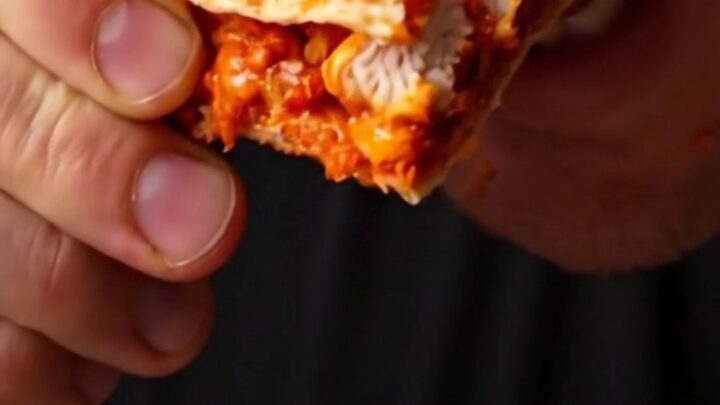
- Drizzle ranch and lime, serveDrizzle the wedges with ranch dressing and squeeze lime juice over the top just before serving. Serve immediately, while the crust is at its loudest — the contrast of fiery crunch, molten cheese, and cool, tangy dressing is what makes the finish worth it.Look for The dressing should fall in thin ribbons, pooling only slightly at the edges of the wedges.Tip Drizzle at the table rather than in advance; sitting in dressing softens the crust within minutes.
When the quesadilla comes off the pan, both faces should be deep brick-red, firm to the touch, and audibly crisp when tapped with a spatula. The edges will show a few darker freckles — that is flavor, not burning.
After the two-minute rest, the first cut should meet slight resistance from the crust and then glide through molten, glossy cheese; the wedges should hold their shape when lifted, with the filling stretching rather than flooding. The chicken should be warmed throughout and the kitchen should smell toasty and a little fiery. Only now do the ranch and lime go on, in thin ribbons, just before the plate leaves the counter.
Common mistakes
The most common failure is a burnt crust around cold cheese, which happens when the pan runs too hot. Keep it at a steady 350°F (175°C) and trust the two-minute window. The second mistake is pressing the crumbs too hard and tearing the tortilla — press firmly but briefly.
Overfilling is third: more than about four ounces of chicken and a cup and a half of cheese makes the fold bulge and the wedges leak. Finally, do not skip the rest after cooking; cutting straight from the pan floods the board with molten cheese and the wedges slump. And never drizzle the ranch early — dressing softens the crust quickly.
How to tell it’s done
The quesadilla is done when both faces have toasted for two minutes each and the crust has deepened from bright red to a darker brick-red tone with a few nearly black freckles at the edges. Lift a wedge with tongs and listen: it should sound crisp, not bend softly.
Peek at the cut edge — the Monterey Jack should be fully melted and glossy, flowing slowly when the wedge is lifted, with the chicken warmed through. Because the rotisserie chicken is already fully cooked, there is no internal temperature to chase; the cheese itself is the thermometer. If the cheese has not melted, give the folded side another thirty to sixty seconds over lower heat.
Up next · Part 3 of 3
4 variations · storage & make-ahead · 5 answers · printable card
Tips, FAQ & printable recipe (Part 3)← Back to the ingredients (Part 1)