Dinner · Part 2 of 3: Instructions
Cast-Iron Surf and Turf Filet Mignon with Creamy Garlic Shrimp Step-by-step instructions
- Prep
- Cook
- Total
- Serves
- 2
Before you start
Before heating the skillet, ensure all ingredients are measured and ready to go, as the cooking process moves very quickly once the meat hits the pan. Remove the filet mignon steaks from the refrigerator about thirty minutes prior to cooking to take the chill off, which helps them cook more evenly.
Pat the steaks completely dry with paper towels. Peel and devein the shrimp, and have the butter, herbs, and creamy garlic herb sauce within arm's reach.
Ingredients at a glance (5)
- 2 thick filet mignon steaks
- 4 tbsp butter, divided
- 1/2 lb shrimp, peeled and deveined
- 2 tbsp chopped fresh herbs
- 1/2 cup creamy garlic herb sauce, store-bought or made ahead
Instructions
Phase 1: Searing the Steaks
- Sear the SteaksPreheat a heavy cast-iron skillet over high heat. Melt 1 tablespoon of the butter in the skillet. Add the thick filet mignon steaks to the hot skillet. Sear for 4 to 5 minutes per side, or until a deep golden-brown crust forms and the internal temperature reaches 145°F (63°C) for medium-well. Remove the steaks from the skillet and let them rest on a warm plate for at least 3 minutes to allow the juices to redistribute.Look for A rich, dark crust will form on the surface of the meat.Safe temperature 145°F (63°C) internal temperature (steaks, chops and roasts)Tip Do not move the steaks around while they sear to ensure they develop a uniform, deep crust.
By the end of this phase, the filet mignon steaks will have developed a beautiful, deep mahogany crust on both sides. The skillet will be hot and filled with the rich, savory aroma of seared beef. When tested with a meat thermometer, the center of the steaks should reach 145 degrees Fahrenheit (63 degrees Celsius) before being removed to rest, ensuring they remain exceptionally juicy and tender.
Phase 2: Sautéing the Shrimp
- Sauté the ShrimpReduce the skillet heat to medium. Melt 2 tablespoons of the butter in the same skillet, scraping up any browned bits from the bottom. Add the shrimp and the herbs. Cook for 2 to 3 minutes, tossing occasionally, until the shrimp turn pink, opaque, and reach an internal temperature of 145°F (63°C). Transfer the shrimp to a bowl and cover to keep warm.Look for The shrimp will curl slightly and turn a beautiful pearly pink.Safe temperature 145°F (63°C) internal temperature (shellfish)Tip Avoid overcooking the shrimp as they can quickly become tough and rubbery.
At the conclusion of this phase, the shrimp will have transformed from translucent gray to a vibrant, pearly pink and white. They will be lightly curled and coated in a glistening layer of melted butter and bright green herbs.
The kitchen will fill with the sweet, buttery aroma of cooked seafood, and the shrimp will have reached a safe internal temperature of 145 degrees Fahrenheit (63 degrees Celsius).
Phase 3: Warming the Sauce and Plating
- Warm the Creamy Garlic Herb SauceIn the same skillet over medium-low heat, melt the remaining 1 tablespoon of butter. Pour in the creamy garlic herb sauce and bring to a gentle simmer. Cook for 1 to 2 minutes, stirring constantly, until the sauce is warmed through and incorporates the savory pan drippings.Look for The sauce will become smooth, hot, and slightly reduced.Tip Keep the heat low when warming the sauce to prevent the dairy from separating.
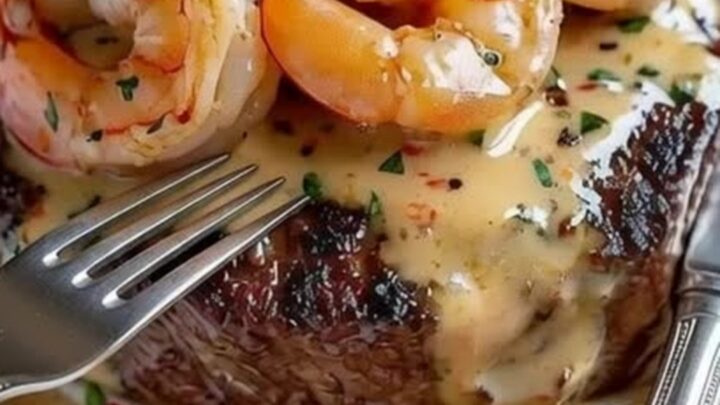
- Assemble and ServePlace the rested filet mignon steaks on warm serving plates. Stack the golden, buttery shrimp neatly on top of each steak. Generously pour the warm, creamy garlic herb sauce over the shrimp and steaks, letting it cascade down the sides. Serve immediately with a sharp steak knife and fork.Look for The sauce should completely coat the shrimp and pool beautifully around the steak.Tip Warm the serving plates slightly in a low oven before assembling to keep the dish hot.
During this final phase, the creamy garlic herb sauce will warm through in the skillet, scraping up the flavorful browned bits from the pan to create a smooth, rich coating. The sauce is ready when it is hot and completely uniform. Once plated, the creamy sauce will cascade beautifully over the stacked shrimp and steaks, creating a stunning presentation.
Common mistakes
One common mistake is crowding the skillet when searing the steaks, which traps steam and prevents a proper crust from forming. Ensure there is space around each steak, or sear them in batches if using a smaller pan.
Another error is overcooking the shrimp, which turns them rubbery; keep a close eye on them and remove them from the heat the moment they turn opaque. Finally, avoid heating the creamy garlic herb sauce too vigorously, which can cause the sauce to split and lose its velvety texture.
How to tell it’s done
To guarantee perfect results, always rely on an accurate instant-read digital meat thermometer rather than visual guesswork. The filet mignon is safely cooked and perfectly juicy when it reaches an internal temperature of 145 degrees Fahrenheit (63 degrees Celsius) followed by a mandatory three-minute rest.
The shrimp are fully cooked when they reach 145 degrees Fahrenheit (63 degrees Celsius), appearing completely opaque and firm to a gentle touch.
- Steaks, chops and roasts: 145°F (63°C) in the thickest part, then a 3-minute rest
- Shellfish: 145°F (63°C) in the thickest part
Up next · Part 3 of 3
3 variations · storage & make-ahead · 4 answers · printable card
Tips, FAQ & printable recipe (Part 3)← Back to the ingredients (Part 1)