Desserts · Part 1 of 3: Ingredients
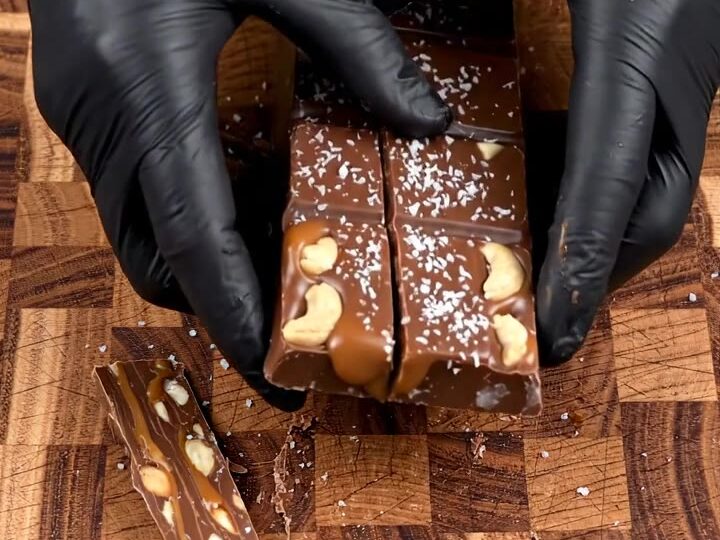
Cashew Coconut Salted Caramel Chocolate Bark
- Prep
- Cook
- Total
- Serves
- 12
This cashew coconut salted caramel chocolate bark is the kind of candy that makes everyone stop mid-conversation. Thick bars of glossy dark milk chocolate hide ribbons of amber coconut caramel and a generous scatter of crunchy cashew sesame brittle.
The first bite is a clean snap, then layers of smooth, nutty, and salty-sweet flavors unfold. It looks like something from a high-end chocolatier, but the technique is surprisingly simple: grate chocolate, melt it, layer it, and let it set.
This bark is a study in textures and contrasts. The chocolate is grated into delicate curls before melting, which gives it a smooth, even melt and a beautiful snap once set. The coconut caramel adds a chewy, buttery ribbon that contrasts with the crispy brittle.
The brittle itself is a quick stovetop affair: sugar, butter, cashews, and sesame seeds cooked to a glossy amber. The result is a candy that is both elegant and rustic, with a cross section that is almost too pretty to eat. Whether you are a seasoned candy maker or a curious beginner, this recipe is a rewarding project that yields impressive results.
Ingredients
- 1 1/2 lb dark milk chocolate, finely chopped
Coconut Caramel
- 1 cup coconut caramel, homemade or store-bought
Cashew Sesame Brittle
- 1 cup cashews, roughly chopped
- 1/2 cup sesame seeds
- 1 cup granulated sugar
- 1/2 tsp flaky sea salt
- 2 tbsp unsalted butter
Why this recipe works
Grating the chocolate before melting is a game-changer. The fine curls melt quickly and evenly, reducing the risk of scorching. It also creates a lighter, more aerated texture in the final bark, making it melt in the mouth rather than feeling heavy. The grated chocolate also helps the bark achieve that clean, crisp snap when you break it, which is the hallmark of well-tempered chocolate.
The combination of coconut caramel and cashew sesame brittle brings together complementary flavors and textures. The caramel is rich and buttery with a hint of coconut, while the brittle adds a satisfying crunch and a toasty nuttiness.
The flaky sea salt on top cuts through the sweetness and enhances the chocolate's depth. Each element is simple on its own, but together they create a complex, multi-layered candy that is far greater than the sum of its parts.
Notes and substitutions
Choose a high-quality dark milk chocolate for the best flavor and texture. A bar with around 50-60% cocoa solids strikes a good balance between sweetness and chocolate intensity. If you prefer a more intense bark, use bittersweet chocolate. For a dairy-free version, look for vegan chocolate that is clearly labeled. The coconut caramel can be homemade or store-bought; if making your own, ensure it is thick enough to drizzle without running off the chocolate.
The cashew sesame brittle is straightforward but requires attention. Cook the sugar until it reaches a deep amber color, but do not let it burn. The nuts and seeds should be stirred in quickly and poured onto the prepared sheet before the sugar hardens.
If the brittle becomes too hard to chop, place it in a zip-top bag and gently crush it with a rolling pin. The bark can be stored in an airtight container in the refrigerator for up to two weeks, but it is best enjoyed within the first few days.
- dark milk chocolate: Use semisweet or bittersweet chocolate for a deeper, less sweet bark. For a dairy-free version, choose vegan chocolate.
- coconut caramel: Use a classic salted caramel sauce if coconut caramel is unavailable, or make a quick version by simmering coconut milk and sugar until thick.
- cashews: Replace with peanuts, almonds, or pecans. Toast them first for extra flavor.
- sesame seeds: Use sunflower seeds or omit them entirely for a nut-only brittle.
Equipment
- Box grater
- Parchment-lined baking sheet
- Saucepan
- Heatproof spatula
- Chef's knife
- Cutting board
- Candy thermometer (optional)
Up next · Part 2 of 3
7 steps · 15 min of cooking · what to look for at each stage
Step-by-step instructions (Part 2)