Desserts · Part 2 of 3: Instructions
Cashew Coconut Brittle Salted Caramel Chocolate Bark Step-by-step instructions
- Prep
- Cook
- Total
- Serves
- 12
Before you start
Gather everything before you begin, because the chocolate starts to soften as soon as it is grated and the caramel needs to be ready to drizzle. Line a rimmed baking tray with parchment paper so it covers the bottom and lightly lifts at the edges, which makes the finished slab easy to remove. Place a wooden cutting board, a chef's knife and a box grater within reach.
Set out the roasted cashews, the coconut brittle, the caramel sauce and the flaky salt in separate bowls so you can move quickly once the chocolate is grated. Chill the dark chocolate bar for about 15 minutes so it grates into clean curls rather than smearing. Put on disposable gloves if you want to keep your hands clean from the caramel and chocolate.
Ingredients at a glance (5)
- 1 cup roasted salted cashews
- 1/2 cup coconut brittle, broken into pieces (store-bought or made ahead)
- 8 oz solid dark chocolate bar, chilled for grating
- 1/3 cup caramel sauce (store-bought or made ahead)
- flaky sea salt, to taste
Instructions
Chopped and grated base
- Chop the crunchy mixPut the roasted cashews and the coconut brittle pieces on a wooden cutting board. Chop them together with a chef's knife until you get a rough, mixed pile of crunchy bits in varied sizes, with some larger pieces left for texture.Look for A rough, mixed pile with nut pieces and brittle shards of different sizes.Tip Chop in short, firm strokes and keep some pieces chunky so the bark has visible crunch.
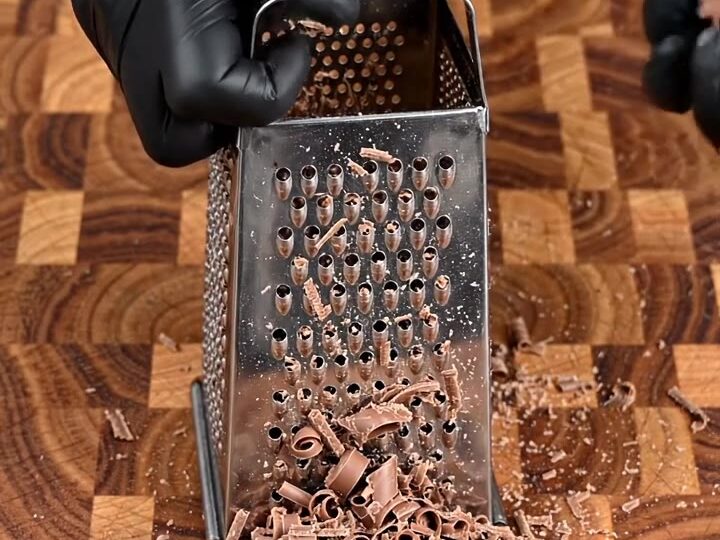
- Grate the chocolateHold the cold dark chocolate bar against the coarse side of a box grater and grate it over the cutting board, letting fine curls and shavings fall onto the board. Keep grating until you have a generous pile.Look for Fine curls and shavings falling onto the board, with the bar getting shorter.Tip Chill the chocolate for 15 minutes first so it grates into curls instead of smearing.
At the end of the first phase, you should have a rough pile of chopped cashews and coconut brittle in mixed sizes on the board, and a generous mound of fine chocolate curls and shavings beside it. The nuts should look crunchy and separated, with no dust or powder building up. The chocolate should look dry and firm, not greasy, and the curls should fall lightly rather than clump.
Before you continue, check that the board is clear and the tray is lined, because the next steps move fast. Make sure the caramel is at a pourable, thick consistency so it forms defined ribbons when drizzled across the chocolate later. If the chocolate has begun to melt on the board, return it to the refrigerator for a few minutes before spreading.
Layered melted topping
- Spread the chocolate layerLine a rimmed baking tray with parchment paper. Scatter the grated chocolate across the tray and spread it into an even layer, pressing lightly so it covers the parchment from edge to edge without gaps.Look for An even, thin layer of chocolate covering the whole parchment-lined tray.Tip Spread the chocolate to the corners so each piece of bark has the same thickness.
- Add the caramel ribbonsDrizzle the caramel sauce across the chocolate in thick ribbons, spacing them out over the whole surface so every piece of bark gets caramel. Let the caramel and chocolate start to melt together.Look for Thick caramel ribbons lying on top of the chocolate, softening where they touch.Tip Use a spoon to drizzle back and forth rather than pouring in one spot.
- Scatter the toppingScatter the chopped cashews, coconut brittle and coconut pieces over the melted chocolate and caramel, pressing them lightly so they stick. Finish with a sprinkle of flaky sea salt over the top.Look for Nut and brittle pieces evenly spread, with flakes of salt visible on the surface.Tip Add the topping while the chocolate is still soft so the pieces anchor into the bark.
At the end of the second phase, the chocolate should form an even layer across the parchment, with no bare patches, and the caramel ribbons should lie on top in distinct streaks that are beginning to soften where they touch the chocolate. The nut and brittle pieces should sit evenly over the surface, with salt flakes visible and catching the light. The chocolate should look glossy and feel slightly soft at the edges. Check that no single area is overloaded with topping, since this creates thick spots that take longer to set and break unevenly. If the layer looks too thin in one corner, add a small handful of chocolate curls there before moving on to setting.
Set and cut slab
- Let the bark setLeave the tray at cool room temperature until the chocolate firms and holds its shape when pressed gently. Speed the process by placing the tray in the refrigerator for about 30 minutes if needed.Look for The chocolate is firm, glossy and no longer tacky when touched.Tip Avoid refrigerating for long periods, which can dull the surface and make caramel sticky.
- Break into piecesLift the set slab off the parchment and cut it into rectangular pieces with a chef's knife, or break it along the lines by hand. Arrange the pieces on a plate so the cashews, caramel and salt show on top.Look for Clean, rectangular pieces with glossy surfaces studded with nuts and salt.Tip Wipe the knife between cuts for neat edges on each piece.
At the end of the final phase, the chocolate should be firm, glossy and no longer tacky when pressed gently with a fingertip, and the slab should lift cleanly from the parchment without bending or sticking. The pieces should look distinct, with caramel swirls, nut shards and salt flakes all visible on top. Cut or break the slab into rectangular pieces, checking that each has an even amount of topping and chocolate. Keep the pieces at cool room temperature until serving so the surface stays crisp and the caramel does not turn sticky. If the chocolate still feels soft after the expected setting time, return the tray to the refrigerator briefly and check again.
Common mistakes
The most common mistake is grating chocolate that is too warm, which turns it into a paste that smears instead of forming fine curls. Chill the bar before grating and work in a cool room so the shavings stay separate. Another frequent problem is spreading the chocolate too thick in some areas and too thin in others. Uneven layers set at different speeds and break into pieces of inconsistent texture, so spread the curls to the corners and press them gently.
Overloading the caramel is also a problem: thin, watery sauce runs into the chocolate and disappears, while very thick sauce clumps. Aim for a pourable, spoonable texture and drizzle in separated ribbons. Adding the nuts and brittle too early, when the chocolate is still fully liquid, causes them to sink and become hard to see.
How to tell it’s done
Bark is done when the chocolate has firmed through and holds its shape when pressed gently. The surface should look glossy and feel dry to the touch, with no tackiness on the caramel and no soft spots in the chocolate. A simple test is to lift one corner of the parchment: if the slab bends slightly but does not sag or stick, it has set.
Cut through a piece to check that the chocolate snaps cleanly and the nuts and brittle sit firmly in place. This recipe contains no meat, poultry, fish or eggs, so no internal temperature applies. Store-bought or made-ahead caramel sauce and coconut brittle are used cold or at room temperature, and the chocolate sets through cooling alone.
Up next · Part 3 of 3
4 variations · storage & make-ahead · 5 answers · printable card
Tips, FAQ & printable recipe (Part 3)← Back to the ingredients (Part 1)