Dinner · Part 2 of 3: Instructions
Caramelized Onion Pasta: Rich, Silky One-Pan Dinner Step-by-step instructions
- Prep
- Cook
- Total
- Serves
- 4
Before you start
Before cooking, slice the onions thinly and evenly—aim for crescents about 1/4 inch thick. Grate the Parmesan fresh and chop the parsley. Bring a large pot of salted water to a boil for the pasta. Have the broth, cream, and pasta water measured and ready.
Set out a wide sauté pan for the onions and a colander for draining the pasta. This recipe moves quickly once the onions are done, so having everything within reach makes the final steps seamless.
Ingredients at a glance (11)
- 2 large yellow onions, thinly sliced
- 2 tbsp unsalted butter
- 2 tbsp olive oil
- 10 oz fettuccine
- 1/2 cup vegetable or chicken broth
- 1/2 cup heavy cream
- 1/2 cup starchy pasta water
- 1/2 cup freshly grated Parmesan cheese
- Freshly chopped parsley, for serving
- Fresh lemon juice, for serving
- Shaved Parmesan, for serving
Instructions
Caramelize and Cook the Pasta
- Caramelize the OnionsHeat the butter and olive oil in a wide sauté pan over medium heat until the butter is foaming. Add the sliced onions and spread them into an even layer. Cook, stirring occasionally, for 20 to 25 minutes, until the onions are deeply golden, soft, and jammy. If they begin to stick, add a tablespoon of water and scrape up the browned bits.Look for The onions turn translucent, then slowly deepen to a rich amber with a sweet, nutty aroma.Tip Keep the heat at medium, not high, so the onions caramelize without burning. Stir every few minutes for even color.
- Cook the PastaBring a large pot of salted water to a boil. Add the fettuccine and cook according to the package directions until al dente. Reserve 1/2 cup of the starchy pasta water before draining. Drain the pasta but do not rinse it; toss with a tiny drizzle of olive oil if needed to prevent sticking.Look for The pasta is tender but still has a slight bite in the center. The reserved water looks cloudy and starchy.Tip Salt the pasta water generously—it should taste like the sea. This seasons the pasta from within.
The onions should be deeply golden, soft, and jammy after 20 to 25 minutes of slow cooking. They will have reduced significantly in volume and smell sweet and nutty. The pasta should be al dente, with a cup of starchy water reserved. The kitchen will smell of butter and slowly browning onions—a sign that the foundation is set.
Build the Silky Sauce
- Deglaze and Make the SauceOnce the onions are deeply caramelized, pour in the broth and heavy cream. Stir to scrape up any browned bits from the bottom of the pan. Bring the mixture to a gentle simmer and cook for 2 to 3 minutes, until the cream has thickened slightly and turned a pale golden color.Look for The liquid bubbles gently and the sauce coats the back of a spoon. It smells rich and savory.Tip Simmer gently—high heat can make the cream separate. Stir often to keep the sauce smooth.
- Emulsify with Pasta Water and ParmesanAdd the reserved pasta water and the freshly grated Parmesan to the pan. Whisk continuously until the cheese melts and the sauce turns silky and glossy. The starch from the pasta water helps bind the sauce to the noodles.Look for The sauce becomes smooth, slightly thickened, and coats the spoon evenly. The cheese is fully melted.Tip Add the cheese gradually while whisking to avoid clumps. Use freshly grated, not pre-shredded, for the smoothest sauce.
The sauce should be a pale golden color, smooth and slightly thickened after simmering. When you drag a spoon through it, it should leave a trail that slowly fills in.
The Parmesan should be fully melted, and the sauce should taste savory and rich but not overly salty. The texture should be glossy and velvet-like, not watery or greasy.
Toss and Finish
- Toss the Pasta in the SauceAdd the drained fettuccine to the pan with the sauce. Using tongs, toss and swirl the pasta vigorously for 1 to 2 minutes, until every strand is coated in the silky sauce. If the sauce is too thick, add a splash more pasta water to loosen it.Look for The pasta turns glossy and the sauce clings to every strand. The pan looks cohesive, not soupy.Tip Toss with confidence—the motion helps emulsify the sauce. Keep the heat low so the sauce doesn't break.
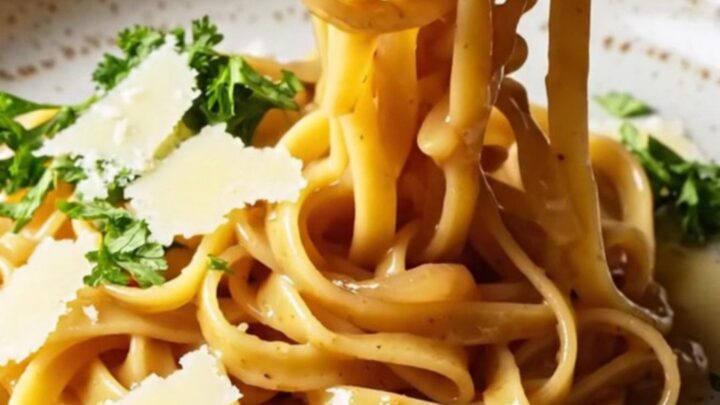
- Finish and ServeRemove the pan from the heat. Sprinkle with freshly chopped parsley and a squeeze of fresh lemon juice. Twirl the pasta into nests on warm plates or a large serving bowl. Top with shaved Parmesan and serve immediately.Look for The parsley adds a fresh green contrast and the lemon brightens the rich sauce. The cheese shavings melt slightly on contact.Tip Add the lemon just before serving—it should be a bright note, not a sour one. Twirl high for a beautiful presentation.
The pasta should be evenly coated in the glossy sauce, with no dry strands and no puddle of liquid in the pan. The parsley and lemon should add fresh color and a bright aroma. When you twirl the pasta, it should hold its shape and the sauce should cling. The shaved Parmesan on top should be just starting to soften.
Common mistakes
The most common mistake is rushing the onions—cooking them over high heat burns them before they caramelize. Keep the heat at medium and stir occasionally. Another issue is a broken or greasy sauce, which happens when the cream is boiled too hard or the cheese is added too quickly.
Simmer gently and whisk constantly. Skipping the pasta water makes the sauce thin and slippery; the starch is essential for a clingy emulsion. Finally, overcooking the pasta leads to a mushy dish, so cook it just until al dente.
How to tell it’s done
The dish is done when the pasta is al dente—tender but with a slight bite—and the sauce has thickened enough to coat the back of a spoon. When you toss the pasta, the sauce should cling to every strand without pooling at the bottom of the pan.
The onions should be deeply caramelized, with a rich amber color and a sweet, nutty aroma. Taste a strand: the sauce should be silky, savory, and bright with a hint of lemon.
Up next · Part 3 of 3
4 variations · storage & make-ahead · 5 answers · printable card
Tips, FAQ & printable recipe (Part 3)← Back to the ingredients (Part 1)