Dinner · Part 1 of 3: Ingredients
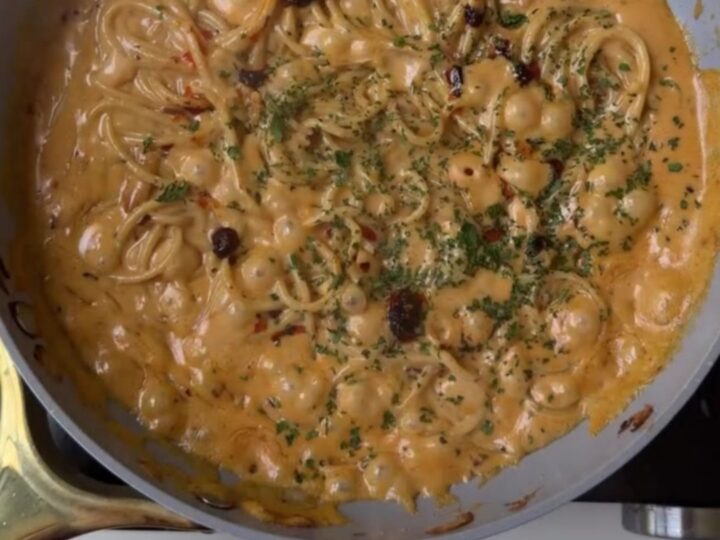
Caramelized Onion Garlic Butter Spaghetti
- Prep
- Cook
- Total
- Serves
- 4
This is the spaghetti that tastes like a slow Sunday, but comes together on a busy Tuesday. Sweet, jammy caramelized onions melt into a golden garlic butter sauce, and a splash of starchy pasta water turns it all into a glossy emulsion that clings to every strand.
Finished with a mountain of parmesan and fresh parsley, it’s the kind of comfort dinner that feels both simple and special.
There are pasta dishes that rely on a long list of ingredients, and then there are those that prove a few humble things done right can be extraordinary. This caramelized onion and garlic butter spaghetti belongs to the second camp. The onions are cooked low and slow until they turn deeply sweet and almost spreadable, then garlic and chili flakes bloom in the same pan.
A cup of starchy pasta water brings everything together into a silky, emulsified sauce that coats each strand without heaviness. It’s a weeknight dinner that tastes like you spent hours, but the active time is surprisingly short. Serve it with a green salad and a glass of something crisp, and dinner feels like an event.
Ingredients
- 12 oz spaghetti
- 2 yellow onions, thinly sliced
- 3 tbsp unsalted butter, divided
- 1 tbsp olive oil
- 1/2 tsp kosher salt, plus more for pasta water
- 6 cloves garlic, thinly shaved
- 1/4 tsp red chili flakes
- 1 cup starchy pasta water, reserved
- 1 cup freshly grated parmesan cheese
- 1/4 cup fresh parsley, chopped
Why this recipe works
Caramelizing the onions slowly is what gives this dish its deep, sweet, almost meaty flavor. Cooking them over medium heat with a little salt draws out their moisture and lets their natural sugars brown and develop complex notes.
Rushing this step leads to bitter, uneven onions; patience yields a jammy, melting texture that forms the backbone of the sauce. The butter and olive oil combination also helps the onions cook evenly and adds richness without burning.
The pasta water is the secret to the glossy, clingy sauce. As the spaghetti cooks, it releases starch into the water, and that starch acts as an emulsifier when whisked with the butter and cheese.
The result is a sauce that coats every strand rather than pooling at the bottom of the bowl. Adding the parmesan off the heat prevents it from clumping, while the residual heat melts it into the emulsion for a silky finish.
Notes and substitutions
Choose yellow onions for their balance of sweetness and sharpness; they caramelize reliably and develop a deep amber color. Sweet onions like Vidalia also work and will be even sweeter. Slice them thinly and uniformly so they cook evenly. The salt added at the beginning helps draw out moisture, which speeds up caramelization and seasons the onions from within.
Use a good-quality parmesan and grate it yourself; pre-grated cheese often contains anti-caking agents that can make the sauce grainy. The same goes for the parsley: fresh, chopped just before serving, adds a bright, herbal note that cuts through the richness. If you like heat, keep the chili flakes, but adjust the amount to your tolerance.
- spaghetti: Use any long pasta like linguine, fettuccine, or bucatini. Adjust cooking time according to package.
- yellow onions: Sweet onions like Vidalia or Walla Walla work well and caramelize even sweeter.
- unsalted butter: Salted butter can be used; reduce added salt to 1/4 tsp and season to taste at the end.
- parmesan: Pecorino Romano adds a sharper, saltier flavor. Use half pecorino and half parmesan if preferred.
Equipment
- Large skillet
- Large pot for pasta
- Colander
- Measuring cups and spoons
- Chef's knife
- Cutting board
- Wooden spoon or tongs
Up next · Part 2 of 3
6 steps · 25 min of cooking · what to look for at each stage
Step-by-step instructions (Part 2)