Desserts · Part 2 of 3: Instructions
Caramelized Brown Butter Pumpkin Basque Cheesecake Step-by-step instructions
- Prep
- Cook
- Total
- Serves
- 10
Before you start
Before you begin, ensure your workspace is clear and that all ingredients are measured and ready. Take the cream cheese out of the refrigerator at least an hour before you start to allow it to soften completely.
Preheat your convection oven to 425°F (218°C) so it is fully ready for the high-heat bake. Prepare your 9-inch springform pan by lining it with two sheets of parchment paper, pressing them into the bottom and up the sides so they overlap and extend at least two inches above the rim.
Ingredients at a glance (7)
- 400 g pumpkin puree
- 750 g cream cheese, softened
- 80 g unsalted butter, browned
- 220 g maple sugar
- 5 large eggs
- 2 tsp pumpkin pie spice
- 1 cup maple bourbon chantilly cream, for serving
Instructions
Creating the Spiced Base
- Prepare the Brown Butter and BaseIn a small saucepan over medium heat, melt the butter until it turns golden brown and smells like toasted hazelnuts. Remove from heat immediately. In a large mixing bowl, whisk together the softened cream cheese, pumpkin puree, maple sugar, and pumpkin pie spice until smooth. Gradually incorporate the cooled brown butter into the pumpkin mixture while whisking constantly to ensure a uniform, silky consistency that will provide the base for the cheesecake structure.Look for The butter smells nutty and appears deep golden brown.Tip Ensure the cream cheese is at room temperature to avoid lumps in the batter.
The base is ready when the cream cheese, pumpkin, and spices are fully emulsified into a smooth, thick custard. The brown butter should be fully incorporated, giving the batter a warm, amber hue and a rich, nutty aroma. Check that there are no visible lumps of cream cheese remaining in the bowl, as these will affect the final texture of the baked cheesecake once it has cooled.
High Heat Baking
- Incorporate Eggs and BakeAdd the eggs one at a time to the pumpkin base, whisking gently until just combined. Line a 9-inch springform pan with double parchment paper extending above the rim. Pour in the batter and bake in a preheated convection oven at 425°F (218°C) for 30 minutes until deeply caramelized. Ensure the center reaches 160°F (71°C) to cook the eggs completely.Look for The top is dark mahogany and the center still has a slight jiggle.Safe temperature 160°F (71°C) internal temperature (egg dishes)Tip The parchment paper provides the signature rustic look of the Basque style.
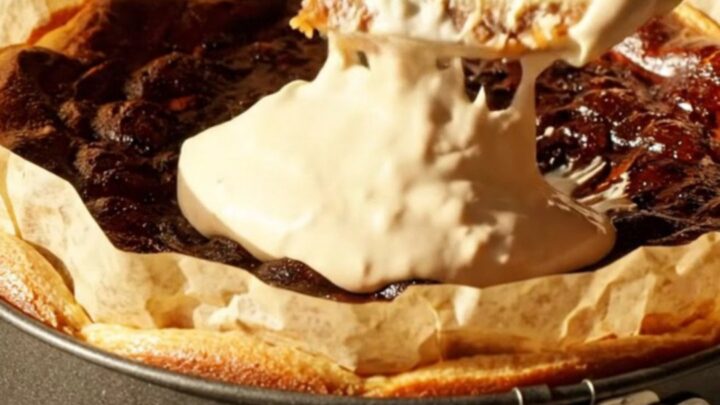
The cheesecake is ready to come out of the oven when the top has developed a dark, charred mahogany appearance, signaling that the sugars have caramelized perfectly.
The edges should be set and slightly puffed, while the center should still retain a soft, custardy wobble. This visual contrast between the dark top and the creamy, pale center is the hallmark of a successfully baked Basque-style cheesecake.
Resting and Serving
- Cool and ServeRemove the cheesecake from the oven and allow it to rest at room temperature for at least one hour to set the custard properly. Once cooled, release the springform pan and remove the parchment. Slice the cheesecake into wedges and serve with a generous dollop of maple bourbon chantilly cream to balance the intensity of the caramelized top and the earthy pumpkin notes within the custard.Look for The cheesecake is firm enough to slice cleanly but remains creamy inside.Tip Serve slightly warm or at room temperature for the best texture.
The cheesecake is ready to serve once it has cooled to room temperature and the center has firmed up into a delicate, spoonable consistency. It should look rustic and slightly sunken in the center, which is typical for this style. When sliced, the interior should be smooth and creamy, with the charred edges providing a textural contrast to the soft, spiced pumpkin custard.
Common mistakes
A common mistake is using cold cream cheese, which leads to lumps in the batter that will not bake out. Another frequent error is overmixing the eggs; whisk only until just combined to keep the texture dense and creamy.
Avoid opening the oven door too frequently during the baking process, as this causes temperature fluctuations that can prevent the signature char on top. Finally, do not rush the cooling process, as the cheesecake needs time to firm up before it can be sliced.
How to tell it’s done
The cheesecake is done when the top has turned a deep, dark mahogany color and the center still has a slight, soft jiggle when the pan is gently shaken. It should not be completely firm like a standard cake.
The internal temperature of the custard should reach 160°F (71°C) to ensure the eggs are fully cooked. Allow it to rest at room temperature for at least one hour; this cooling period is crucial for the custard to set into its final, velvety consistency.
- Egg dishes: 160°F (71°C) in the thickest part
Up next · Part 3 of 3
2 variations · storage & make-ahead · 3 answers · printable card
Tips, FAQ & printable recipe (Part 3)← Back to the ingredients (Part 1)