Breakfast · Part 2 of 3: Instructions
Caramel Pecan Sticky Buns in One Pan, Ready in About an Hour Step-by-step instructions
- Prep
- Cook
- Total
- Serves
- 8
Before you start
Gather the cinnamon brioche rolls, a chilled block of caramel, the pecans, butter, confectioners' sugar, milk, and vanilla. Heat the oven to 350°F (175°C) and set a rack in the middle position. Brush the round metal pan with melted butter so nothing sticks, and place the box grater, serrated knife, and wooden board within reach.
Keep the caramel cold until you grate it, because chilled caramel forms neat shavings that melt into an even layer. Sift the confectioners' sugar now so the glaze comes together quickly once the buns are out of the oven. Have oven mitts ready, since the pan and the caramel will be very hot when the buns come out.
Ingredients at a glance (7)
- 8 cinnamon brioche rolls, store-bought or made ahead
- 4 oz block of caramel, chilled for grating
- 1 cup pecan halves, plus more for topping
- 2 tbsp unsalted butter, melted, for greasing the pan
- 1 cup confectioners' sugar, sifted
- 2 tbsp whole milk, plus more as needed
- 1/2 tsp vanilla extract
Instructions
Slice, grate, and layer
- Slice the cinnamon brioche rollsPlace the cinnamon brioche rolls on a wooden board. Using a serrated knife, slice them so the spiral centers show, keeping each roll intact enough to sit cut side up. Work gently so the cinnamon sugar stays in the swirls and the rolls keep their shape.Look for Cut faces show clear cinnamon swirls and the rolls hold together without crumbling.Tip A serrated knife cuts soft brioche cleanly without squashing the spirals.
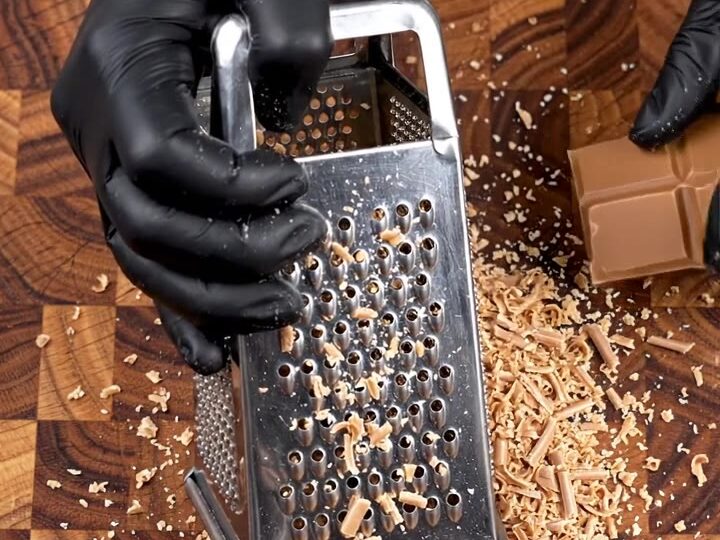
- Grate the caramelHold the chilled block of caramel against the fine side of a box grater. Grate it over a plate or the board so the fine amber shavings fall evenly. Keep the grated caramel cold until you are ready to use it.Look for Fine amber shavings fall in a loose, even layer without clumping.Tip Chilling the caramel firms it up and keeps it from smearing on the grater.
- Prepare the pan with caramel and pecansBrush the round metal pan with the melted butter. Scatter the grated caramel evenly over the bottom, then add the pecan halves across it. Spread them so the base is covered and the rolls will sit on a bed of nuts and caramel.Look for The base is covered in an even layer of amber shavings and pecan halves.Tip Keep a little space between pecans so the caramel can flow around them.
After the first phase, the rolls are sliced with their spirals showing, the caramel is grated into fine amber shavings, and the bottom of the pan is covered in an even layer of caramel and pecan halves. The shavings should look loose and dry rather than clumped, and the pecans should be spread across the base without bare spots.
Check that the pan is buttered at the edges so the caramel will bubble up cleanly. Before moving on, make sure every part of the base is covered, because any gaps will show as dry patches once the rolls are baked and flipped.
Arrange and bake the rolls
- Arrange the rolls in a ringPlace the cut brioche rolls cut side up in a ring over the caramel and pecans. Nestle them closely together so they fill the pan and rise into one another. Add a few extra pecan halves on top of each spiral before baking.Look for The rolls sit snugly in a tight ring, touching one another, with pecans resting on the spirals.Tip A tight ring keeps the buns soft and makes them easier to pull apart later.
- Bake until golden and bubblingBake the rolls on the middle rack until they turn golden brown and the caramel bubbles around the edges of the pan. Check the rolls at the end of baking, when they should look glossy and set. Remove the pan from the oven and let the rolls rest briefly.Look for Golden brown tops with caramel bubbling at the edges of the pan.Tip If the tops darken before the centers are done, cover them loosely with foil.
At the end of the second phase, the rolls sit in a tight ring over the caramel, cut side up, with pecan halves resting on each spiral. As the buns bake, the tops should turn golden brown and the caramel should bubble visibly around the edges of the pan. The kitchen will smell of toasted sugar, butter, and cinnamon. Before you move on, lift the foil or check the oven for color, and confirm the caramel is melted and bubbling all the way around. The buns should look set and glossy rather than pale or doughy.
Glaze and finish the buns
- Make the white glazeIn a small bowl, whisk the sifted confectioners' sugar with the whole milk and vanilla extract. Add more milk, one teaspoon at a time, until the glaze is thick but still pourable and smooth.Look for The glaze is smooth and falls from the whisk in a steady ribbon.Tip Add milk gradually, since a little too much turns the glaze thin quickly.
- Drizzle the warm bunsWhile the rolls are still warm, drizzle the white glaze generously over them so it pools between the buns and into the gaps. Gently separate and adjust the rolls with your hands so the caramel and icing coat each spiral.Look for The glaze pools between the rolls and runs into the spirals, staying glossy.Tip Warm buns absorb the glaze better, so drizzle as soon as they leave the oven.
By the end of the third phase, the glaze is smooth, thick, and pourable, and it has been drizzled over the warm rolls so it pools between them and runs into the gaps. The buns should look glossy, with the caramel and icing coating the spirals evenly. Gently separate and adjust the rolls with your hands while the icing is still soft, so the buns look neat on the serving plate. Before serving, check that the glaze has set into a thin, shiny coat and that no part of the tray looks dry or pale.
Common mistakes
The most common mistake is grating the caramel too warm, which makes it clump and smear instead of forming shavings. Chill the block before grating and keep the shavings spread evenly across the pan. Another frequent problem is leaving gaps between the rolls. Nestle them tightly so they rise together and keep their shape.
Do not skip the buttered pan, because the caramel can stick and burn at the edges if it is not greased. Finally, avoid drizzling the glaze over cold buns, which causes it to sit on top instead of soaking into the spirals. Add milk slowly to the glaze so it stays thick enough to pool without running off the sides.
How to tell it’s done
The buns are ready when the tops are golden brown and the caramel is bubbling around the edges of the round pan. The rolls should look set and glossy, not pale or doughy in the center. Gently press the middle of a roll with a fingertip: it should feel springy and soft rather than sunken.
The caramel should be melted and fluid, and the pecans should look toasted. Because this recipe contains no meat, poultry, eggs in the raw form, or seafood, there is no internal protein temperature to check. Cool the buns for a few minutes before glazing so the icing sets into a glossy coat.
Up next · Part 3 of 3
4 variations · storage & make-ahead · 5 answers · printable card
Tips, FAQ & printable recipe (Part 3)← Back to the ingredients (Part 1)