Desserts · Part 2 of 3: Instructions
Caramel Macchiato Espresso Mascarpone Cheesecake Step-by-step instructions
- Prep
- Cook
- Total
- Serves
- 12
Before you start
Before starting, bring the cream cheese, mascarpone, and eggs to room temperature. Crush the espresso beans using a rolling pin or food processor.
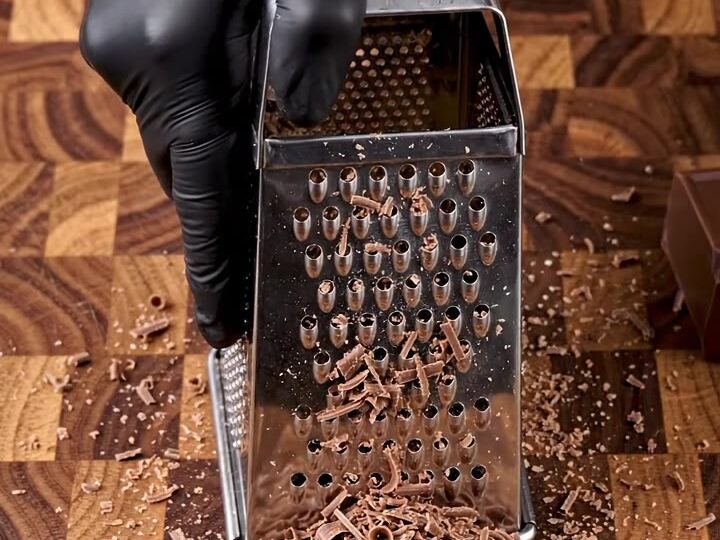
Dice the caramel squares into small, uniform pieces. Grate the dark chocolate on a box grater and set aside. Preheat the oven to 325°F (163°C). Have ready a 9-inch springform pan and a baking sheet.
Ingredients at a glance (12)
- 1/2 cup espresso beans, crushed
- 1 cup golden caramel squares, diced
- 4 oz dark coffee-coverture chocolate, grated
- 32 oz cream cheese, softened
- 1 cup mascarpone cheese
- 1 1/4 cups granulated sugar
- 4 large eggs
- 2 tbsp espresso powder
- 1 tsp vanilla extract
- 1 cup salted caramel sauce, divided
- 1 cup heavy cream
- 2 tbsp confectioners' sugar
Instructions
Prepare the Crunchy Toppings
- Prepare the Crunchy ToppingsCrush the espresso beans with a rolling pin or in a food processor until they are coarse crumbs. Dice the golden caramel squares into small pieces. Grate the dark coffee-coverture chocolate on a box grater into a fine pile of espresso chocolate shavings. Set all three aside in separate bowls.Look for The espresso beans are crushed but not powdery; the caramel squares are small and uniform; the chocolate shavings are fine and fluffy.Tip Chill the chocolate block for 10 minutes before grating to prevent it from melting on your hands.
- Make the Crust BaseIn a small bowl, combine the crushed espresso beans and diced caramel squares. Press the mixture evenly into the bottom of a 9-inch springform pan. Use the bottom of a measuring cup to compact it firmly. Place the pan in the refrigerator while preparing the filling.Look for The crust is evenly distributed and compacted, with no gaps.Tip Line the bottom of the pan with parchment paper for easier release.
At the end of this phase, you should have a bowl of crushed espresso beans, a bowl of diced caramel squares, and a bowl of fine chocolate shavings. The espresso beans should be coarse, not powdery, and the caramel squares should be small and uniform. The chocolate shavings should be light and fluffy.
Make the Cheesecake Batter and Bake
- Make the Espresso Mascarpone BatterIn a large bowl, beat the softened cream cheese and mascarpone cheese with an electric mixer until smooth and creamy. Add the granulated sugar and beat until light and fluffy. Add the eggs one at a time, beating well after each addition. Mix in the espresso powder and vanilla extract until fully incorporated.Look for The batter is smooth, creamy, and free of lumps, with a light coffee aroma.Tip Use room-temperature ingredients to ensure a smooth, lump-free batter.
- Pour and Swirl the BatterPour the cheesecake batter over the prepared crust in the springform pan. Smooth the top with a spatula. Dollop half of the salted caramel sauce across the surface in small spoonfuls. Use a knife or skewer to swirl the caramel into the batter, creating ribbons throughout.Look for The caramel is swirled into the batter, forming marbled ribbons without being fully mixed.Tip Do not over-swirl; you want distinct ribbons of caramel for a marbled effect.
- Bake the CheesecakePlace the springform pan on a baking sheet. Bake in a preheated oven at 325°F (163°C) for 55-65 minutes, until the edges are set and the center is slightly moist but not liquid. Turn off the oven and leave the cheesecake inside with the door ajar for 1 hour. Then remove and cool completely on a wire rack.Look for The edges are puffed and set, the center is moist and slightly glossy, and the top is lightly golden.Safe temperature 160°F (71°C) internal temperature (egg dishes)Tip Use a water bath if you prefer a softer, more custardy texture, but ensure the pan is well wrapped to prevent leaks.
- Chill the CheesecakeOnce the cheesecake has cooled to room temperature, refrigerate it for at least 4 hours, preferably overnight, until fully chilled and set. This step is essential for clean slicing and the best texture.Look for The cheesecake is firm to the touch and cold throughout.Tip Chill the cheesecake for at least 6 hours for the best texture and flavor.
The batter should be smooth and creamy, with no lumps. After swirling in the caramel, the top should show distinct ribbons. During baking, the edges will set and puff, while the center remains moist. The cheesecake should be cooled gradually and then chilled until completely firm.
Decorate and Serve
- Make the Whipped CreamIn a chilled bowl, beat the heavy cream and confectioners' sugar with an electric mixer until stiff peaks form. Transfer the whipped cream to a piping bag fitted with a star tip.Look for The whipped cream holds stiff peaks and is glossy.Tip Chill the bowl and beaters for a few minutes to help the cream whip faster.
- Decorate and ServeRemove the cheesecake from the springform pan. Pipe whipped cream rosettes around the top edge. Drizzle the remaining salted caramel sauce over the top. Sprinkle generously with the grated espresso chocolate shavings. Slice a thick triangular wedge and lift it onto a metal cake server to serve.Look for The cheesecake is beautifully decorated with rosettes, caramel drizzle, and chocolate shavings; the slice holds its shape.Tip Use a warm knife to slice cleanly; wipe the knife between cuts.
The cheesecake should be fully chilled and firm. The whipped cream rosettes should hold their shape, and the caramel drizzle should be smooth and glossy.
The chocolate shavings should be sprinkled generously over the top. When sliced, the cheesecake should hold its shape and reveal the caramel swirls.
Common mistakes
One common mistake is overmixing the batter, which incorporates too much air and can cause cracks. Another is overbaking, which dries out the cheesecake.
To avoid cracks, do not open the oven door while baking, and cool the cheesecake gradually. Also, ensure the crust is firmly pressed to prevent crumbling when slicing.
How to tell it’s done
The cheesecake is done when the edges are set and puffed, and the center is moist but not liquid. It should jiggle slightly in the center when the pan is tapped, but the top should not be wet.
An instant-read thermometer inserted into the center should read at least 160°F (71°C). After baking, cool gradually in the oven with the door ajar to prevent cracking.
- Egg dishes: 160°F (71°C) in the thickest part
Up next · Part 3 of 3
4 variations · storage & make-ahead · 5 answers · printable card
Tips, FAQ & printable recipe (Part 3)← Back to the ingredients (Part 1)