Desserts · Part 2 of 3: Instructions
Caramel Macchiato Espresso Cheesecake with Mascarpone and Biscuit Base Step-by-step instructions
- Prep
- Cook
- Total
- Serves
- 12
Before you start
Gather every ingredient and tool before you start, because the cheesecake moves quickly from base to filling to baking. Set the mascarpone and cream cheese on the counter for at least one hour so they soften fully and blend without lumps. Brew the espresso and let it cool completely, since warm coffee can thin the filling and cause it to split.
Chop the roasted coffee beans finely on the wooden cutting board, crush the spiced biscuit cookies and the block of caramel, and grate the dark chocolate into fine shavings. Melt the butter and let it cool slightly. Preheat the oven to 300°F (150°C) and wrap the outside of the springform pan in aluminum foil.
Ingredients at a glance (16)
- 2 tbsp roasted coffee beans, chopped
- 12 oz spiced biscuit cookies, crushed
- block of caramel, crushed into pieces, to taste
- 6 tbsp unsalted butter, melted
- 2 oz dark chocolate, for grating
- 24 oz mascarpone cheese, at room temperature
- 8 oz cream cheese, at room temperature
- 3/4 cup granulated sugar
- 1/4 cup strong espresso, cooled
- 3 large eggs
- 1 tsp vanilla extract
- 1/2 cup caramel sauce, for swirling
- 1/2 cup caramel sauce, warmed, for glazing
- 1 1/2 cups cold heavy cream
- 2 tbsp confectioners' sugar
- ground coffee, for dusting, to taste
Instructions
Base and filling ready
- Chop the coffee beansPlace the roasted coffee beans on a wooden cutting board and chop them finely with a chef's knife. Set them aside for the garnish. Wear food-safe gloves if you prefer to keep your hands clean while working with the crumbs.Look for Pieces should be coarse and crunchy, with no whole beans left.Tip Rock the knife over the beans in a steady rhythm to keep the pieces even.
- Crush the cookies and caramelPlace the spiced biscuit cookies on the board and crush them with the flat of the knife or a rolling pin until they form fine crumbs. Crush the block of caramel into small pieces the same way, then reserve a few pieces for the topping.Look for Crumbs should be sandy and uniform, with a few larger pieces of caramel.Tip Crush the cookies in a sealed bag first if the board gets sticky from the caramel.
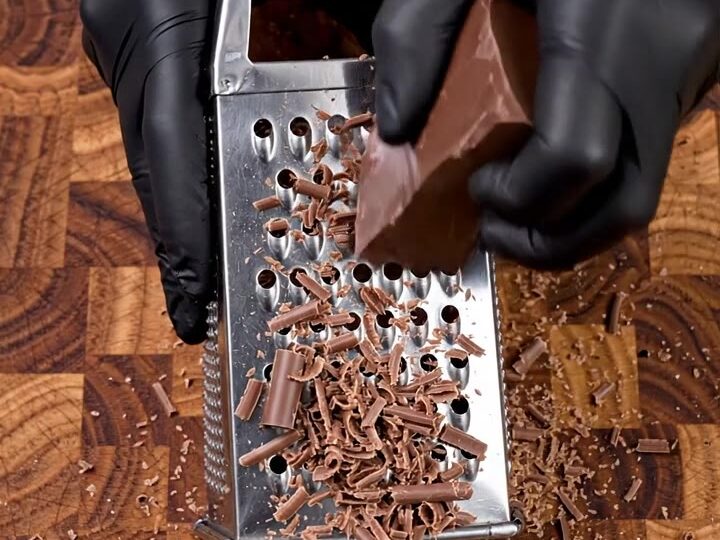
- Grate the dark chocolateHold a block of dark chocolate against the fine side of a box grater and grate it over the board. Let the shavings fall onto the work surface so they scatter, then set aside a generous pinch for finishing.Look for Shavings should be fine and feathery, falling in loose curls.Tip Chill the chocolate for 10 minutes first so it grates cleanly without melting.
At the end of the first phase, the biscuit crumbs should be finely crushed and fully coated with butter, pressed into the springform pan and chilled. The mascarpone filling should be smooth, glossy and free of lumps, with the espresso and vanilla fully blended in. The eggs should be mixed in without leaving streaks.
The caramel sauce should be thick enough to hold spiral swirls on the surface. Check the base for an even layer with no thin spots, because a loose base can crumble when sliced. Also confirm that the filling has no pale patches of cheese, which means the mixture still needs more time on medium speed.
Baked and fully chilled
- Make the biscuit baseStir the crushed biscuit crumbs with the melted butter in a bowl until evenly moistened. Press the mixture firmly and evenly into the bottom of a 9-inch springform pan, then chill the crust while you make the filling.Look for The crumbs should clump when squeezed and hold their shape.Tip Use the flat bottom of a measuring cup to press the base firmly.
- Beat the mascarpone fillingBeat the mascarpone and cream cheese in a stand mixer on medium speed until smooth. Add the sugar, cooled espresso and vanilla extract, and mix until combined. Add the eggs one at a time on low speed, mixing only until each is blended.Look for The filling should be smooth, glossy and pale tan, with no lumps of cheese.Tip Scrape the bowl often so the cheese blends evenly and no streaks remain.
- Layer and swirl the caramelSpread the mascarpone filling over the chilled biscuit base until level. Drizzle the caramel sauce in spiral swirls across the top of the filling. Use a toothpick to pull the caramel gently through the filling without mixing it in completely.Look for Caramel should form visible spirals on the filling, not disappear into it.Tip Keep the caramel sauce slightly thick so the swirls hold their shape.
- Bake and chill until setWrap the bottom of the springform pan in aluminum foil and set it in a larger pan. Bake at 300°F (150°C) until the edges are set and the centre barely wobbles, then turn off the oven, crack the door and let it cool inside for one hour. Refrigerate for at least 6 hours.Look for The edges look set and the centre gently jiggles when the pan is shaken.Tip Set the springform pan in a water bath to keep the surface smooth and crack-free.
At the end of the second phase, the cheesecake should have a set edge and a centre that barely moves when the pan is gently shaken. The surface should look smooth and pale, with caramel spirals still visible. After the oven is turned off and the door is cracked, the cheesecake should cool slowly without cracking. Once refrigerated for at least six hours, the filling should feel firm and cut cleanly with a sharp knife. Check that the top has no dark or dry patches, which signal over-baking, and that the sides have pulled very slightly away from the pan.
Glazed and garnished
- Release and glaze the cheesecakeRun a thin knife around the edge of the pan, then release the springform ring. Warm the caramel sauce gently until pourable and pour it over the top, letting it drip down the sides. Refrigerate the cheesecake for 15 minutes so the glaze sets.Look for The glaze should look glossy and flow evenly over the edges.Tip Set the cheesecake on a cake board so you can move it easily.
- Pipe the cream and finishWhip the cold heavy cream with the confectioners' sugar until stiff peaks form. Pipe rosettes around the top edge of the cheesecake with a star tip. Scatter the grated dark chocolate, chopped coffee beans, crushed caramel and a dusting of ground coffee over the surface before serving.Look for Cream should hold firm peaks and keep its shape when piped.Tip Keep the cream very cold and pipe the rosettes just before serving.
At the end of the final phase, the caramel glaze should be glossy and smooth, dripping evenly down the sides of the cheesecake without pooling on the board. The whipped cream should hold firm, defined peaks, and the rosettes around the top edge should keep their shape when piped. The grated chocolate, chopped coffee beans and ground coffee should be scattered across the surface in an even layer, with no bare patches. Check the cream and the glaze for temperature before serving, since warm caramel softens cream quickly. Slice the cheesecake only after the glaze has set and the cream is firm.
Common mistakes
The most common mistake is adding warm espresso or warm melted butter to the filling, which thins the mixture and can cause it to split or bake unevenly. Another frequent problem is overbeating the mascarpone and eggs, which introduces air and makes the cheesecake puff, then crack as it cools.
Cracks also appear when the oven runs too hot or when the cheesecake cools too quickly after baking. Letting the crust sit uncooled or unchilled before adding the filling can cause the base to soften and mix with the cream. Pressing the biscuit crumbs too lightly can leave gaps that crumble when sliced.
How to tell it’s done
The cheesecake is done when the outer edges look set and the centre barely wobbles when the pan is gently shaken, similar to the way a custard moves. It should not look liquid or runny in the middle. Because this cheesecake contains eggs, cook it at a low temperature until the filling is moist, tender and just set, then let it cool slowly in the oven before refrigerating it for at least six hours.
The chilled slice should hold its shape, cut cleanly and show a smooth, creamy texture with distinct layers of biscuit base, filling and caramel. The glaze should be glossy and the cream should keep firm peaks. If the centre still moves much more than a gentle wobble, bake for a few more minutes and check again.
Up next · Part 3 of 3
4 variations · storage & make-ahead · 5 answers · printable card
Tips, FAQ & printable recipe (Part 3)← Back to the ingredients (Part 1)