Desserts · Part 2 of 3: Instructions
Caramel Macchiato Espresso Mascarpone Cheesecake with Salted Caramel Step-by-step instructions
- Prep
- Cook
- Total
- Serves
- 12
Before you start
Gather everything before you start, because the batter comes together quickly once the dairy is soft. Set the cream cheese, mascarpone and eggs out at room temperature for about one hour. Crush the espresso beans coarsely in a food processor or inside a resealable bag with a rolling pin, and dice the caramel squares into small pieces.
Brew the espresso and let it cool completely. Wrap the outside of a 9-inch springform pan with foil if you plan to use a water bath. Chill the dark coffee chocolate block so it grates into fine shavings. Heat the oven to 325°F (163°C) and set a rack in the center position. Line a baking sheet under the pan to catch any drips.
Ingredients at a glance (15)
- 2 tbsp espresso beans, coarsely crushed
- 6 golden caramel squares, finely diced
- 1 1/2 cups graham cracker crumbs
- 6 tbsp unsalted butter, melted
- 24 oz cream cheese, softened
- 8 oz mascarpone cheese, at room temperature
- 1 cup granulated sugar
- 3 large eggs, at room temperature
- 2 tbsp brewed espresso, cooled
- 1/2 cup sour cream
- 1/2 cup salted caramel sauce, store-bought or made ahead
- 1 cup heavy cream, cold
- 2 tbsp confectioners' sugar
- 2 oz dark coffee-coverture chocolate block, chilled
- 1/4 tsp kosher salt
Instructions
Crust, batter and bake
- Prepare the crust and toppingsHeat the oven to 325°F (163°C). Crush the espresso beans coarsely, dice the caramel squares, and mix the crumbs with melted butter and salt. Press the crust firmly into the base of a 9-inch springform pan and chill while you make the batter.Look for The crumbs hold together when pinched and look evenly moistened.Tip Press the crust with the bottom of a measuring cup for a firm, even base.
The crust is firm and evenly pressed, the batter is smooth and glossy with caramel swirled through it, and the cheesecake is baked when the edges look set and the center moves only slightly. Before you move on to chilling, check that the top is pale golden and unbroken.
Let it cool gradually in the turned-off oven with the door cracked open, then chill it fully. Check the surface again before you add the toppings so the whipped cream sits neatly on a firm, cool base.
Whipped cream and toppings
- Mix the espresso mascarpone batterBeat the cream cheese, mascarpone and sugar until smooth. Add the eggs one at a time on low speed, then mix in the cooled espresso and sour cream. Pour the batter over the crust, dot the surface with salted caramel, and swirl gently with a knife.Look for The batter is smooth, glossy and free of lumps.Tip Beat on low speed after adding the eggs to avoid trapping air in the batter.
- Bake until just setBake the cheesecake for about 55 to 65 minutes, until the edges are set and the center barely wobbles. Turn off the oven, crack the door, and let it cool inside for one hour before chilling at least six hours.Look for The edges look set and the center jiggles only slightly when the pan is moved.Safe temperature 160°F (71°C) internal temperature (egg dishes)Tip Set a pan of hot water on the lower rack to keep the top from cracking.
The whipped cream holds stiff peaks that stand upright on the whisk and feel smooth rather than grainy. The chilled cheesecake has firmed completely, so the rosettes sit cleanly on top. The salted caramel is warm and pourable, not hot, so it drizzles in ribbons without melting the cream. The chocolate shavings are fine and crisp when grated from the cold block. Check each element before you assemble so the final layers stay distinct.
Slice and serve
- Whip the cream and chillWhip the cold heavy cream with the confectioners' sugar until stiff, glossy peaks form. Chill until ready to pipe. Remove the sides of the pan and set the cheesecake on a serving plate.Look for Peaks stand upright and hold their shape on the whisk.Tip Chill the bowl and whisk beforehand for faster, firmer whipped cream.
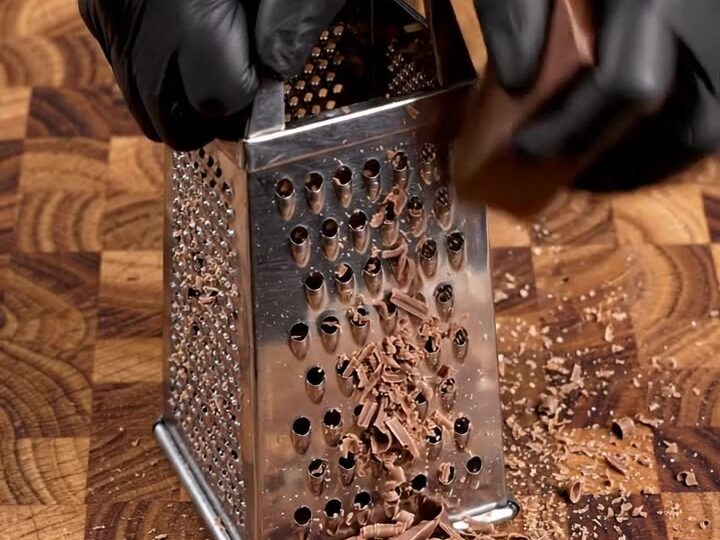
- Pipe, drizzle and shavePipe whipped cream rosettes around the edge of the cheesecake. Warm the salted caramel sauce briefly and drizzle it over the top. Grate the chilled dark coffee-coverture chocolate on a box grater and scatter the fine shavings over the cream.Look for The rosettes hold their swirl and the caramel runs in ribbons.Tip Grate the chocolate straight from the fridge so it shaves into fine, crisp curls.
- Slice and serveDip a long knife in hot water and wipe it dry between cuts. Slice a thick triangular wedge, then lift it onto a plate with a metal cake server to show the tall layers of cheesecake, caramel and cream.Look for Clean cuts reveal distinct layers of crust, batter and caramel.Tip Hot, dry knife cuts keep the caramel ribbons and cream rosettes intact.
The cheesecake has chilled for at least six hours and feels firm when the sides are touched. The toppings are in place and the caramel has cooled slightly so it clings to the cream. Use a hot, dry knife and wipe it between cuts, then lift the thick triangular wedge onto a plate with a metal cake server. The layers of crust, filling and caramel should look distinct and clean.
Common mistakes
The most common problem is a cheesecake that cracks across the top, which usually comes from over-baking or from cooling it too quickly. Pull it from the oven as soon as the edges are set and the center still trembles slightly, then cool it gradually. Another frequent issue is a lumpy batter, caused by cold cream cheese or mascarpone; soften both fully before mixing.
Beating on high speed after the eggs are added traps air that rises and sinks in the oven, so keep the mixer on low. Pouring the caramel on the warm batter without a gentle swirl can leave a pool at the bottom, so swirl with a single knife pass. Finally, cutting a cold cheesecake with a dull or unheated knife tears the layers, so warm the blade and wipe it clean between slices.
How to tell it’s done
The cheesecake is done when the outer two inches look set and matte, and the center wobbles slightly when the pan is gently nudged, much like a just-set custard. For a more precise check, a probe thermometer inserted near the center should read about 150°F (66°C), and the eggs in the batter should reach 160°F (71°C) to be cooked through.
Once cooled and chilled, the filling becomes firm enough to hold a clean wedge. If the center still looks liquid after the full baking time, bake for another five minutes and check again. Avoid baking until the top browns, since that makes the texture dry and grainy.
- Egg dishes: 160°F (71°C) in the thickest part
Up next · Part 3 of 3
4 variations · storage & make-ahead · 5 answers · printable card
Tips, FAQ & printable recipe (Part 3)← Back to the ingredients (Part 1)