Desserts · Part 2 of 3: Instructions
Caramel Apple Turnovers: Flaky Puff Pastry Hand Pies in Under an Hour Step-by-step instructions
- Prep
- Cook
- Total
- Serves
- 6
Before you start
Thaw the puff pastry in the refrigerator overnight, or at room temperature for about 30 minutes until it is cool but pliable. Keep it cold, because cold pastry puffs higher in the oven. Chill the caramel block for 10 minutes so it grates cleanly. Heat the oven to 400°F (200°C) and line a baking tray with parchment paper. Set out a cutting board, a sharp knife, a box grater, a fork, a pastry brush and a small bowl for the egg wash. Have the warm caramel sauce ready on the stove or in the microwave so it can be drizzled the moment the turnovers come out of the oven.
Ingredients at a glance (7)
- 2 fresh red apples, peeled and cut into small cubes
- 1/4 cup packed brown sugar
- 1 block of caramel, chilled and grated on a box grater, store-bought or made ahead
- 1 sheet store-bought puff pastry, thawed and cut into 6 squares
- 1 egg, beaten with 1 tbsp water, for brushing
- 1/2 cup warm caramel sauce, store-bought or made ahead
- flaky salt, for sprinkling, to taste
Instructions
Filling and pastry squares ready
- Dice the apples and sugarPeel the red apples and cut them into small, even cubes on a wooden cutting board. Place the cubes in a bowl and toss them with the brown sugar so the fruit is evenly coated and ready to fill the pastry.Look for Small, even cubes with a sugared, slightly damp surface.Tip Keep the cubes small so the apples cook through in the same time the pastry takes to brown.
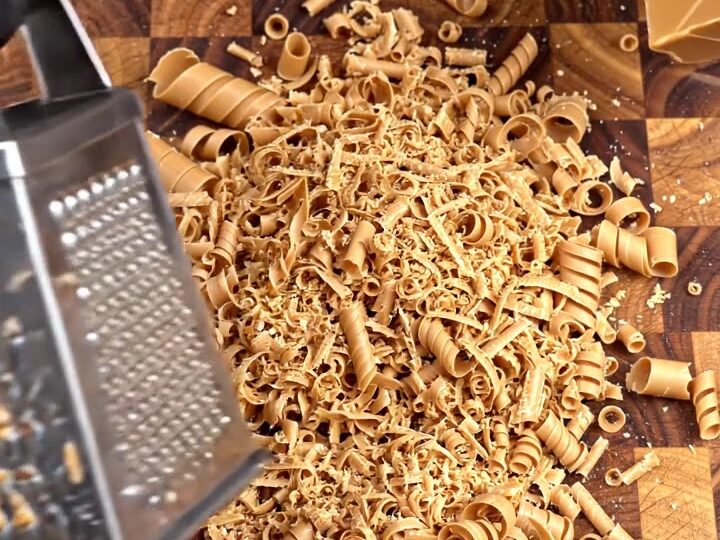
- Grate the caramel blockSet the chilled block of caramel on the box grater and grate it over the cutting board. The caramel falls as thin curly shavings, which you scatter over the apples and sugar so they melt into the filling.Look for Fine, curly shavings that separate easily from the grater.Tip Chill the caramel for 10 minutes first so it grates cleanly instead of smearing.
- Shape the pastry squaresUnroll the puff pastry and cut it into 6 equal squares. Lay them on the parchment-lined baking tray, leaving space between each one, and spoon an equal portion of the apple and caramel mixture into the center of each square.Look for Six even squares, each with a mound of filling in the center.Tip Leave a 1-inch border of bare pastry around the filling so the edges seal well.
The apples are cut into small, even cubes and tossed with brown sugar, so the fruit looks lightly glossy and coated. The caramel has been grated into fine, curly shavings that scatter loosely over the board rather than clumping. The puff pastry is cut into six equal squares and laid on the parchment with space between them.
Each square holds a mound of filling in the center with a clean border of bare pastry around it. Check that the pastry still feels cool and firm before you fold, because warm pastry will soften and lose its layers. If it has become sticky or soft, return the tray to the refrigerator for 10 minutes before continuing.
Folded, sealed and baked
- Fold and seal the edgesFold each square over the filling to form a triangle or rectangle. Press the edges together with the tines of a fork, then score a crisscross pattern across the top of each turnover to let steam escape during baking.Look for Edges pressed firmly, with a clear crisscross pattern on top.Tip Press gently so the pastry seals without tearing; a fork pattern is also a good seal.
- Brush and bakeHeat the oven to 400°F (200°C). Beat the egg with the water and brush the top of each turnover. Bake for 20 to 25 minutes, until the pastry is deep golden brown and puffed and the filling bubbles at the scores.Look for Deep golden crust, fully puffed, with bubbling filling at the scores.Tip Rotate the tray halfway through baking for an even color on every turnover.
Each turnover is folded into a neat triangle or rectangle with the edges pressed closed by the tines of a fork. The crisscross scores are clear across the top, and the egg wash gives the surface an even sheen. After 20 to 25 minutes in the oven, the pastry should be deep golden brown and visibly puffed, with the filling bubbling gently through the score marks.
Give the tray a half-turn halfway through baking to even the color. If the edges are browning faster than the tops, cover them loosely with a strip of foil. Remove the turnovers only when both the crust and the sugar at the seams look fully set and caramelized.
Glazed, salted and ready
- Cool, drizzle and serveLet the turnovers rest on the tray for 10 minutes so the filling sets. Drizzle each one with warm caramel sauce, then sprinkle a pinch of flaky salt over the top before serving.Look for Glossy caramel drizzle that stays on the crust and a crisp, flaky top.Tip Warm the caramel sauce gently so it pours in a smooth ribbon.
After resting on the tray for 10 minutes, the turnovers should hold their shape and the filling should look thick and glossy rather than runny. The warm caramel sauce should pour in a smooth ribbon across the crust and stay in place without running off the sides. The flaky salt should sit in small crystals on the top, catching the light. Check that the pastry is still crisp at the base when you lift one turnover with a spatula. If the base feels soft, return the turnovers to the oven for 3 to 5 minutes before serving, so the pastry crisps evenly and the caramel stays warm and pourable.
Common mistakes
The most common problem is a soggy base. This usually happens when the filling is too wet or the pastry is warm when it is folded. Dice the apples small, toss them with the sugar, and let the pastry stay cold until you fold it. Another frequent mistake is overfilling. A generous spoonful is enough; too much filling pushes against the seal, causing leaks and sticky spills on the tray.
Skipping the crisscross scores can also cause the pastry to burst open, because steam has no way to escape. Finally, do not cut into the turnovers or drizzle the sauce straight from the oven, since the filling is still very hot and will run out of the pastry. Let them rest for 10 minutes first so the filling thickens and the caramel stays in place.
How to tell it’s done
The turnovers are done when the pastry is deep golden brown across the top and sides, fully puffed and crisp when lightly pressed. The filling should bubble gently through the crisscross scores and look soft, glossy and tender when a knife tip is pushed into a cut.
Pastry that looks pale or feels doughy in the center needs a few more minutes in the oven. Since the filling is cooked apples and caramel, there is no protein temperature to check. Use a knife to test the apple cubes at the seam; they should be soft but still hold their shape, and the caramel should be fully melted and smooth against the fruit.
Up next · Part 3 of 3
4 variations · storage & make-ahead · 5 answers · printable card
Tips, FAQ & printable recipe (Part 3)← Back to the ingredients (Part 1)