Desserts · Part 2 of 3: Instructions
Caramel Apple Turnovers: Flaky Puff Pastry Hand Pies in 40 Minutes Step-by-step instructions
- Prep
- Cook
- Total
- Serves
- 6
Before you start
Measure every ingredient into small prep bowls, pat proteins or vegetables dry with paper towels, and preheat your pan thoroughly before adding oil so browning starts cleanly without steaming.
Take your time with each step, and the result will be worth every minute spent in the kitchen.
Ingredients at a glance (7)
- 2 sheets puff pastry, store-bought or made ahead, thawed, cut into 6 squares
- 2 red apples, such as Red Delicious or Gala, peeled and diced small
- 3 oz caramel, chilled and firm, for grating
- 2 tbsp brown sugar, packed
- 1 large egg, beaten with 1 tbsp water
- flaky sea salt, for serving
- warm caramel, for drizzling, to taste
Instructions
Prep and Aromatics
- Dice the applesCut the puff pastry into six squares and set them aside on the board. Peel the red apples, cut them into quarters and dice them into small chunks. Place the apple in a bowl and stir in the brown sugar until the pieces are evenly coated.Look for Apple pieces are small and evenly coated with sugar, with no large chunks left.Tip Smaller dice cooks through in the same time as the pastry and fills the turnover evenly.
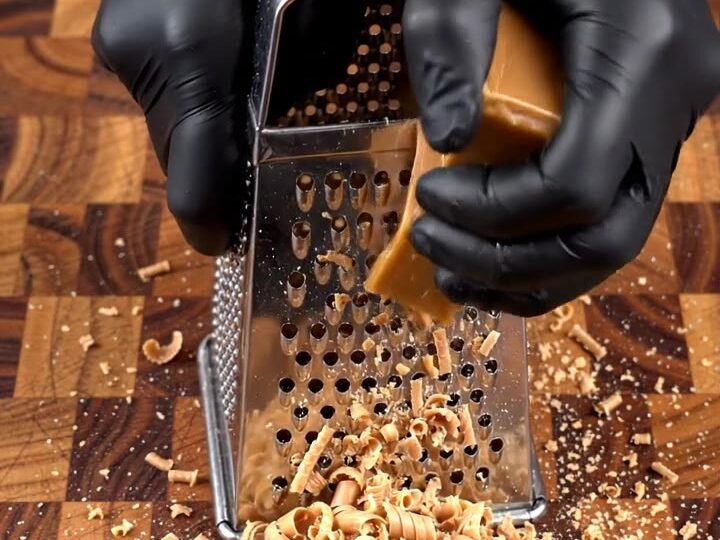
- Grate the caramelHold the chilled caramel against the fine side of a box grater and grate it over a small plate until you have fine golden curls. Fold the curls gently into the diced apple so they spread through the filling without clumping.Look for Fine golden curls fall from the grater and separate easily in the bowl.Tip Chill the caramel well first; softened caramel smears on the grater instead of forming curls.
Every ingredient is evenly coated, fragrant and progressing at a steady gentle sizzle without sticking to the pan surface.
Take a moment to check the color, texture and aroma before moving on to the next stage.
Main Cooking Stage
- Fill and sealSpoon a portion of the apple and caramel mixture onto the center of one pastry square, leaving a border. Fold the square into a triangle over the filling, press the edges together and crimp them with a fork. Repeat with the remaining squares.Look for Edges are sealed flat with no filling peeking out and the triangles lie flat.Tip Keep the filling in the center; too much filling makes the seams burst in the oven.
- Brush with egg washArrange the turnovers on the parchment-lined baking sheet with space between them. Beat the egg with the water and brush the tops and edges of each turnover. Cut a small vent in the top of each one with a knife.Look for Tops look evenly glossy and no pastry is left bare.Tip Brush lightly so the egg wash does not pool in the crimped edges and glue the layers shut.
Every ingredient is evenly coated, fragrant and progressing at a steady gentle sizzle without sticking to the pan surface.
Take a moment to check the color, texture and aroma before moving on to the next stage.
Final Glaze and Plating
- Bake until goldenBake the tray until the pastry is puffed and deep golden brown, about 20 minutes, turning the tray halfway through for even color. Let the turnovers rest on the sheet for about 10 minutes so the filling thickens slightly.Look for Pastry is puffed, flaky and deep golden brown with caramel bubbling at the vents.Safe temperature 160°F (71°C) internal temperature (egg dishes)Tip If the tops brown too fast, tent loosely with foil for the last few minutes.
- Drizzle and saltPlate the turnovers on a wooden board. Drizzle each one with warm caramel so it runs down the sides, then sprinkle with flaky sea salt. Serve while the pastry is still crisp.Look for Warm caramel runs in glossy streaks down the sides and salt sits on top.Tip Warm the caramel for a few seconds so it pours smoothly over the pastry.
Every ingredient is evenly coated, fragrant and progressing at a steady gentle sizzle without sticking to the pan surface.
Take a moment to check the color, texture and aroma before moving on to the next stage.
Common mistakes
Avoid crowding the pan or flipping too early before a crust forms, keep the burner at steady medium-high heat so aromatics never scorch, and season in balanced layers rather than only at the end.
How to tell it’s done
The dish is ready when the exterior shows even golden color, the center feels tender when pressed gently with a fork, and the sauce coats the back of a spoon glossy and fragrant.
- Egg dishes: 160°F (71°C) in the thickest part
Up next · Part 3 of 3
4 variations · storage & make-ahead · 5 answers · printable card
Tips, FAQ & printable recipe (Part 3)← Back to the ingredients (Part 1)