Desserts · Part 1 of 3: Ingredients
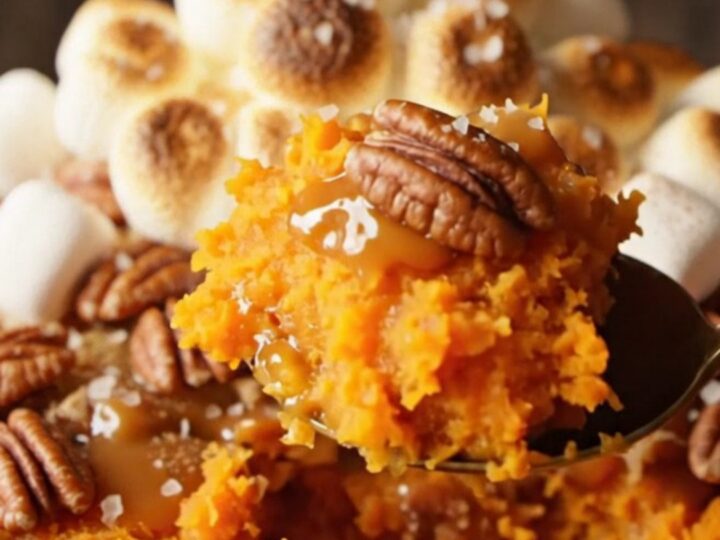
Candied Pecan Sweet Potato Casserole with Torched Marshmallows
- Prep
- Cook
- Total
- Serves
- 8
This sweet potato casserole is the side dish that steals the entire holiday table. Velvety roasted sweet potatoes are whipped with nutty browned butter, dark brown sugar, and warm spices, then crowned with candied pecans and a blanket of marshmallows that are torched until blistered and golden.
The contrast of creamy, crunchy, and gooey textures makes every spoonful irresistible. It is simple enough for a weeknight but stunning enough for Thanksgiving.
Sweet potato casserole is a beloved holiday classic, but this version takes it to the next level. The sweet potatoes are roasted until deeply caramelized, then whipped with brown butter and a touch of spice for a silky, fragrant base.
A layer of pecans adds crunch, while marshmallows are baked and then torched to create a dramatic, smoky-sweet crust. The result is a side dish that feels both nostalgic and exciting, with a texture that ranges from creamy to crispy to gooey in every bite.
Ingredients
- 800 g garnet sweet potatoes
- 60 g browned butter
- 50 g dark brown sugar
- 1 tsp Ceylon cinnamon
- 1/4 tsp nutmeg
- 100 g pecans
- 150 g mini marshmallows
- flaky sea salt, for serving
Why this recipe works
Roasting the sweet potatoes whole concentrates their natural sugars and deepens their flavor, giving the casserole a caramel-like sweetness that boiling or steaming cannot match.
The dry heat of the oven also removes excess moisture, so the mash stays thick and velvety rather than watery. Whipping the potatoes with browned butter adds a nutty, toasty note that echoes the pecans and makes the dish taste more complex.
Torching the marshmallows after baking creates a caramelized crust with a smoky edge that you cannot achieve in the oven alone. The blowtorch gives you control, allowing you to blister the marshmallows in spots while leaving others soft and gooey. This technique produces a visually striking topping with a range of textures, from crisp and crackly to pillowy and melted.
Notes and substitutions
Garnet sweet potatoes are ideal here because they are moist, orange-fleshed, and naturally sweet. If you cannot find them, Jewel or other orange-fleshed varieties work well. The browned butter adds a rich, nutty flavor; to make it, melt unsalted butter in a saucepan over medium heat and cook until the milk solids turn golden brown and smell fragrant, then remove from the heat immediately.
The pecans are used whole, but you can roughly chop them if you prefer smaller pieces. Mini marshmallows melt more evenly than large ones, so stick with them if possible.
Flaky sea salt is important for finishing—it cuts the sweetness and adds a pleasant crunch. If you do not have a blowtorch, you can place the casserole under a broiler for 1-2 minutes, watching carefully, to achieve a similar effect.
- garnet sweet potatoes: Jewel or other orange-fleshed sweet potatoes work well; their color and sweetness are similar.
- browned butter: Regular unsalted butter can be used, but browning adds a nutty depth that complements the pecans.
- Ceylon cinnamon: Regular ground cinnamon can be substituted; use a slightly smaller amount if it is strong.
- mini marshmallows: Regular marshmallows cut into quarters work, but mini ones melt more evenly.
Equipment
- Large pot
- Potato masher or electric mixer
- 9x13-inch ceramic or glass baking dish
- Kitchen blowtorch
- Measuring spoons
- Rubber spatula
Up next · Part 2 of 3
3 steps · 50 min of cooking · what to look for at each stage
Step-by-step instructions (Part 2)