Dinner · Part 2 of 3: Instructions
One-Pan Cajun Shrimp and Dirty Rice Skillet Step-by-step instructions
- Prep
- Cook
- Total
- Serves
- 4
Before you start
Before starting the skillet, slice the sausage into uniform rounds so they brown evenly across the pan surface. Peel, devein, and pat the shrimp thoroughly dry with clean paper towels, as removing surface moisture allows for a proper sear rather than steaming.
Measure out the prepared dirty rice so it is ready to be folded into the skillet as soon as the proteins reach their proper temperatures.
Ingredients at a glance (3)
- 1 lb andouille sausage, sliced into rounds
- 1 lb large shrimp, peeled and deveined
- 4 cups dirty rice, cooked (store-bought or made ahead)
Instructions
Searing the sausage
- Sear the sausageHeat a large cast-iron skillet over medium-high heat. Add the sliced andouille sausage and cook until browned and slightly crispy on both sides, ensuring the fat renders out to provide a flavorful base for the dish. Cook the meat thoroughly until an internal thermometer registers at least 160°F (71°C).Look for Sausage is browned and fat is rendered.Safe temperature 160°F (71°C) internal temperature (ground meat)Tip Do not crowd the pan; work in batches if necessary for a better sear.
The sausage rounds should be richly browned with crisp edges, sizzling actively in the bottom of the pan.
A generous layer of golden, seasoned fat should coat the cast-iron skillet, creating an aromatic base filled with savory spices. Verify that the meat is firm and sizzling before moving on to cooking the seafood in the same skillet.
Cooking the shrimp
- Cook the shrimpAdd the peeled shrimp directly to the hot skillet with the rendered sausage fat. Sauté for 2 to 3 minutes, turning once, until the shrimp turn opaque, pink, and reach an internal temperature of at least 145°F (63°C). Take care not to overcook them so they stay juicy.Look for Shrimp are opaque, pink, and firm.Safe temperature 145°F (63°C) internal temperature (shellfish)Tip Watch the shrimp closely as they cook very quickly.
The shrimp must turn fully pink and opaque throughout, with slight golden edges from the rendered sausage fat. They should feel tender yet springy when pressed, curling into gentle curves rather than tight, hard circles. Confirm that they have reached an internal temperature of 145°F (63°C) before tossing in the dirty rice.
Heating the rice
- Combine and heat throughAdd the prepared dirty rice into the skillet with the cooked sausage and shrimp. Gently fold everything together over medium heat for about 3 to 5 minutes, allowing the seasoned rice to absorb the savory pan drippings and warm completely through before serving.Look for Rice is steaming hot and thoroughly mixed.Tip Stir gently to avoid breaking apart the tender shrimp.
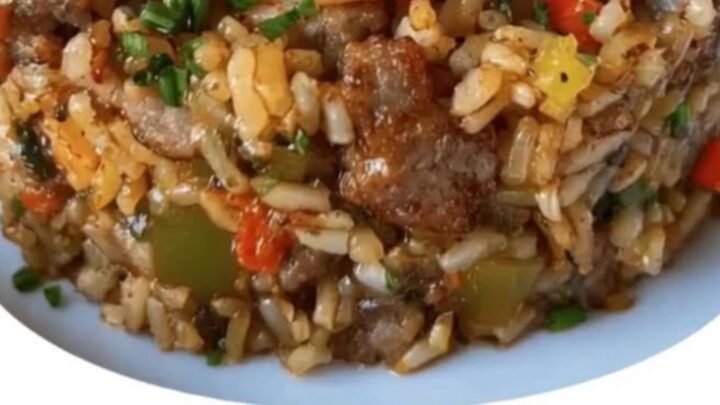
The dirty rice should be thoroughly steaming, with every grain separated, glossy, and evenly coated in the pan drippings. There should be no cold pockets in the center of the skillet. The sausage and shrimp ought to be evenly dispersed throughout the dark, flavorful rice, producing a mouthwatering aroma.
Common mistakes
A common mistake is adding the shrimp too early or leaving them over high heat for too long, which results in tough, rubbery shellfish. Keep a close eye on their color and remove the skillet from high heat as soon as they turn pink.
Another misstep is overloading a cold pan; make sure the skillet is properly heated before adding ingredients so everything sears instead of boiling in released liquids.
How to tell it’s done
The dish is fully ready when the rice is steaming hot and evenly distributed among the meats. The sausage must reach an internal temperature of at least 160°F (71°C) after browning thoroughly.
The shrimp should curl into loose C-shapes, turn completely pink and opaque, and register a safe internal temperature of 145°F (63°C). The entire skillet should be fragrant and steaming throughout.
- Ground meat: 160°F (71°C) in the thickest part
- Shellfish: 145°F (63°C) in the thickest part
Up next · Part 3 of 3
2 variations · storage & make-ahead · 3 answers · printable card
Tips, FAQ & printable recipe (Part 3)← Back to the ingredients (Part 1)