Dinner · Part 2 of 3: Instructions
Cajun Chicken with Creamy Cajun Alfredo Penne Step-by-step instructions
- Prep
- Cook
- Total
- Serves
- 4
Before you start
Before beginning the cooking process, organize all ingredients and equipment to ensure a smooth workflow. Measure out the Cajun seasoning, Alfredo sauce, and mozzarella cheese into separate bowls. Chop the fresh parsley and set it aside.
Pat the chicken breasts dry with paper towels and place them on a clean cutting board, ready for seasoning. Fill a large pot with water for the penne pasta and set it on the stove. Having everything prepped prevents any risk of burning the spices or overcooking the chicken.
Ingredients at a glance (7)
- 1 1/2 lb boneless, skinless chicken breasts
- 2 tbsp Cajun seasoning, divided
- 2 tbsp unsalted butter
- 12 oz penne pasta
- 1 1/2 cups Alfredo sauce
- 1 cup shredded mozzarella cheese
- 2 tbsp chopped fresh parsley
Instructions
Searing and Resting the Chicken
- Season and sear the chickenPat the chicken breasts dry with paper towels and season them evenly on both sides with one tablespoon of the Cajun seasoning. Heat the butter in a large skillet over medium-high heat. Add the chicken breasts and sear until they are beautifully browned, about 5 to 7 minutes per side.Look for The chicken should develop a deep, golden-brown crust.Tip Avoid moving the chicken too much during the first few minutes to ensure a good sear.
- Finish cooking and rest the chickenReduce the heat to medium and continue cooking the chicken until the internal temperature reaches 165°F (74°C) at the thickest part. Transfer the chicken to a cutting board, cover loosely with foil, and let it rest for 5 minutes before slicing into strips.Look for The juices should run clear when the chicken is pierced.Safe temperature 165°F (74°C) internal temperature (poultry)Tip Resting the chicken keeps it incredibly juicy and prevents the juices from running out when sliced.
At the end of this phase, the chicken breasts should display a deep, golden-brown crust from the caramelized Cajun spices. The kitchen will fill with a rich, smoky aroma of sizzling butter and spices. When pierced with a meat thermometer at the thickest point, the internal temperature must read 165°F (74°C). After resting, the meat will be tender and easy to slice into clean, juicy strips.
Cooking Pasta and Simmering Sauce
- Boil the penne pastaWhile the chicken cooks, bring a large pot of salted water to a boil. Add the penne pasta and cook according to the package directions until al dente, about 10 to 12 minutes. Drain the pasta, reserving half a cup of pasta water, and set aside.Look for The pasta should be tender but still have a slight bite.Tip Never rinse the pasta after draining; the starch helps the sauce cling to it.
- Simmer the creamy Cajun Alfredo sauceIn the same skillet used for the chicken, pour in the Alfredo sauce and the remaining Cajun seasoning. Bring to a gentle simmer over medium heat, scraping up the browned bits from the bottom. Stir in the mozzarella cheese until melted and velvety.Look for The sauce should be smooth, thick, and bubbly.Tip Whisk constantly while adding the cheese to prevent clumping.
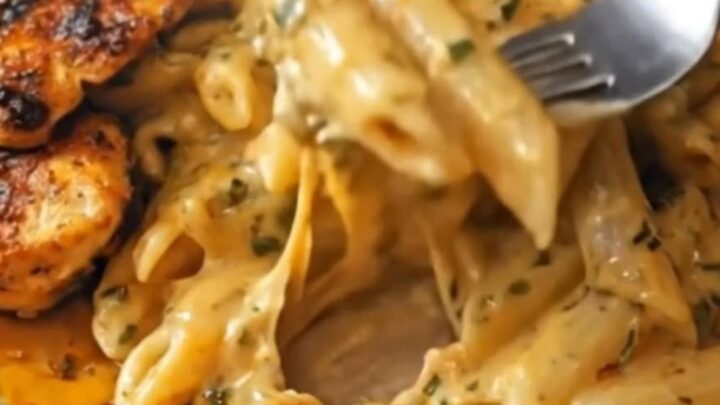
The penne pasta should be cooked to a perfect al dente texture, holding its shape without being mushy. In the skillet, the Alfredo sauce and cheese mixture will have transformed into a thick, bubbling, and velvety orange-hued sauce. The cheese should be completely melted, creating a smooth consistency that coats the back of a spoon and exhibits a dramatic, stretchy cheese pull when lifted.
Combining and Plating
- Combine and garnishAdd the cooked penne pasta and fresh parsley to the skillet with the velvety spiced Alfredo sauce. Toss well to coat the pasta evenly, adding a splash of the reserved pasta water if the sauce is too thick. Slice the rested Cajun chicken and serve it alongside or on top of the warm, creamy pasta.Look for The pasta should be completely coated in a rich, glossy sauce with a distinct cheese pull.Tip Serve immediately while the cheese is hot and stretchy.
The final dish presents a beautiful harmony of colors and textures. The warm penne pasta is completely enveloped in the glossy, spiced Alfredo sauce, with flecks of bright green parsley distributed throughout.
Slices of the seared Cajun chicken rest elegantly alongside or on top of the pasta, showing off their juicy interior and dark, seasoned exterior. The pasta clings together with a rich cheese pull as it is plated.
Common mistakes
One common mistake is cooking the chicken over heat that is too high, which burns the Cajun spices before the center of the meat reaches a safe internal temperature. To avoid this, maintain a medium-high heat for the initial sear, then lower the heat to medium to finish cooking.
Another frequent error is adding the cheese to boiling sauce, which causes the sauce to split and become greasy. Always lower the heat before stirring in the mozzarella.
How to tell it’s done
Determining the perfect doneness for this dish involves checking both the chicken and the pasta. The chicken is cooked safely and remains juicy when a digital meat thermometer inserted into the thickest part reads exactly 165°F (74°C).
The penne pasta is done when it reaches an al dente state, meaning it is cooked through but still offers a firm, pleasant bite. The sauce is ready when it is thick enough to coat a spoon.
- Poultry: 165°F (74°C) in the thickest part
Up next · Part 3 of 3
2 variations · storage & make-ahead · 3 answers · printable card
Tips, FAQ & printable recipe (Part 3)← Back to the ingredients (Part 1)