Dinner · Part 2 of 3: Instructions
Cajun Blackened Chicken and Andouille Skillet Step-by-step instructions
- Prep
- Cook
- Total
- Serves
- 4
Before you start
Before starting, make sure all your ingredients are prepped and within reach. Slice the Andouille sausage, coat the chicken thighs with Cajun seasoning, and dice the onion, celery, and bell pepper.
Have the dark roux and chicken stock measured out. Cook the white rice according to package directions, or use leftover rice. The skillet will go fast once you start cooking, so having everything ready ensures a smooth process.
Ingredients at a glance (10)
- 8 oz smoked Andouille sausage, sliced
- 4 boneless chicken thighs
- 2 tbsp Cajun seasoning
- 1 medium onion, diced
- 2 stalks celery, diced
- 1 medium green bell pepper, diced
- 2 tbsp dark roux
- 1 cup chicken stock
- 2 cups cooked white rice, for serving
- 2 tbsp sliced scallions, for serving
Instructions
Prep and Sear
- Prep the IngredientsSlice the smoked Andouille sausage into 1/4-inch rounds. Coat the chicken thighs evenly with the Cajun seasoning, rubbing it into both sides. Dice the onion, celery, and green bell pepper into small, uniform pieces; set the trinity aside.Look for The chicken is well coated and the trinity is diced small.Tip Keep the chicken and sausage cold while prepping the vegetables.
- Heat the SkilletPlace a large cast iron skillet over medium-high heat and let it get hot, about 2 minutes. Add the sliced Andouille sausage in a single layer. Sear without moving for 2 minutes until browned on the bottom, then flip and cook 1 minute more. Transfer the sausage to a plate, leaving the drippings in the skillet.Look for The sausage is browned and the skillet has rendered fat.Tip Don't crowd the pan; work in batches if needed.
At the end of this phase, the sausage is browned and the chicken is cooked through. The skillet should have a rich, brown fond on the bottom, and the kitchen will smell of smoked sausage and spices.
The chicken should be deeply blackened in spots and reach 165°F (74°C) internally. Set the meat aside and get ready to build the sauce.
Trinity and Roux
- Sear the ChickenAdd the seasoned chicken thighs to the hot skillet, skin-side down if applicable. Cook undisturbed for 4-5 minutes until deeply browned and blackened in spots. Flip and cook another 4-5 minutes until the chicken reaches 165°F (74°C) in the thickest part. Transfer to the plate with the sausage.Look for The chicken is deeply browned and cooked through.Safe temperature 165°F (74°C) internal temperature (poultry)Tip Use tongs to flip gently to keep the coating intact.
- Cook the TrinityReduce the heat to medium. Add the diced onion, celery, and green bell pepper to the same skillet. Cook, stirring occasionally, for 4-5 minutes until the vegetables soften and begin to brown, scraping up any browned bits from the bottom of the pan.Look for The vegetables are softened and fragrant.Tip Let the vegetables sit for a minute before stirring to get a nice fond.
- Add the RouxSprinkle the dark roux over the vegetables and stir to coat. Cook for 1-2 minutes, stirring constantly, until the roux is well incorporated and the mixture smells nutty and toasted.Look for The roux is fully blended and the mixture is thick.Tip Keep stirring to prevent the roux from burning.
The trinity is softened and beginning to caramelize, and the roux has turned the mixture into a thick, nutty paste. The vegetables should be coated in the dark roux, and the raw onion smell should be gone, replaced by a toasty aroma. The roux should be fully incorporated without any lumps, and the mixture should be sizzling gently.
Simmer and Serve
- Simmer the SaucePour in the chicken stock and stir to combine, scraping up any browned bits. Bring the mixture to a simmer. Return the browned chicken and sausage to the skillet, nestling them into the sauce. Reduce the heat to low, cover, and simmer for 10 minutes, allowing the flavors to meld and the sauce to thicken slightly.Look for The sauce is bubbling gently and the chicken is coated.Safe temperature 165°F (74°C) internal temperature (poultry)Tip Simmer gently to keep the chicken tender.
- Check the ChickenAfter simmering, check that the chicken is fully cooked by inserting an instant-read thermometer into the thickest part; it should register 165°F (74°C). If not, continue simmering for another 2-3 minutes.Look for The thermometer reads 165°F (74°C).Safe temperature 165°F (74°C) internal temperature (poultry)Tip If the sauce gets too thick, add a splash of stock or water.
- Serve Over RiceSpoon the smoky chicken and sausage mixture over cooked white rice. Garnish with sliced scallions and serve hot.Look for The dish is steaming and fragrant.Tip Spoon extra sauce over the rice for more flavor.
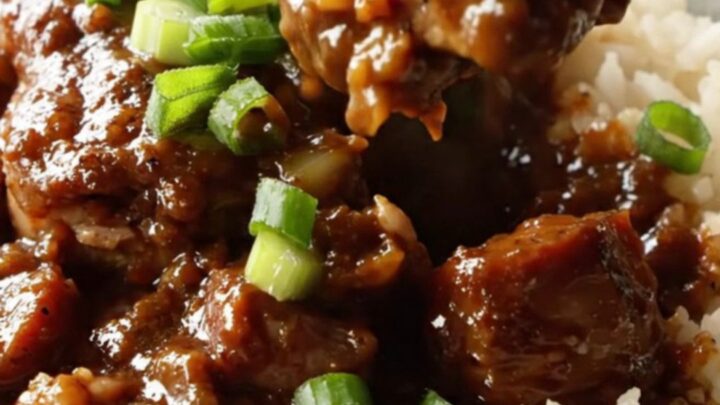
The sauce is bubbling gently and has thickened into a rich, glossy gravy. The chicken and sausage are bathed in the sauce, and the flavors have melded into a smoky, spicy whole. The rice is fluffy and ready, and the scallions add a fresh, bright finish. The dish is ready to serve, with the sauce coating every bite.
Common mistakes
One common mistake is overcrowding the skillet when browning the sausage and chicken. If you add too much at once, the pan cools and the meat steams instead of searing, resulting in less flavor. Work in batches if necessary.
Another pitfall is burning the roux—stir constantly and keep the heat at medium. If the roux burns, it will taste bitter; start over if that happens. Finally, don't skip the simmering step; it allows the flavors to meld and the sauce to thicken properly.
How to tell it’s done
The chicken is done when an instant-read thermometer inserted into the thickest part registers 165°F (74°C). The sauce should be thickened and coating the back of a spoon.
The sausage and chicken should be deeply browned, and the sauce should be bubbling gently. Taste and adjust seasoning with salt and pepper if needed. Serve immediately over rice for the best texture and flavor.
- Poultry: 165°F (74°C) in the thickest part
Up next · Part 3 of 3
4 variations · storage & make-ahead · 5 answers · printable card
Tips, FAQ & printable recipe (Part 3)← Back to the ingredients (Part 1)