Dinner · Part 2 of 3: Instructions
Buttery Garlic Herb Salmon: A Quick and Elegant Dinner Step-by-step instructions
- Prep
- Cook
- Total
- Serves
- 2
Before you start
Before you begin, ensure all your ingredients are measured and ready to go. The cooking process moves rapidly once the pan is heated, so having your minced garlic, chopped fresh herbs, and dried salmon fillets at hand is essential.
Ensure your skillet is clean, and have your metal spatula and basting spoon nearby. Organizing your workstation prevents the butter from burning while searching for utensils.
Ingredients at a glance (4)
- 2 salmon fillets, about 6 ounces each
- 3 tbsp butter
- 3 cloves garlic, minced
- 1 tbsp fresh herbs, chopped
Instructions
Drying and prep
- Prepare the salmonPat the salmon fillets completely dry with paper towels to ensure a clean, crisp sear in the pan.Look for The surface of the fish should look dry and matte before it touches the pan.Tip Dry fillets prevent excess moisture from steaming the fish instead of browning it.
The salmon fillets should be completely dry to the touch on all surfaces. Moisture on the exterior will cause splattering and prevent proper searing. The workstation should be fully prepped with measured butter, garlic, and herbs placed next to the stove before any heat is applied.
Searing and butter infusion
- Sear the filletsHeat a large skillet over medium-high heat. Place the fillets in the hot pan skin-side down first. Cook until the bottom is golden brown and releases easily.Look for The edges of the salmon will begin to turn opaque as heat moves upward.Tip Avoid moving the fish until it releases naturally from the surface.
- Melt the garlic herb butterFlip the fillets carefully. Add the butter to the skillet, allowing it to melt completely. Stir in the minced garlic and fresh herbs, letting them infuse the bubbling butter.Look for The butter will foam vigorously and smell intensely fragrant.Tip Keep the heat controlled so the garlic softens without turning dark brown.
The bottom crust of the salmon should be golden brown and release easily from the skillet surface before flipping.
Once inverted and the butter is added, the pan should fill with bubbling, foaming butter and fragrant aromas of lightly softened garlic and herbs without any signs of browning smoke.
Basting and resting
- Baste and finishTilt the skillet slightly and use a spoon to continuously bathe the salmon in the hot garlic herb butter. Cook until the fish reaches an internal temperature of 145°F (63°C). Remove from heat and rest for 3 minutes before serving.Look for The fillets will be tender, flaking gently when pressed.Safe temperature 145°F (63°C) internal temperature (fish)Tip Basting transfers heat evenly and keeps the top surface thoroughly moist.
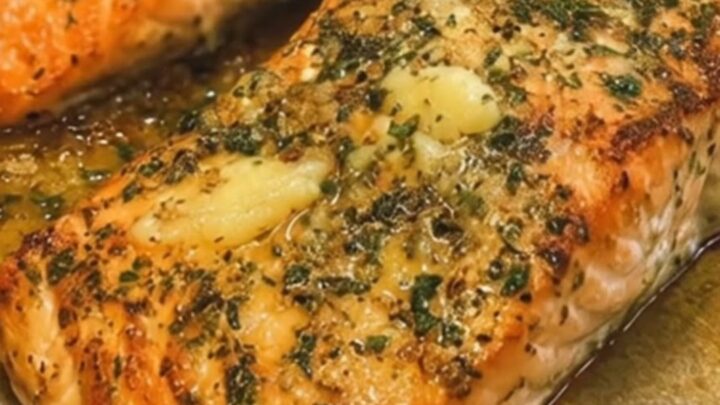
The hot garlic herb butter should coat the entire surface of each fillet in a glossy sheen. The flesh should be firm yet yielding, reaching the safe internal temperature of 145°F (63°C). After resting off the heat for three minutes, no excess juices should rapidly pool out.
Common mistakes
A common mistake is placing damp fillets into the skillet, which causes the fish to steam rather than develop a golden crust. Another error is introducing the garlic too early or over excessive heat, resulting in bitter, scorched bits in the sauce.
Keep the pan at medium heat once the butter is added, and continuously spoon the liquid over the fish rather than letting it scorch on the pan surface.
How to tell it’s done
To verify that the salmon is safely and properly cooked, ensure the internal temperature reaches 145°F (63°C) at the thickest part of the fillet. Visually, the flesh should turn opaque and flake easily when nudged with a fork or spatula.
Allowing the fish to rest for three minutes after cooking redistributes the natural juices throughout the fillet, guaranteeing tender, succulent flakes from edge to center.
- Fish: 145°F (63°C) in the thickest part
Up next · Part 3 of 3
2 variations · storage & make-ahead · 3 answers · printable card
Tips, FAQ & printable recipe (Part 3)← Back to the ingredients (Part 1)