Desserts · Part 2 of 3: Instructions
Butterscotch Pecan Layer Cake with Brown Butter Praline Step-by-step instructions
- Prep
- Cook
- Total
- Serves
- 12
Before you start
Before starting, ensure the sponge cake layers are ready—either store-bought or baked ahead and cooled completely. Toast the pecan halves in a dry skillet over medium heat for 3-5 minutes until fragrant, then let them cool.
Prepare the whipped mascarpone butterscotch frosting and the warm butterscotch sauce, keeping the sauce warm until assembly. Have the candied pecan praline ready. Gather all equipment: a box grater, chef's knife, cutting board, cake stand, offset spatula, and a metal cake server.
Ingredients at a glance (7)
- 3 9-inch round sponge cake layers (store-bought or made ahead)
- 1 1/2 cups toasted pecan halves
- 4 oz caramelized blonde coverture chocolate
- 3 cups whipped mascarpone butterscotch frosting
- 1 1/2 cups warm amber butterscotch sauce
- 1 cup candied pecan praline
- 1 tsp flaky sea salt
Instructions
Prepare and Assemble
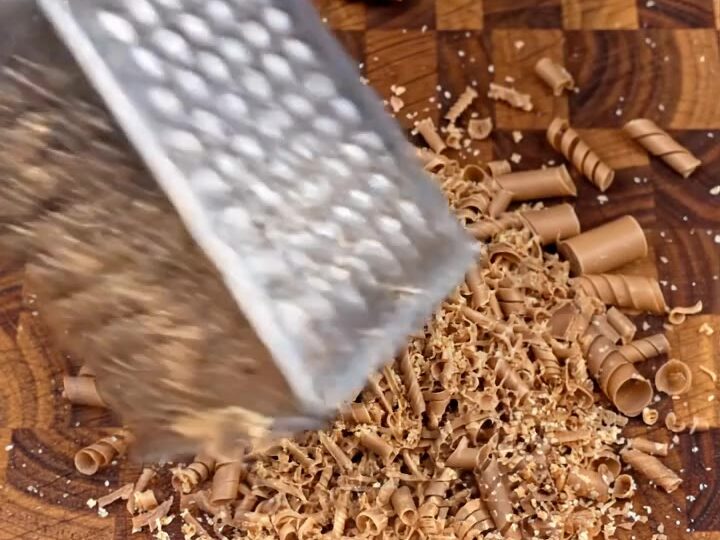
- Prepare the ToppingsChop the toasted pecan halves into small, even pieces using a chef's knife on a cutting board. Set them aside in a bowl. Grate the caramelized blonde coverture chocolate on the large holes of a box grater, creating a pile of golden blonde chocolate curls. Set aside.Look for The pecans are finely chopped and the chocolate forms delicate curls.Tip Chill the chocolate for 10 minutes before grating for cleaner curls.
- Assemble the Cake LayersPlace one sponge cake layer on a cake stand or serving plate. Spread a generous amount of whipped mascarpone butterscotch frosting evenly over the top using an offset spatula. Top with the second cake layer and repeat with more frosting. Place the third layer on top, cut side down for a flat surface.Look for The layers are stacked evenly with frosting between each.Tip If the cake layers are domed, trim the tops with a serrated knife for even stacking.
The toasted pecans are chopped into small pieces, the chocolate is grated into curls, and the cake layers are stacked with frosting between each.
The assembled cake should be stable and level, with the frosting evenly spread. The chocolate curls should be dry and not melting, and the pecans should be ready for later use.
Add the Sauce
- Pour the Butterscotch SaucePour the warm amber butterscotch sauce over the crown of the cake, letting it cascade down the sides. Use the offset spatula to gently guide the sauce to the edges if needed, ensuring an even drip.Look for The sauce flows down the sides in glossy rivulets.Tip Warm the sauce just until pourable but not boiling to maintain a smooth drip.
The warm butterscotch sauce has been poured over the top and is cascading down the sides in a glossy, even layer. The sauce should be thick enough to coat the cake but fluid enough to drip. The cake should look shiny and inviting, with the sauce pooling slightly at the base.
Finish and Serve
- Add the Praline and SaltPile the candied pecan praline generously on top of the cake, covering the surface. Drizzle extra warm butterscotch sauce over the pecans. Sprinkle with flaky sea salt, focusing on the top and edges for a sweet-salty finish.Look for The top is covered with praline, sauce, and salt.Tip Add the salt just before serving to keep it crunchy.
- Slice and ServeUsing a sharp knife, slice a thick triangular wedge from the cake. Lift the tall layered slice onto a metal cake server and present it with the glossy sauce, crunchy praline, and soft sponge layers visible.Look for The slice holds its shape with distinct layers.Tip For clean slices, dip the knife in hot water and wipe it between cuts.
The top is piled with candied pecan praline, drizzled with extra sauce, and sprinkled with flaky sea salt. The finished cake is tall, glossy, and crunchy. When sliced, the layers should be visible and the texture contrast between soft cake, creamy frosting, and crunchy praline is evident. The cake is ready to present.
Common mistakes
One common mistake is pouring the butterscotch sauce too quickly, causing it to run off the cake entirely. Pour slowly and guide it with a spatula. Another is using cold frosting that is too stiff to spread; let it come to room temperature.
Overloading the top with praline can make it difficult to slice; use a generous but even layer. Finally, slicing with a dull knife can crush the cake; use a sharp, wet knife.
How to tell it’s done
The cake is done when it is fully assembled with all layers stacked, frosted, and topped. The butterscotch sauce should have cascaded down the sides, the praline should cover the top, and the sea salt sprinkled over.
The cake should be served at room temperature for the best flavor and texture. Since there are no raw proteins, no temperature check is needed. The cake is ready to slice and serve.
Up next · Part 3 of 3
4 variations · storage & make-ahead · 5 answers · printable card
Tips, FAQ & printable recipe (Part 3)← Back to the ingredients (Part 1)