Desserts · Part 2 of 3: Instructions
Butterscotch Pecan Layer Cake with Brown Butter Praline Step-by-step instructions
- Prep
- Cook
- Total
- Serves
- 12
Before you start
Gather every component before you start, because the cake assembles quickly once the sauce is warm and the cream is whipped. Make sure the cake layer is fully cooled and set on a cake board inside the acrylic ring. Chill the mixing bowl and beaters for about 15 minutes, and chill the heavy cream until it is very cold.
Place the butterscotch candy in the refrigerator so it stays firm enough to grate, and set the pecan halves and brown sugar praline on a wooden cutting board with a sharp knife nearby. Warm the butterscotch caramel sauce gently in a small saucepan until it is pourable, and pour it into a steel pitcher. Have an offset spatula, a small bowl for the shavings, and a clean serving plate ready.
Ingredients at a glance (7)
- 1 butterscotch pecan cake layer, store-bought or made ahead
- 4 oz soft butterscotch candy, chopped and grated
- 1 cup pecan halves, plus extra for the ring
- 1/2 cup brown sugar praline pieces, chopped
- 2 cups cold heavy cream, whipped to soft peaks
- 1 cup butterscotch caramel sauce, warm, store-bought or made ahead
- flaky salt, for serving
Instructions
Build the cake base
- Chop the praline and pecansChop the pecan halves and the brown sugar praline pieces on a wooden board with a sharp knife. Keep some pieces coarse and some fine so the topping has both crunch and sand-like texture.Look for Pieces range from coarse chunks to fine crumbs, with no large whole pecans left.Tip Chop the praline last, just before assembly, so it stays crisp.
- Prepare the butterscotch piecesCut the soft butterscotch candy into chunks and set them beside the chopped nuts. Keep the chunks separate from the grated portion so you can portion them evenly.Look for Chunks are firm enough to hold their edges and grate cleanly.Tip Chill the butterscotch for 10 minutes if it turns sticky when cut.
The cake layer is set inside the acrylic ring and the whipped cream sits in a smooth, even band around the edge. The cream holds soft peaks and looks pale and glossy, with no weeping or slump. The cake board is level, so the sauce will spread evenly. Check that the ring is sealed against the board so no cream leaks underneath.
The warm butterscotch sauce is ready in its pitcher, and the cream band is firm enough to hold it. Only move on when the frosting band is straight and the surface is smooth, because any imperfection here will show once the sauce is poured and the toppings are added. This is the stage where a few minutes of patience pays off in clean lines.
Pour the sauce and top
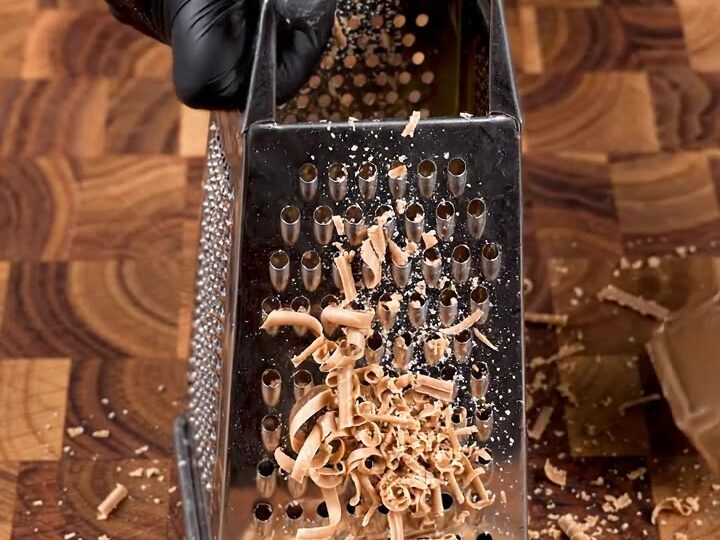
- Grate the butterscotchHold a block of butterscotch against a box grater and grate it over the board until fine curls and shavings fall onto the surface. Gather the shavings in a small bowl for topping.Look for Fine golden curls and shavings collect on the board.Tip Grate on the small holes, and wipe the grater between batches.
- Whip the cream frostingWhip the cold heavy cream in a chilled bowl until it forms soft peaks. Spread a generous band of the whipped cream around the edge of the cake layer inside the acrylic ring.Look for The cream holds soft peaks and stays pale and smooth.Tip Chill the bowl and beaters for 15 minutes before whipping.
- Pour the warm butterscotch sauceWarm the butterscotch caramel sauce until it is pourable. Pour it from a steel pitcher into the center of the cake layer, letting it spread slightly over the surface.Look for The sauce is glossy and flows slowly across the layer.Tip Warm the sauce gently, stirring often, so it does not scorch.
The butterscotch sauce covers the center of the layer in a smooth, golden pool that has begun to spread toward the cream band. The sauce should look glossy, not thin or separated, and it should flow slowly without running over the frosting. The praline, nuts and grated butterscotch sit on the surface in an even scatter, with the pecan ring neatly placed around the edge. Check that the toppings do not sink into the sauce and that no pecans are loose on the board. Before the final drizzle, look for a warm, buttery caramel smell and a crisp, dry texture on the nuts. When the top looks balanced and the sauce has settled, the cake is ready for the last step.
Drizzle, salt and serve
- Top the cake with pecansArrange a ring of whole pecan halves around the top edge of the cake. Scatter the chopped praline, the grated butterscotch and the remaining nuts over the center.Look for The ring is even and the center is covered with crunchy praline and golden shavings.Tip Set the largest pecan halves on the outside edge for a tidy ring.
- Drizzle, salt and liftDrizzle more warm butterscotch sauce so it runs down the sides of the cake. Finish with a light sprinkle of flaky salt, then lift the cake with an offset spatula onto a wooden board to serve.Look for Glossy sauce runs down the sides and the salt sits evenly on top.Tip Chill the cake for 15 minutes before lifting if the frosting feels soft.
Glossy butterscotch sauce runs down the sides in thin, even streaks, and a light sprinkle of flaky salt covers the top without clumping. The frosting band is still firm and the pecan ring stays intact. Lift the cake gently with an offset spatula onto the wooden board, supporting the base so the layers do not shift. The surface should look shiny, the nuts should stay crisp, and the sides should be clean where the cream meets the cake. Check that the drizzles have stopped moving before you serve, so the sauce does not run onto the board. A short rest in the refrigerator helps the sauce set on the sides before slicing.
Common mistakes
The most common mistake is whipping the cream too long or letting it warm up, which causes it to turn grainy and lose its smooth, pale look. Keep the bowl chilled and stop whipping as soon as the cream holds soft peaks. Another frequent problem is pouring sauce that is too hot, which can melt the frosting band and cause the cream to slide. Warm the sauce gently until it is pourable, not piping hot.
Grating butterscotch when it is too soft will clog the grater and produce sticky clumps, so chill it first. Chopping the praline too early lets it absorb moisture from the sauce and lose its crunch, so add it at the last moment. Finally, avoid overfilling the center of the layer, because the sauce will run past the cream band and onto the board.
How to tell it’s done
This cake is finished when the whipped cream holds soft peaks and looks smooth and pale, the butterscotch sauce is glossy and pourable, and the toppings are dry and crisp on the surface. The sauce should have spread slightly over the layer and begun to run down the sides in even streaks, without pooling on the board.
The praline and pecans should look crunchy rather than damp. Because this cake contains no raw protein, no internal temperature is required, but the cream should be chilled and the cake kept refrigerated until serving. Check the sides with a clean spatula: the frosting band should stay firm, and the cake should lift cleanly onto the serving board without sliding or leaking.
Up next · Part 3 of 3
4 variations · storage & make-ahead · 5 answers · printable card
Tips, FAQ & printable recipe (Part 3)← Back to the ingredients (Part 1)