Desserts · Part 2 of 3: Instructions
Butterscotch Pecan Layer Cake with Praline Crunch and Sea Salt Step-by-step instructions
- Prep
- Cook
- Total
- Serves
- 12
Before you start
Measure every ingredient into small prep bowls, pat proteins or vegetables dry with paper towels, and preheat your pan thoroughly before adding oil so browning starts cleanly without steaming.
Take your time with each step, and the result will be worth every minute spent in the kitchen.
Ingredients at a glance (7)
- 3 vanilla sponge cake layers, store-bought or made ahead
- 3 cups pale cream frosting, such as a whipped vanilla buttercream
- 1 cup warm butterscotch caramel sauce, store-bought or made ahead
- 4 oz firm butterscotch praline pieces, for grating
- 2 tbsp packed brown sugar
- 1 cup pecan halves, toasted and chopped, plus 12 whole toasted pecan halves for the top
- flaky sea salt, to taste
Instructions
Prep and Aromatics
- Chop the pecans and sugarRoughly chop the toasted pecans with a chef's knife on the cutting board. Add the brown sugar and chop them together until the mix is coarse and sandy. Set the mixture aside for the topping.Look for The nuts are in mixed sizes, from fine crumbs to small pieces, with brown sugar evenly distributed.Tip Chop in short passes so the pecans keep some crunch rather than turning oily.
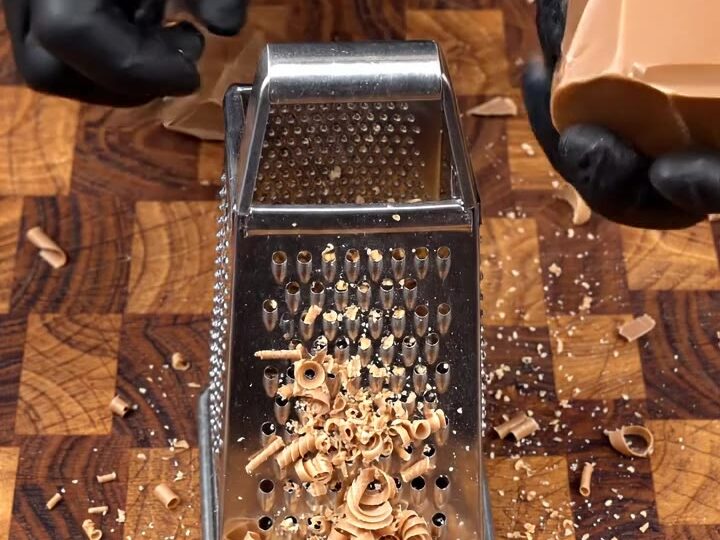
- Grate the butterscotchBreak the firm butterscotch praline pieces into smaller chunks. Grate them on a fine microplane-style grater over the board so golden curls and shavings fall onto the surface. Keep the shavings separate.Look for Fine golden curls and shavings collect on the board, with no large lumps left.Tip Chill the praline for 10 minutes first so it grates cleanly instead of smearing.
Every ingredient is evenly coated, fragrant and progressing at a steady gentle sizzle without sticking to the pan surface.
Take a moment to check the color, texture and aroma before moving on to the next stage.
Main Cooking Stage
- Set the first layerPlace one sponge cake layer on the turntable inside the acetate ring. Spread an even, thick layer of pale cream frosting over the top, reaching the edges. Build the next layer the same way.Look for The frosting is smooth and even, with no bare patches showing on the sponge.Tip Keep the acetate ring snug against the cake so the frosting stays level.
- Pour the butterscotchPour the warm butterscotch caramel sauce from the metal pitcher over the frosting on each layer. Let it drip down the sides. Place a pecan half in the center of the top layer.Look for The amber sauce runs down the sides in glossy streaks and pools lightly on the frosting.Tip Pour slowly from the center outward so the sauce spreads on its own.
- Stack and chill the cakeStack the remaining sponge layers with frosting and sauce between each one. Press gently to align the layers. Refrigerate the cake for 30 minutes so the frosting firms.Look for The layers look even and the frosting feels firm to a light touch.Tip Chill on a flat tray so the layers stay aligned while the frosting sets.
Every ingredient is evenly coated, fragrant and progressing at a steady gentle sizzle without sticking to the pan surface.
Take a moment to check the color, texture and aroma before moving on to the next stage.
Final Glaze and Plating
- Coat and decorate the cakeRemove the acetate ring. Coat the whole cake with glossy butterscotch sauce, smoothing it with the offset spatula. Arrange a ring of whole toasted pecan halves along the top edge.Look for The surface looks glossy and the pecan ring sits neatly along the top edge.Tip Warm the sauce briefly if it has thickened so it coats smoothly.
- Finish with praline and saltSprinkle the chopped pecan and sugar mixture and the grated praline over the top. Finish with a pinch of flaky sea salt. Slice with a long knife dipped in hot water and serve.Look for Golden praline shavings and salt flakes cover the top evenly, and the slices show clean layers.Tip Dip the knife in hot water and wipe it between cuts for neat slices.
Every ingredient is evenly coated, fragrant and progressing at a steady gentle sizzle without sticking to the pan surface.
Take a moment to check the color, texture and aroma before moving on to the next stage.
Common mistakes
Avoid crowding the pan or flipping too early before a crust forms, keep the burner at steady medium-high heat so aromatics never scorch, and season in balanced layers rather than only at the end.
How to tell it’s done
The dish is ready when the exterior shows even golden color, the center feels tender when pressed gently with a fork, and the sauce coats the back of a spoon glossy and fragrant.
Up next · Part 3 of 3
4 variations · storage & make-ahead · 5 answers · printable card
Tips, FAQ & printable recipe (Part 3)← Back to the ingredients (Part 1)