Desserts · Part 2 of 3: Instructions
Butterscotch Pecan Layer Cake with Brown Butter Praline Buttercream Step-by-step instructions
- Prep
- Cook
- Total
- Serves
- 12
Before you start
Start by setting out all the components so the assembly runs smoothly. Let the butter soften at room temperature until it gives slightly when pressed, which usually takes about 30 to 60 minutes. Sift the confectioners' sugar to remove lumps so the buttercream is silky. Toast the pecans until fragrant, let them cool completely, and then chop them into rough pieces, setting aside a handful of whole halves for decoration.
Chill the firm butterscotch candy for about 10 minutes so it grates into clean curls rather than sticking. Confirm that the sponge layer is cool, pale golden and level, and that the ring mold is clean and set on a plate. Warm the butterscotch sauce gently and keep it glossy and pourable.
Ingredients at a glance (7)
- store-bought or made ahead sponge cake layer, pale golden, 8-inch round, to taste
- 1 1/2 cups toasted pecans, chopped into rough pieces, plus whole halves for topping
- 4 oz firm butterscotch candy, grated for shavings
- 1 cup (2 sticks) unsalted butter, softened
- 3 cups confectioners' sugar, sifted
- 1 cup butterscotch sauce, warm and glossy
- flaky salt for finishing, to taste
Instructions
Build the layers and frosting
- Prepare the pecans and candyChop the toasted pecans into rough pieces with a chef's knife, keeping some whole halves aside for decoration. Set the firm butterscotch candy on the board within reach so it is ready to grate.Look for Pecans are chopped into uneven pieces, with a few whole halves set aside.Tip Chop the nuts just before using them so they stay crisp and fragrant.
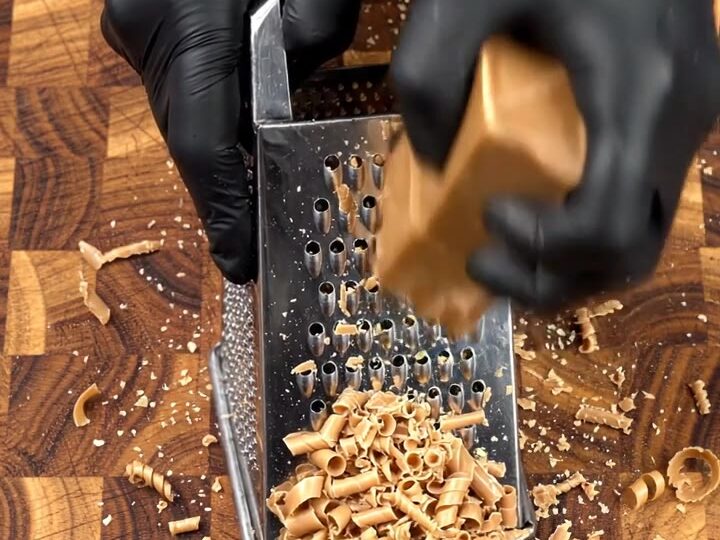
- Grate the butterscotch shavingsGrate the firm butterscotch candy on a fine-hole box grater over a plate or the board. Keep the golden curled shavings separate for the final decoration, and set them aside.Look for Fine golden curls drop from the grater with no large chunks left.Tip Chill the candy for 10 minutes first if it softens and clogs the grater.
After this phase, the sponge sits level in the ring mold and is covered with a thick, even layer of tan butterscotch buttercream. The frosting should look smooth and spreadable, with no streaks of sugar or dry patches, and it should hold a soft peak when lifted. Chopped pecans should be scattered evenly across the buttercream so every slice has nut crunch. Check the edges of the layer for gaps or thin spots and fill them before going on. The cake should feel stable, neither slipping nor sliding, when you move the mold. If the buttercream looks too soft, chill the assembled layer for 10 minutes so it firms enough to take the sauce cleanly and hold its shape.
Pour sauce and stack the cake
- Make the butterscotch buttercreamBeat the softened butter until creamy, then add the sifted confectioners' sugar gradually and beat until smooth and pale tan. Fold in a little of the grated butterscotch until the buttercream is spreadable and tender.Look for The buttercream is smooth, light, and holds a soft peak.Tip Sift the sugar to avoid lumps that can streak the frosting.
- Layer the sponge and buttercreamSet the pale golden sponge layer in the clear ring mold. Spread a thick, even layer of the tan butterscotch buttercream over the cake, then sprinkle with a portion of the chopped pecans.Look for An even layer of tan buttercream covers the sponge with no gaps.Tip Use an offset spatula to spread the buttercream to the edges.
- Pour the butterscotch sauceWarm the butterscotch sauce gently until glossy and pourable. Pour it from a white pitcher over the buttercream so it pools and drips down the sides, then top with more chopped pecans and whole halves.Look for The warm sauce looks glossy and flows slowly over the edges.Tip Let the sauce cool for a minute before pouring so it drips rather than runs off.
At the end of this phase, the warm butterscotch sauce has been poured from the pitcher over the buttercream and has pooled on top before dripping down the sides in even streaks. The layers are stacked neatly with the edges aligned, and the cake looks smooth enough to coat. Look for sauce that is glossy and tacky rather than watery, which means it will hold on the sides without running into a puddle at the base. Check that the top is not sagging or leaning, and that the sides are not too thin. If the sauce is too runny, let it cool for a minute before continuing. The cake should be firm enough to handle with care before its final coat.
Decorate and set the cake
- Stack and coat the cakeStack the layers, pressing lightly so they align, and cover the whole cake with a smooth coat of buttercream. Let butterscotch sauce drip in golden rivulets down the sides for a clean finish.Look for The cake is smooth on top and sides, with sauce dripping in even streaks.Tip Chill the stacked cake for 20 minutes so the buttercream firms before saucing.
- Decorate and rest the cakeArrange whole pecan halves and chopped pecans across the top, then scatter the grated butterscotch shavings. Finish with a sprinkle of flaky salt and let the caramel streaks cascade over the edges before slicing.Look for The top is evenly covered with nuts, shavings and salt, with caramel streaks on the edges.Tip Let the cake rest 2 hours so the buttercream sets for clean slices.
By the end of this phase, the cake is covered with a smooth coat of buttercream, with golden sauce rivulets running down the sides and the top evenly decorated with whole pecan halves, chopped pecans, grated butterscotch shavings and a sprinkle of flaky salt. The shavings should look delicate and golden, not melted into the topping.
Caramel streaks should cascade over the edges in a controlled pattern. Check that every area of the top has some decoration and that the salt is evenly distributed. Let the cake rest for 2 hours so the buttercream sets firmly before slicing. Once rested, the crumb should look moist and tender, and the frosting should cut cleanly without dragging.
Common mistakes
The most common mistake is pouring the sauce while it is too hot or too thin, which makes it run off the cake in a single sheet rather than forming rivulets. Let the sauce cool slightly and check that it is glossy and tacky first. Another error is overbeating the buttercream after adding the sugar, which can introduce air bubbles and make it look grainy.
Beat only until smooth and light. Skipping the chill step before saucing is also a problem, because soft buttercream will slide and blur the streaks. Finally, adding the decorations too early can cause the shavings to dissolve into the sauce. Apply the grated candy and salt only when the sauce has set slightly so they stay crisp and clearly visible on top.
How to tell it’s done
The finished cake is ready when the buttercream is firm to the touch, the sauce streaks hold their shape, and the top looks evenly decorated without any wet spots. Gently press the side of the cake with a fingertip; it should feel set and yield slightly without marking. The sponge should look moist and tender inside when sliced, and the buttercream should cut cleanly with no smearing.
There is no protein in this recipe, so no internal temperature needs to be checked. Confirm the cake has rested for at least 2 hours after decorating. If the sauce still feels soft or runs when the cake is tilted, allow it to rest longer in the refrigerator for 20 minutes before slicing.
Up next · Part 3 of 3
4 variations · storage & make-ahead · 5 answers · printable card
Tips, FAQ & printable recipe (Part 3)← Back to the ingredients (Part 1)