Dinner · Part 2 of 3: Instructions
Butter Cream Garlic Herb Turkey Cutlets Crockpot Recipe Step-by-step instructions
- Prep
- Cook
- Total
- Serves
- 4
Before you start
Before you start, make sure your slow cooker is clean and ready. There's no need to brown the turkey or pre-cook the potatoes—this recipe is truly dump-and-go. If you're serving with mashed potatoes, you can prepare them ahead of time and keep them warm, or make them while the Crockpot does its thing.
Have all your ingredients measured and prepped: halve the potatoes, smash the garlic, and cut the butter into pats. The turkey cutlets should be patted dry with paper towels, but don't season them in advance—the butter and cream provide plenty of flavor.
Ingredients at a glance (6)
- 4 boneless turkey breast cutlets (about 1 1/2 lb total)
- 1 1/2 lb baby Yukon Gold potatoes, halved
- 6 cloves garlic, smashed
- 2 sprigs fresh rosemary
- 4 tbsp salted butter, cut into pats
- 1 cup heavy whipping cream
Instructions
Layer and Go
- Layer the IngredientsPlace the turkey cutlets in the bottom of a 6-quart slow cooker in a single layer. Scatter the halved baby potatoes, smashed garlic cloves, and fresh rosemary sprigs over the turkey. Dot the top with the butter pats, then pour the heavy cream evenly over everything.Look for The turkey and potatoes should be nestled together, with butter and cream pooling around them.Tip No need to stir. Layering keeps the turkey from drying out and lets the potatoes cook in the creamy juices.
- Cover and Cook on LowCover the slow cooker and cook on low for 4 hours, or until the turkey registers 165°F (74°C) in the thickest part and the potatoes are fork-tender. Do not lift the lid during the first 3 hours to keep the heat steady.Look for The sauce will be bubbling gently around the edges, and the kitchen will smell richly of garlic and rosemary.Safe temperature 165°F (74°C) internal temperature (poultry)Tip If the slow cooker runs hot, check at 3 1/2 hours. The turkey is done when it reaches 165°F (74°C).
At the end of this phase, the raw turkey and potatoes are nestled in the slow cooker, with butter pats and cream poured over the top. The garlic and rosemary are scattered throughout, and the dish looks simple but promising. The cream should be evenly distributed, and the butter will start to melt as the slow cooker heats. This is the point where you cover and walk away—no stirring, no peeking.
Slow-Cooked Perfection
- Rest and Thicken the SauceTurn off the slow cooker. Remove the turkey and potatoes to a platter and cover loosely with foil. Let the turkey rest for at least 3 minutes. Meanwhile, if the sauce looks thin, let it sit uncovered for 5 minutes, then whisk gently to combine.Look for The sauce should coat the back of a spoon; if it's too thin, let it sit a few more minutes.Safe temperature 165°F (74°C) internal temperature (poultry)Tip Resting the turkey helps the juices redistribute, keeping the meat moist. The sauce will naturally thicken as it cools slightly.
After 4 hours on low, the slow cooker is bubbling gently around the edges, and the aroma of garlic and rosemary fills the kitchen. The turkey is tender and cooked through, the potatoes are soft, and the sauce has thickened into a velvety cream.
The butter has melted into the sauce, giving it a glossy sheen. The dish looks and smells like a comforting home-cooked meal, and it's ready to be served or rested.
Rest and Serve
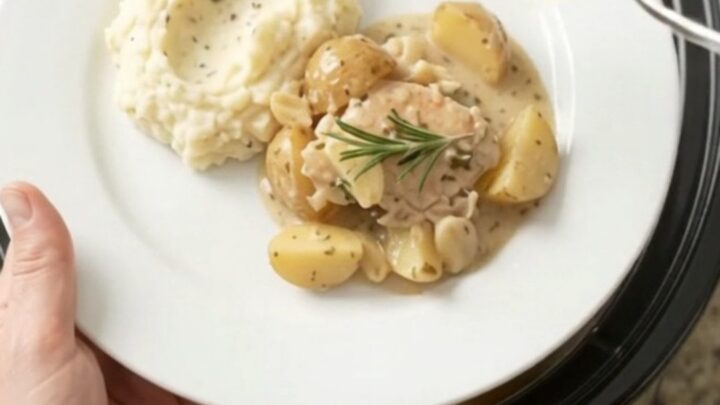
- Serve with Mashed PotatoesSpoon the turkey and potatoes onto plates, and ladle the buttery cream sauce over the top. Serve with whipped garlic mashed potatoes on the side, if desired, and garnish with fresh rosemary if you like.Look for The turkey should be fork-tender and the potatoes glistening with sauce.Tip For a complete meal, add a side of green beans or a simple salad. The sauce is excellent over mashed potatoes.
The turkey rests under foil, allowing the juices to redistribute. The sauce is warm and aromatic, ready to be spooned over the meat and potatoes. When you plate the dish, the turkey should be fork-tender, the potatoes glistening with buttery sauce, and the garlic soft and sweet. The final presentation is rustic but elegant, perfect for a family dinner or a cozy gathering.
Common mistakes
The most common mistake is lifting the lid too often to check on the food. Every time you open the slow cooker, heat escapes and adds to the cooking time. Trust the process and wait until the minimum time is up.
Another mistake is using low-fat cream or milk, which can curdle or separate during the long cooking time. Stick with heavy cream for the best texture. Finally, don't skip the resting step—letting the turkey rest for a few minutes before serving keeps it juicy and allows the sauce to settle.
How to tell it’s done
The turkey is done when it reaches an internal temperature of 165°F (74°C) in the thickest part. Use an instant-read thermometer to check. The potatoes should be fork-tender, meaning a fork slides in easily with no resistance.
The sauce should be slightly thickened and glossy, coating the back of a spoon. If the sauce seems thin, let it sit uncovered for a few minutes to reduce. The dish is ready when the turkey is cooked through, the potatoes are soft, and the sauce is rich and creamy.
- Poultry: 165°F (74°C) in the thickest part
Up next · Part 3 of 3
4 variations · storage & make-ahead · 5 answers · printable card
Tips, FAQ & printable recipe (Part 3)← Back to the ingredients (Part 1)