Dinner · Part 2 of 3: Instructions
Brown Sugar Mustard Glazed Ham with Sweet Honey Crust Step-by-step instructions
- Prep
- Cook
- Total
- Serves
- 12
Before you start
Before beginning, remove the ham from the refrigerator about thirty minutes prior to baking to take the chill off, which ensures even heating. Preheat the oven to 325°F (163°C) and position the oven rack in the lowest position to accommodate the large roasting pan.
Line the roasting pan with heavy-duty aluminum foil for easy cleanup later. Measure out the brown sugar, honey, and Dijon mustard, and have a sturdy pastry brush and a small saucepan ready on the stovetop.
Ingredients at a glance (4)
- 8-10 lb fully cooked spiral-sliced bone-in ham
- 1 cup packed brown sugar
- 1/2 cup honey
- 1/2 cup Dijon mustard
Instructions
Tenting and Slow Baking the Ham
- Prepare the Ham and Roasting PanPlace the spiral-sliced ham cut-side down in a heavy metal roasting pan. Pour a half cup of water into the bottom of the pan to create steam. Cover the entire roasting pan tightly with heavy-duty aluminum foil, creating a secure tent that traps moisture inside.Look for The foil must be sealed tightly around the edges of the pan.Tip Double wrap with foil if necessary to prevent steam from escaping.
- Bake the Ham to Warm ThroughBake the covered ham in the preheated oven at 325°F (163°C) for approximately 12 to 15 minutes per pound, which is about 1 to 2 hours for an 8 to 10-pound ham, until the internal temperature reaches 130°F (54°C).Look for A thermometer inserted into the thickest part should read 130°F.Tip Do not rush this step; gentle heat keeps the ham juicy.
At the end of this phase, the ham should be completely warmed through, and steam should rise visibly when you carefully peel back the aluminum foil tent.
The meat will appear moist, and the natural juices will begin to pool at the bottom of the roasting pan. The kitchen will be filled with a rich, savory aroma of roasted pork, indicating that the ham is ready for the glaze application.
Simmering and Brushing the Glaze
- Prepare the Sweet Mustard GlazeWhile the ham is baking, combine the packed brown sugar, honey, and Dijon mustard in a small saucepan over medium heat. Stir constantly until the sugar dissolves and the mixture comes to a gentle simmer, cooking for 2 to 3 minutes until smooth.Look for The glaze should be smooth, thick, and bubbling gently.Tip Watch the heat carefully to prevent the sugar from burning.
- Brush the Glaze Over the HamCarefully remove the ham from the oven and peel back the steaming aluminum foil. Increase the oven temperature to 400°F (204°C). Use a pastry brush to generously apply the hot brown sugar mustard glaze all over the ham, ensuring it gets between the spiral slices.Look for The ham should be completely coated and glistening with glaze.Tip Gently fan the slices to let the glaze penetrate deeper.
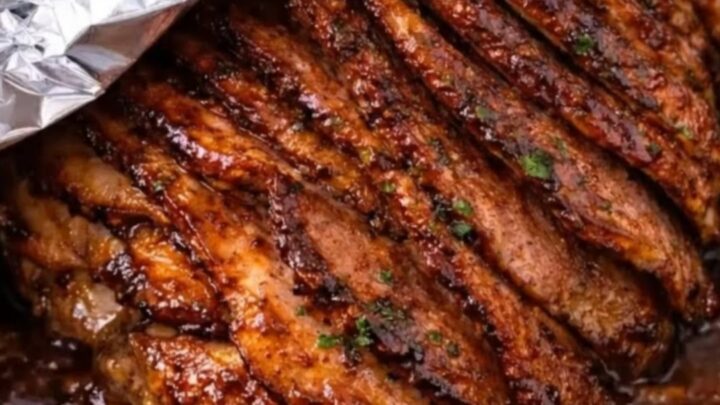
By the end of this phase, the glaze will be thick, smooth, and bubbling in the saucepan. When brushed onto the ham, it should cling beautifully to the sliced edges, creating a glistening, golden-brown coating. The sweet aroma of caramelized sugar and tangy mustard will immediately fill the air as the warm glaze meets the hot surface of the ham, sinking into the spiral cuts.
Caramelizing the Crust and Resting
- Caramelize the Glaze and RestReturn the uncovered ham to the oven and bake at 400°F (204°C) for 15 to 20 minutes until the glaze is bubbling and caramelized. Remove from the oven, spoon the pan juices over the ham, cover loosely with foil, and let rest for 15 minutes before serving.Look for The edges should be crispy, caramelized, and bubbling.Tip Resting is essential to allow the juices to redistribute.
At the final checkpoint, the glaze on the ham will be bubbling, deeply caramelized, and slightly charred along the crisp edges of the slices. The juices in the bottom of the pan will be thick and sizzling. After resting under a loose foil tent for fifteen minutes, the meat will have reabsorbed its juices, making it exceptionally tender and easy to carve.
Common mistakes
One common mistake is baking the ham completely uncovered for the entire duration. This exposes the delicate pre-sliced meat directly to dry oven air, resulting in a tough, dry texture.
Another error is applying the glaze too early in the baking process; the high sugar content in the honey and brown sugar will burn and turn bitter if exposed to heat for hours. Always wait until the final thirty minutes of cooking to apply the glaze, allowing it to caramelize perfectly without burning.
How to tell it’s done
Since the spiral-sliced ham is already fully cooked, the goal is simply to warm it through to a safe and appetizing temperature. The ham is perfectly done when a meat thermometer inserted into the thickest part of the meat, without touching the bone, registers 140°F (60°C).
At this temperature, the ham is hot throughout, juicy, and ready for the glaze to be caramelized. Avoid overcooking past this point, as the meat will rapidly lose its moisture and become dry.
Up next · Part 3 of 3
2 variations · storage & make-ahead · 4 answers · printable card
Tips, FAQ & printable recipe (Part 3)← Back to the ingredients (Part 1)