Dinner · Part 2 of 3: Instructions
Brown Sugar Honey Hickory BBQ Country Pork Ribs: Slow Cooker Step-by-step instructions
- Prep
- Cook
- Total
- Serves
- 6
Before you start
Before you start, measure out all the ingredients. Slice the onions into thin rings or half-moons. If your ribs are in large pieces, you can leave them whole or cut them into smaller portions to fit evenly in the slow cooker.
Have the brown sugar, smoked paprika, and barbecue sauce measured and ready. No need to preheat the slow cooker; it will heat up gradually as it cooks. If you plan to broil the ribs at the end, position an oven rack about 6 inches from the broiler element and line a baking sheet with foil.
Ingredients at a glance (5)
- 3 lb boneless country-style pork ribs
- 1/4 cup dark brown sugar, packed
- 1 tbsp smoked paprika
- 2 medium yellow onions, sliced
- 1 1/2 cups honey-hickory barbecue sauce
Instructions
Layer and Coat
- Layer the Ribs and RubPlace the boneless country-style pork ribs in the bottom of a 6-quart slow cooker, arranging them in a single layer if possible. Sprinkle the dark brown sugar and smoked paprika evenly over the ribs, then scatter the sliced yellow onions on top.Look for The ribs are coated with a dark, sweet rub and topped with onion slices.Tip For even coverage, toss the ribs with the sugar and paprika before adding to the cooker if preferred.
- Pour on the BBQ SaucePour the honey-hickory barbecue sauce over the ribs and onions, using a spoon or spatula to spread it evenly so every piece is coated. The sauce should pool around the meat.Look for The ribs are fully covered in a thick, glossy sauce.Tip Do not stir after adding the sauce; the layers will meld as they cook.
At the end of this phase, the ribs are nestled in the slow cooker, topped with the brown sugar, smoked paprika, and onions. The sauce is poured over, creating a thick, glossy coating. The raw ribs are visible under the sauce, but everything is evenly distributed. The aroma is sweet and smoky, with the raw pork scent still present. Before moving on, ensure all pieces are coated; if not, gently spoon the sauce over any dry spots.
Slow Cook to Tender
- Slow Cook on LowCover the slow cooker and cook on low for 6 to 8 hours, until the pork is fork-tender and easily pulls apart. Avoid opening the lid during cooking to keep the heat steady. Let it rest for 3 minutes before slicing.Look for The sauce is bubbling gently and the meat is beginning to shred.Safe temperature 145°F (63°C) internal temperature (steaks, chops and roasts)Tip If the sauce seems thin at the end, remove the ribs and simmer the sauce on high for 15 minutes to thicken.
- Check for TendernessAfter 6 hours, test the ribs with a fork. The meat should be very tender and easily pull apart, but still hold its shape. If not, continue cooking for up to 2 more hours. Let it rest for 3 minutes before slicing.Look for A fork twists into the meat with no resistance.Safe temperature 145°F (63°C) internal temperature (steaks, chops and roasts)Tip For extra caramelization, transfer the ribs to a baking sheet and broil for 3-4 minutes, watching closely.
After 6-8 hours, the slow cooker is bubbling gently, and the sauce has darkened and thickened. The kitchen smells of caramelized sugar and smoky barbecue. The onions have softened and begun to melt into the sauce.
The meat is visibly pulling away from the bone (if using bone-in) and is fork-tender. The liquid should be a rich, deep amber color. Check that the meat reaches 145°F (63°C) minimum, but the texture should be the primary indicator.
Rest and Serve
- Rest the RibsTurn off the slow cooker and let the ribs rest in the sauce for at least 3 minutes before serving. This allows the juices to redistribute and the meat to firm up slightly.Look for The ribs are glistening in the sauce, and the onions are caramelized.Safe temperature 145°F (63°C) internal temperature (steaks, chops and roasts)Tip Use a slotted spoon to lift the ribs out, letting excess sauce drip back into the cooker.
- Serve with SauceTransfer the ribs to a serving platter or individual plates. Spoon some of the caramelized onions and sauce from the slow cooker over the top. Serve hot.Look for The ribs are coated in a thick, sticky glaze.Tip Pair with coleslaw or cornbread to soak up the extra sauce.
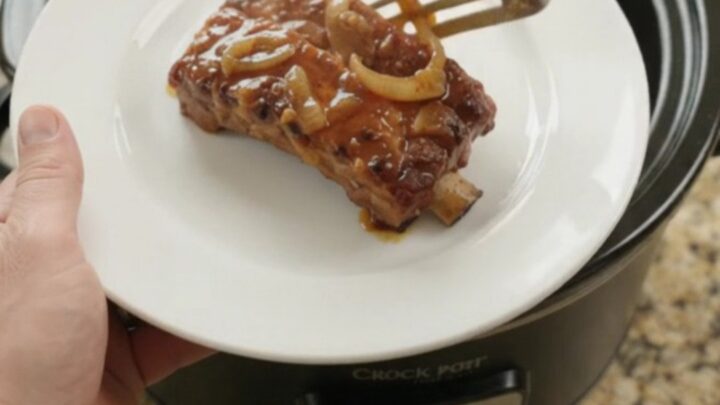
The ribs are resting in the sauce, glistening and tender. The sauce is thick enough to coat a spoon, and the onions are caramelized and sweet. The meat is so tender it nearly falls apart when lifted. The aroma is intensely savory and sweet. The ribs are ready to be lifted out, with the sauce spooned over the top. The final dish looks rustic and inviting, with deep brown glaze and soft onion strands.
Common mistakes
One common mistake is lifting the lid to check on the ribs too often. Every time you open the slow cooker, heat escapes and adds 20-30 minutes of cooking time. Trust the process and wait until the minimum time has passed. Another mistake is using a lean cut of pork; country-style ribs need fat, so avoid extra-lean cuts.
Also, don't skip the brown sugar and paprika rub—it creates the crust that makes these ribs special. Finally, if you're using a thicker barbecue sauce, you might need to add a splash of water or apple juice to keep the sauce from becoming too thick and burning on the edges.
How to tell it’s done
The ribs are done when they are fork-tender: a fork inserted into the thickest part should twist easily with no resistance, and the meat should pull apart readily. The internal temperature should register at least 145°F (63°C) for food safety, but for country-style ribs, you want it higher—around 190°F (88°C)—to ensure the collagen has fully broken down.
The sauce should be thick enough to coat the back of a spoon, and the onions should be caramelized and translucent. If the sauce is too thin, remove the ribs and simmer the sauce on the stovetop to reduce.
- Steaks, chops and roasts: 145°F (63°C) in the thickest part, then a 3-minute rest
Up next · Part 3 of 3
4 variations · storage & make-ahead · 5 answers · printable card
Tips, FAQ & printable recipe (Part 3)← Back to the ingredients (Part 1)