Dinner · Part 2 of 3: Instructions
Brown Sugar Garlic Pork Roast (Incredibly Juicy) Step-by-step instructions
- Prep
- Cook
- Total
- Serves
- 4
Before you start
Before starting, ensure the pork tenderloin is trimmed of any excess fat and silver skin. Pat the meat completely dry with paper towels; this is essential for achieving a deep, even sear in the skillet.
Measure out the brown sugar, mince the garlic cloves, and chop the fresh thyme. Preheat the oven if completing the cooking there, and have a reliable instant-read meat thermometer ready to monitor the internal temperature.
Ingredients at a glance (4)
- 1 1/2 lb pork tenderloin
- 4 cloves garlic, minced
- 1/2 cup brown sugar
- 4 sprigs fresh thyme, for garnish
Instructions
Searing the Pork
- Sear the PorkPlace the pork tenderloin in a hot skillet over medium-high heat. Sear the meat for 2 to 3 minutes per side, turning carefully with tongs, until a deep golden-brown crust forms on all sides of the tenderloin.Look for Look for a rich, caramelized exterior on the pork.Tip Ensure the skillet is fully preheated before adding the meat.
The pork tenderloin should have a deep, golden-brown crust on all sides. You will hear a loud, active sizzle as the meat hits the hot pan, and the kitchen will fill with a rich, savory aroma. The exterior should look beautifully caramelized, but the interior will still be raw at this stage. Make sure all sides are evenly browned before proceeding.
Glazing and Roasting
- Prepare the GlazeIn a bowl or directly in the skillet, combine the minced garlic and brown sugar, stirring constantly over medium heat until the sugar dissolves and forms a thick, bubbling glaze. Brush this sweet mixture generously over the top of the seared pork tenderloin.Look for The glaze should be thick, bubbly, and fragrant.Tip Work quickly so the sugar does not scorch in the hot pan.
- Cook and CaramelizeContinue cooking the pork in the skillet, or transfer it to a preheated oven at 400°F (204°C). Cook for 10 to 12 minutes, basting occasionally with the pan juices, until the sweet glaze becomes sticky and beautifully caramelized on the meat.Look for The glaze should look shiny and cling to the meat.Tip Keep an eye on the glaze to ensure it does not burn.
The glaze should be bubbling, thick, and sticky, clinging tightly to the surface of the pork. The brown sugar will have melted completely, blending with the garlic to release a sweet and intensely aromatic scent.
The pork will feel firm to the touch but yield slightly when pressed. Ensure the glaze is caramelized but not burnt before removing from heat.
Resting and Slicing
- Rest, Garnish, and SliceRemove the pork roast from the heat once the internal temperature reaches 145°F (63°C). Transfer the roast to a warm platter, pour the remaining glaze from the pan over it, and let it rest for at least 3 minutes. Garnish with fresh thyme sprigs, then slice into thick rounds and serve.Look for The meat must rest to allow juices to redistribute.Safe temperature 145°F (63°C) internal temperature (steaks, chops and roasts)Tip Slice against the grain for the most tender texture.
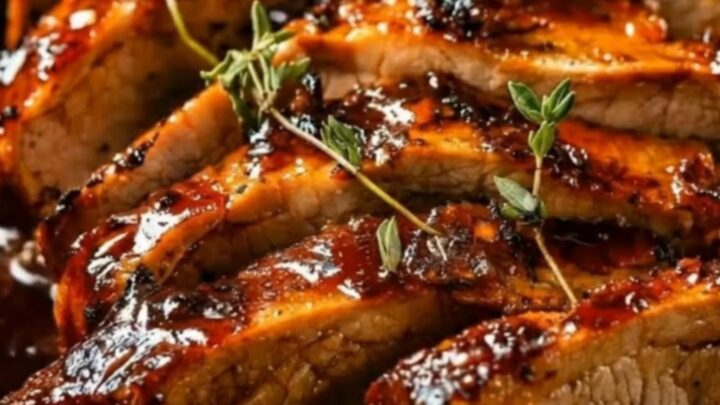
After resting, the juices will have redistributed throughout the meat, ensuring every slice remains incredibly tender and moist. When sliced, the pork should display a faint blush of pink in the center, and the caramelized glaze on the outside will look shiny, sticky, and deeply golden. This rest is essential for keeping the meat juicy and flavorful.
Common mistakes
One common mistake is moving the pork too much when it first hits the skillet. Let the meat sit undisturbed for a few minutes to develop a proper crust.
Another error is applying the glaze too early in the searing process; the high sugar content can burn easily in a hot skillet, resulting in a bitter flavor. Lastly, slicing the meat immediately after cooking will cause all the delicious juices to run out onto the cutting board, leaving the pork dry.
How to tell it’s done
Pork is perfectly cooked when it reaches an internal temperature of 145°F (63°C) at its thickest part. Use a digital meat thermometer to check this accurately.
Once this temperature is reached, remove the pork from the heat source and let it rest for at least 3 minutes. The temperature will rise slightly during this resting period, locking in the juices and ensuring a tender, safe, and delicious result.
- Steaks, chops and roasts: 145°F (63°C) in the thickest part, then a 3-minute rest
Up next · Part 3 of 3
2 variations · storage & make-ahead · 4 answers · printable card
Tips, FAQ & printable recipe (Part 3)← Back to the ingredients (Part 1)