Dinner · Part 2 of 3: Instructions
Boursin Meatball Bolognese Rigatoni Slow Cooker Dinner Step-by-step instructions
- Prep
- Cook
- Total
- Serves
- 6
Before you start
Before starting, ensure the slow cooker is clean and dry. If using fresh meatballs, you can brown them in a skillet for extra flavor, but this is optional.
Measure out the rigatoni and shred the fontina cheese if not pre-shredded. Have the sauce and Boursin ready to go. No other prep is needed; this recipe is designed to be quick and easy, with minimal hands-on time.
Ingredients at a glance (5)
- 2 lb homestyle Italian beef meatballs
- 1 lb rigatoni pasta
- 1 jar (24 oz) roasted garlic tomato basil sauce
- 1 wheel (5.2 oz) garlic and fine herbs Boursin cheese
- 1 1/2 cups shredded Italian fontina cheese
Instructions
Layer and go
- Layer the meatballsPlace the beef meatballs in an even layer in the bottom of a 6-quart slow cooker. Ensure they are spread out so they cook evenly and brown slightly on the bottom.Look for The meatballs form a single layer covering the bottom of the slow cooker.Safe temperature 160°F (71°C) internal temperature (ground meat)Tip If using frozen meatballs, there is no need to thaw them first; just add a little extra cooking time.
- Add pasta and sauceAdd the rigatoni pasta over the meatballs, then pour the roasted garlic tomato basil sauce over the top. Use a spoon to gently stir the pasta and sauce to coat the meatballs slightly, but do not mix too much.Look for The pasta is mostly covered by the sauce, and the meatballs are still visible in spots.Tip For a saucier result, add an extra 1/2 cup of water or broth.
- Top with cheesesPlace the Boursin cheese wheel in the center of the slow cooker, then scatter the shredded fontina cheese evenly over the top.Look for The cheeses sit on top of the sauce and pasta, creating a creamy topping.Tip If the Boursin is cold, it will melt more slowly; let it sit at room temperature for 10 minutes before adding.
At the end of this phase, the slow cooker contains a neat layer of meatballs, covered with rigatoni and sauce, with the Boursin and fontina on top.
The sauce should be evenly distributed, and the cheese should be visible. It smells like garlic and herbs. The meatballs are raw, so handle them with clean hands and avoid cross-contamination.
Slow cook and melt
- Slow cook on lowCover the slow cooker and cook on low for 4 hours, or until the meatballs are cooked through and the pasta is tender. Do not stir during cooking to allow the cheese to melt into a creamy layer.Look for The sauce is bubbling gently around the edges, and the cheese has melted into a smooth, creamy sauce.Safe temperature 160°F (71°C) internal temperature (ground meat)Tip Resist the urge to lift the lid; every peek lets out heat and extends cooking time.
- Check donenessAfter 4 hours, check that the meatballs have reached an internal temperature of 160°F (71°C) using an instant-read thermometer. The pasta should be al dente and the sauce thickened.Look for A thermometer inserted into a meatball reads 160°F (71°C), and the pasta is tender but not mushy.Safe temperature 160°F (71°C) internal temperature (ground meat)Tip If the pasta is still too firm, cook for an additional 30 minutes and check again.
After 4 hours on low, the sauce is bubbling gently, and the cheese has melted into a creamy, golden layer. The aroma is rich and savory. The meatballs should be tender, and the pasta should be al dente. Check the temperature of the meatballs to ensure they are at least 160°F (71°C). The sauce should be thick and coat a spoon.
Serve and enjoy
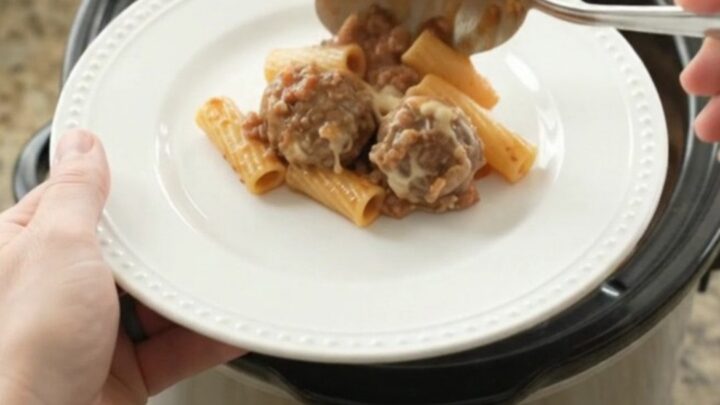
- Serve immediatelySpoon the hot pasta and meatballs onto plates, making sure to get plenty of the creamy sauce. Serve right away while hot and bubbling.Look for The sauce is glossy and coats the pasta, and the cheese pulls into long strands.Tip For a nice presentation, sprinkle a little extra fontina or fresh herbs on top before serving.
The finished dish is bubbling and aromatic, with a creamy, cheesy sauce. When spooned onto plates, the sauce clings to the pasta and meatballs, and the cheese pulls into long strands. The meatballs are juicy and tender, and the rigatoni is perfectly cooked. Serve immediately for the best texture and flavor.
Common mistakes
One common mistake is lifting the lid too often, which releases heat and extends cooking time. Another is using a pasta shape that doesn't hold up well; choose a sturdy shape like rigatoni or penne. Overcooking can make the pasta mushy, so check at the minimum time.
Also, avoid stirring the dish too much, as this can break up the meatballs and make the sauce starchy. Finally, do not skip checking the internal temperature of the meatballs to ensure they are safe to eat.
How to tell it’s done
The dish is done when the meatballs are cooked through and reach an internal temperature of 160°F (71°C) on an instant-read thermometer. The pasta should be al dente—tender but still with a slight bite.
The sauce should be thick and creamy, with the cheese fully melted and incorporated. If the sauce seems too thin, let it cook uncovered for an additional 15-20 minutes to reduce. The meatballs should be fork-tender and the rigatoni should not be mushy.
- Ground meat: 160°F (71°C) in the thickest part
Up next · Part 3 of 3
4 variations · storage & make-ahead · 5 answers · printable card
Tips, FAQ & printable recipe (Part 3)← Back to the ingredients (Part 1)