Dinner · Part 2 of 3: Instructions
Bourbon Gravy Broccoli Flank Steak: 10-Minute Crockpot Dinner Step-by-step instructions
- Prep
- Cook
- Total
- Serves
- 4
Before you start
Before you start, thinly slice the flank steak against the grain—this is easier if you pop it in the freezer for 15 minutes first. Wash and cut the broccoli into bite-size florets, and slice the baby bella mushrooms.
Measure out the gravy and cut the butter into pats. Have a 6-quart slow cooker ready. No need to preheat or sear; everything goes in raw and cooks low and slow.
Ingredients at a glance (5)
- 2 lb flank steak, thinly sliced against the grain
- 3 cups broccoli florets (about 1 large head)
- 8 oz baby bella mushrooms, sliced
- 1 1/2 cups mushroom-bourbon gravy (from a jar)
- 4 tbsp salted butter, cut into pats
Instructions
Layer and Dump
- Layer the steakPlace the thinly sliced flank steak strips in an even layer in the bottom of a 6-quart slow cooker. Spread them out so they cover the bottom as much as possible; this helps them cook evenly.Look for The steak strips cover the bottom of the slow cooker in a single layer.Tip For easier slicing, freeze the flank steak for 15 minutes before cutting. Slice against the grain for the most tender results.
- Add the vegetablesScatter the broccoli florets and sliced baby bella mushrooms evenly over the steak. No need to stir—just layer them on top.Look for The vegetables sit in a colorful layer over the beef.Tip Cut the broccoli into similar-sized florets so they cook at the same rate.
- Pour the gravy and add butterPour the mushroom-bourbon gravy over the steak and vegetables. Dot the top with the butter pats. Do not stir—the butter will melt and create a rich sauce as it cooks.Look for The gravy pools around the ingredients, and butter pats sit on top.Tip Use a high-quality jarred gravy for the best flavor. If you prefer a thicker sauce, you can mix a tablespoon of cornstarch with water and stir it in at the end.
At the end of this phase, the slow cooker contains a neat layer of raw steak strips, topped with broccoli and mushrooms, and covered in dark gravy with butter pats melting on top. The gravy should be evenly distributed, and the butter will begin to melt into the sauce. Everything looks raw and vibrant, ready to cook.
Slow-Cook and Tenderize
- Slow-cook until tenderCover the slow cooker and cook on LOW for 6 to 8 hours, or on HIGH for 3 to 4 hours, until the steak is fork-tender and the vegetables are tender. The steak is done when it reaches an internal temperature of 145°F (63°C) for medium-rare, but for slow-cooked beef, it will be well beyond that and very tender. Let it rest for 3 minutes before slicing.Look for The gravy is bubbling gently, and the steak shreds easily with a fork.Safe temperature 145°F (63°C) internal temperature (steaks, chops and roasts)Tip Check the steak at the minimum time; slow cookers vary. The beef should be pull-apart tender, not chewy.
- Rest the beefTurn off the slow cooker and let the beef rest for at least 3 minutes before serving. This allows the juices to redistribute, keeping the meat moist and flavorful.Look for The sauce settles, and the meat looks glossy and juicy.Safe temperature 145°F (63°C) internal temperature (steaks, chops and roasts)Tip Resting is especially important for large cuts; even sliced steak benefits from a short rest.
After several hours, the slow cooker is bubbling gently, and the kitchen smells rich and savory. The steak is visibly tender, the broccoli has softened, and the gravy has darkened and thickened slightly.
The butter has fully melted into the sauce, giving it a glossy sheen. The beef should be easily pierced with a fork.
Rest and Serve
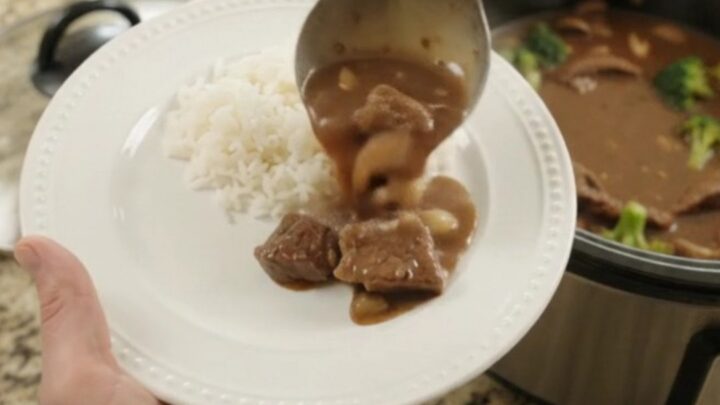
- Serve over riceSpoon the steak, vegetables, and gravy over fluffy white rice on a plate. Use a slotted spoon to serve the solids, then ladle extra gravy over the top.Look for The plate is filled with tender beef, vibrant broccoli, and glossy gravy.Tip For a lower-carb option, serve over cauliflower rice or mashed potatoes.
The slow cooker is turned off, and the beef rests for a few minutes. The gravy settles, and the meat looks juicy and glistening. When served over rice, the plate is full of color and aroma, with the gravy coating every bite. The flavors are deep and satisfying.
Common mistakes
One common mistake is slicing the steak with the grain, which results in tough, stringy pieces. Always slice against the grain. Another is overcooking the broccoli until it turns to mush—if you prefer firmer vegetables, add them halfway through the cooking time.
Also, resist the urge to stir the pot; letting the layers stay intact helps the steak cook evenly and the vegetables steam properly. Finally, don't skip the butter—it adds richness and helps the gravy become glossy.
How to tell it’s done
The dish is done when the steak is fork-tender and easily pulls apart, and the broccoli is tender but not mushy. The gravy should be bubbling and slightly thickened.
For safety, the internal temperature of the steak should reach at least 145°F (63°C), but because it cooks for hours, it will likely be much higher and very tender. Let the beef rest for at least 3 minutes before serving to allow the juices to settle.
- Steaks, chops and roasts: 145°F (63°C) in the thickest part, then a 3-minute rest
Up next · Part 3 of 3
4 variations · storage & make-ahead · 5 answers · printable card
Tips, FAQ & printable recipe (Part 3)← Back to the ingredients (Part 1)