Desserts · Part 2 of 3: Instructions
Blood Orange Ricotta Almond Cake with Glossy Glaze Step-by-step instructions
- Prep
- Cook
- Total
- Serves
- 12
Before you start
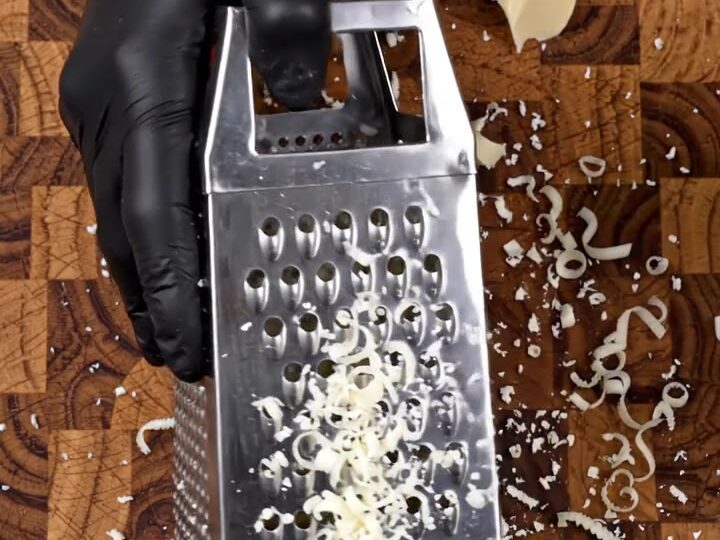
Gather all the ingredients and equipment before you start, so the batter comes together without pauses. Set the eggs out to reach room temperature, which helps them whisk to a light, stable foam. Drain the ricotta in a fine sieve for about 20 minutes so the batter does not turn loose. Slice the blood oranges into thin rounds, chop the almonds finely, and pick the rosemary leaves. Line the base of the 9-inch springform pan with parchment and heat the oven to 350°F (175°C) on the middle rack. Grate the firm cheese on the fine side of the box grater over the cutting board, so the shreds collect in one place.
Ingredients at a glance (14)
- 3 blood oranges, sliced into thin rounds
- 1 cup whole almonds, chopped small
- 1/3 cup sliced almonds, plus more toasted for garnish
- 1 sprig fresh rosemary, leaves picked
- 16 oz whole-milk ricotta, drained
- 3 large eggs, at room temperature
- 3/4 cup granulated sugar
- 1/2 cup all-purpose flour
- 1 tbsp blood orange zest
- 1 cup heavy cream, cold
- 2 tbsp confectioners' sugar
- 1/2 cup blood orange juice
- 1 cup confectioners' sugar, sifted
- 1 tbsp unsalted butter, melted
Instructions
Build the batter and layers
- Prepare the citrus and almondsSlice the blood oranges into thin rounds and set them aside. Chop the whole almonds finely with a chef's knife, then pick the rosemary leaves. Heat the oven to 350°F (175°C) and line the base of the springform pan with parchment.Look for Orange rounds are even and thin, almonds are chopped into small, uniform pieces.Tip Pat the orange slices dry so the batter does not thin out against them.
- Grate the ricottaDrain the ricotta well. Grate the firm white cheese on the fine side of the box grater so it falls in fine, curly shreds. Mix the grated cheese into a bowl with a spoon.Look for The cheese forms fine, fluffy shreds that look almost like snow.Tip Keep the grater over the board to catch every shred for the batter.
At the end of this phase the batter should be smooth, thick and pale yellow, with no streaks of flour and no visible lumps of ricotta. Spread the batter evenly over the blood orange rounds so the top looks level and speckled with the sliced almonds. Check that the orange slices are fully covered and that no batter is pooling against the sides of the pan.
Give the pan a gentle tap on the counter to release trapped air. If the batter looks loose or grainy, whisk it a little longer before pouring it into the pan, and make sure the chopped almonds are evenly distributed through the mixture. This preparation prevents uneven baking and keeps the orange layer bright.
Bake, cool and assemble
- Make the pale batterWhisk the eggs with the sugar until pale and thick. Fold in the grated ricotta, flour, orange zest and chopped almonds until the batter is smooth and pale yellow. Do not overmix once the flour goes in.Look for The batter is smooth, thick and pale yellow with no streaks of flour.Tip Beat the eggs until they fall in a ribbon for a lighter crumb.
- Layer and pour the batterArrange the blood orange rounds over the parchment in the springform pan, overlapping slightly. Pour the batter over them and spread it evenly to the edges. Scatter the sliced almonds over the top.Look for The orange rounds are covered evenly and the top looks level and speckled with almonds.Tip Tap the pan gently on the counter to release any trapped air bubbles.
- Bake until set and goldenBake the cake for about 50 minutes, until the top is golden and a toothpick inserted in the centre comes out clean. Cool the cake in the pan on a rack for 30 minutes, then release the sides and cool completely.Look for The top is golden brown, the edges pull slightly from the pan, and the centre feels set.Safe temperature 160°F (71°C) internal temperature (egg dishes)Tip Cover the top loosely with foil if the almonds darken before the centre sets.
At the end of this phase the cake should be golden brown on top, with a centre that feels set and a toothpick that comes out clean. Let it rest in the pan on a rack for 30 minutes, then release the sides and cool completely before slicing. Check that the edges have pulled slightly away from the pan and that the cake holds its shape when lifted. Cut the cooled cake through the middle into two even layers and confirm that the crumb looks dry and tight. If the top browns too fast, cover it loosely with foil and keep baking until the centre is set. Do not spread the cream on a warm cake, because it will melt and slide off the layers.
Finish with cream and glaze
- Whip the cream fillingWhip the cold heavy cream with the confectioners' sugar until soft peaks form. Slice the cooled cake through the middle into two layers, then spread the cream filling over the bottom layer and set the top layer back on.Look for The cream holds soft peaks that keep their shape on the spoon.Tip Chill the bowl and beaters for ten minutes for faster whipping.
- Make and pour the glazeWarm the blood orange juice in a small saucepan, then whisk in the sifted confectioners' sugar and melted butter until glossy and smooth. Pour the glaze over the top of the cake so it drips down the sides.Look for The glaze is glossy, ruby-coloured and thick enough to coat a spoon.Tip Pour the glaze while it is still warm so it runs evenly down the edges.
- Garnish and serveScatter toasted sliced almonds over the glaze while it is still tacky. Let the glaze set for 15 minutes, then cut the cake with a sharp knife to reveal the stacked pale interior.Look for The glaze has a glossy sheen and the almonds stick to the top.Tip Dip the knife in hot water and wipe it dry between slices for clean edges.
At the end of this phase the cream should hold soft peaks, the glaze should be glossy and ruby-coloured, and the almonds should sit firmly on the top. Spread the whipped cream evenly over the bottom layer and place the top layer back on. Pour the warm glaze over the top so it drips slowly down the sides, then scatter toasted almonds while the glaze is still tacky.
Let it set for 15 minutes before cutting. Look for a smooth, even coat with no thin patches on the top surface. If the glaze becomes too thick, warm it briefly over low heat, stirring constantly, until it flows again. The finished cake should look bright and stable on the plate.
Common mistakes
The most common mistake is overmixing the batter after the flour goes in, which develops gluten and makes the crumb dense and tough. Fold the dry ingredients in gently and stop as soon as no white streaks remain. Another frequent error is leaving the ricotta undrained, which adds moisture that makes the batter loose and the centre slow to set.
Slicing the cake while it is still warm causes the layers to crumble and the cream to slide, so wait until it is completely cool. Pouring the glaze over a cake that is still hot makes the glaze thin and watery and leaves it patchy on the sides. Finally, whipping the cream too long turns it grainy and buttery, so stop as soon as soft peaks form and the cream still looks smooth and glossy.
How to tell it’s done
The cake is done when the top is golden brown, the edges have pulled slightly away from the springform pan, and a toothpick inserted into the centre comes out clean or with a few moist crumbs. The centre should feel set and spring back gently when pressed lightly with a fingertip.
Because the batter contains eggs, the centre should look moist, tender and set rather than wet or glossy. A reliable check is an internal temperature of about 200°F (93°C) in the middle of the cake, which signals that the eggs have cooked through. Once cool, the crumb should look fine, even and pale, with the orange rounds clearly visible along the base of the cake.
- Egg dishes: 160°F (71°C) in the thickest part
Up next · Part 3 of 3
4 variations · storage & make-ahead · 5 answers · printable card
Tips, FAQ & printable recipe (Part 3)← Back to the ingredients (Part 1)