Desserts · Part 2 of 3: Instructions
Blood Orange Ricotta Almond Cake with Glossy Glaze Step-by-step instructions
- Prep
- Cook
- Total
- Serves
- 12
Before you start
Gather every ingredient and tool before you start, since the batter comes together quickly once the eggs and sugar are beaten. Bring the eggs to room temperature so they whip to a light, stable foam. Preheat the oven to 350°F (175°C) with a rack in the center. Line the base of the springform pan with a round of parchment and grease the sides lightly.
Toast the whole almonds on a dry baking sheet until fragrant and chop them coarsely, then set aside the sliced almonds for the topping. Grate the hard aged cheese on the small holes of a box grater and measure it. Slice the blood oranges into thin rounds and pat them dry. Sift the confectioners' sugar for the glaze. Having these steps done in advance keeps the batter smooth and the oven time predictable.
Ingredients at a glance (15)
- 2 blood oranges, cut into thin rounds
- 1/2 cup whole almonds, for the topping
- 1/3 cup sliced almonds, plus more for finishing
- 15 oz whole-milk ricotta cheese
- 1/2 cup finely grated aged hard cheese, such as Pecorino Romano
- 3/4 cup granulated sugar
- 3 large eggs, at room temperature
- 1/2 cup all-purpose flour
- 1/2 cup almond flour
- 1 tsp baking powder
- 1 tbsp blood orange zest
- 1 sprig fresh rosemary, for garnish
- 1 1/2 cups confectioners' sugar, sifted
- 3 tbsp fresh blood orange juice
- red food coloring, optional
Instructions
Prepare the fruit and nuts
- Prepare the blood orangesSlice the blood oranges into thin rounds with a sharp knife, discarding the ends and any seeds. Zest one tablespoon from one orange, then squeeze the juice needed for the glaze. Set the rounds aside on a plate.Look for Thin, even rounds with bright red flesh and a glossy surface.Tip Pat the slices dry so they sit flat on the batter and do not sink.
- Toast and chop the almondsSet the whole almonds on a dry baking sheet and toast them in the oven until fragrant. Chop them coarsely. Keep the sliced almonds separate for the topping.Look for Fragrant, lightly golden nuts that smell nutty and warm.Tip Watch them closely, since almonds darken quickly after turning golden.
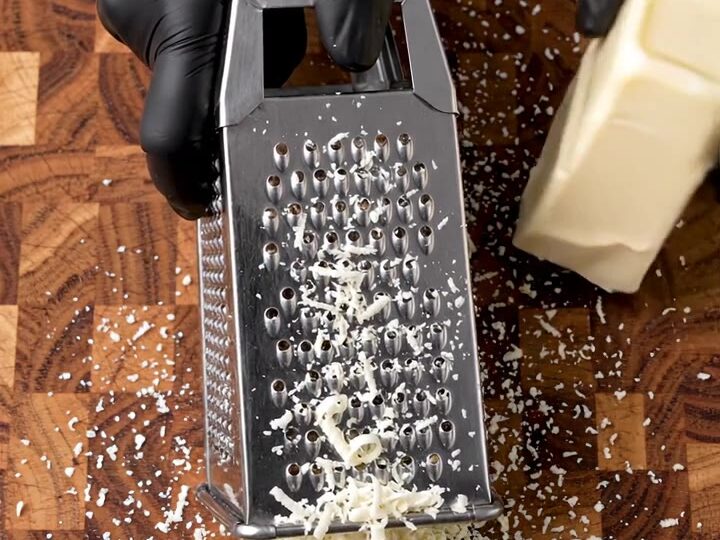
- Grate the aged cheeseFinely grate the hard aged cheese on a box grater until you have fine flakes that fall onto the board. Measure the amount you need and set it aside for the batter.Look for Fine, fluffy flakes that melt easily into the batter.Tip Use the small holes of the grater for the finest texture.
At the end of this phase, the blood orange rounds should be thin, even and dry, with bright red flesh and no seeds. The almonds should smell warm and nutty after toasting, and the sliced almonds should be set aside separately. The aged cheese should be a pile of fine, fluffy flakes ready to fold into the batter.
Check that the grater and board are clear of stray pieces, and that your measuring cups are ready. Nothing should be sticky or wet at this stage, because extra moisture on the fruit or nuts can make the cake heavy or cause the toppings to slide. Once everything is prepared and measured, move on to the batter so the eggs and sugar are whipped while they are still airy.
Build the batter and bake
- Make the ricotta batterHeat the oven to 350°F (175°C) and line a 9-inch springform pan with parchment. Beat the eggs and sugar until pale and thick. Mix in the ricotta, then fold in the grated cheese, both flours, the baking powder and the chopped almonds.Look for A smooth, thick, creamy batter with no lumps of ricotta.Safe temperature 160°F (71°C) internal temperature (egg dishes)Tip Beat the ricotta first to smooth out any curds before folding in the dry ingredients.
- Arrange the orange slicesPour the batter into the prepared pan and smooth the top. Arrange the blood orange rounds in an overlapping ring on the surface, then scatter the sliced almonds over the top.Look for An even ring of orange slices with almonds spread across the surface.Tip Press the slices gently into the batter so they stay in place while baking.
- Bake until set and goldenBake the cake until a toothpick inserted in the center comes out clean and the top is golden. Let the cake cool in the pan for 15 minutes, then remove the ring and let it cool completely on a rack.Look for Golden top, set center and a clean toothpick at the center.Safe temperature 160°F (71°C) internal temperature (egg dishes)Tip Rotate the pan halfway through baking for even color.
At the end of this phase, the batter should be smooth, thick and creamy, with no visible lumps of ricotta and a pale, slightly airy color from the whipped eggs. When you spread it into the pan, it should hold a soft mound and level out gently.
After the orange ring and sliced almonds are placed on top, bake until the top is golden and the center is set, with a clean toothpick inserted at the middle. The kitchen should smell of citrus, toasted almonds and warm cake. Check the cake at the end of the baking time before cooling, and let it rest in the pan for 15 minutes so the crumb firms up and releases cleanly from the sides.
Glaze and finish the cake
- Make the glossy glazeWhisk the sifted confectioners' sugar with the blood orange juice until smooth and thick enough to coat a spoon. Add a drop of red food coloring if you want a deeper color.Look for A smooth, thick, glossy glaze that falls slowly from the spoon.Tip Add the juice a teaspoon at a time to control the thickness.
- Glaze and finish the cakeSet the cooled cake on a serving plate and pour the glaze over the top so it runs down the sides. Scatter toasted sliced almonds over the glaze and add the rosemary sprig as a garnish.Look for Red glaze dripping evenly down the sides and set on top.Tip Let the glaze set for 20 minutes before slicing for clean edges.
At the end of this phase, the glaze should be smooth, thick and glossy, and it should fall slowly from a spoon in a ribbon. Pour it over the completely cooled cake so it runs down the sides in red streaks and settles evenly on top. Scatter the toasted almonds over the wet glaze and set the rosemary sprig to one side. Let the glaze set for about 20 minutes so the surface firms and the slices stay clean. Before serving, check that the sides are evenly coated and that no part of the cake is still wet to the touch. The finished cake should look bright, glossy and ready to slice.
Common mistakes
The most common problem is a dense or gummy crumb, usually caused by overmixing once the flour goes in. Fold the dry ingredients gently with a spatula and stop as soon as they disappear. Another frequent issue is a cake that sinks in the middle. This often happens when the oven door is opened too early or the eggs were not beaten enough to hold air.
Whip the eggs and sugar until pale and thick before adding the ricotta. Glaze that slides off the cake usually means it was poured on a warm or still-hot surface, so wait until the cake is fully cool. Finally, do not skip the parchment, because the citrus juices and sugar in the topping can stick to an unlined base.
How to tell it’s done
The cake is done when the top is golden, the edges have pulled slightly away from the pan and a toothpick inserted in the center comes out clean or with a few moist crumbs. Gently press the top with a fingertip: it should spring back slightly and feel firm, not soft. The center should look set and moist, never wet or shiny. This recipe contains eggs, so bake until the center reaches 160°F (71°C) on an instant-read thermometer, which is the safe internal temperature for eggs. Let the cake cool fully before glazing so the crumb holds its shape and the glaze sets cleanly on top.
- Egg dishes: 160°F (71°C) in the thickest part
Up next · Part 3 of 3
4 variations · storage & make-ahead · 5 answers · printable card
Tips, FAQ & printable recipe (Part 3)← Back to the ingredients (Part 1)