Dinner · Part 1 of 3: Ingredients
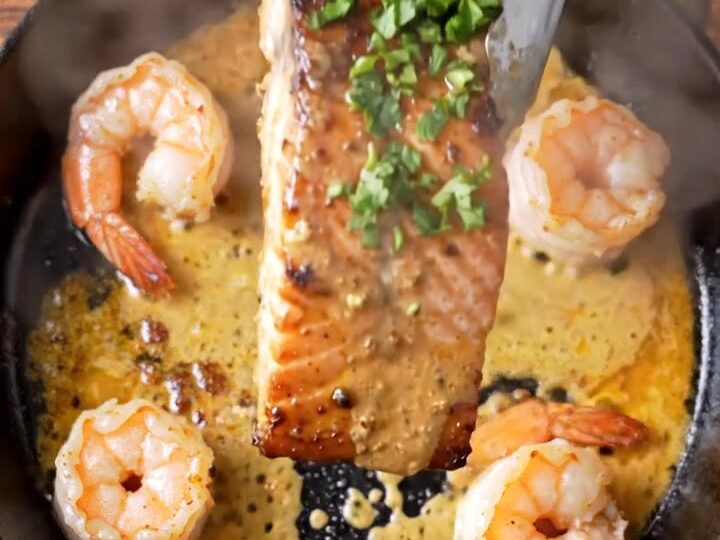
Blackened Salmon and Shrimp Skillet with Creamy Cajun Sauce
- Prep
- Cook
- Total
- Serves
- 4
A cast iron skillet does the heavy lifting in this Cajun-inspired dinner: blackened salmon fillets and Gulf shrimp are seared until deeply browned, then bathed in a rich crawfish cream sauce that picks up all the browned bits from the pan.
Grated Parmigiano-Reggiano melts into the sauce, making it glossy and savory, while a shower of fresh parsley adds brightness. The whole dish comes together in one skillet, from stovetop to table, with minimal cleanup.
This blackened salmon and shrimp skillet brings the bold flavors of a Louisiana seafood house to your home kitchen. The salmon gets a dark, spicy crust from a generous rub of Cajun seasoning, while the shrimp cook quickly in the same pan, picking up extra flavor.
A creamy crawfish sauce—spiked with the same seasoning and finished with Parmesan—ties everything together. The result is a decadent, restaurant-style meal that feels special but is simple enough for a weeknight. Serve it straight from the skillet for maximum effect.
Ingredients
- 1 large bell pepper, diced
- 2 stalks celery, diced
- 2 tbsp Cajun seasoning
- 4 salmon fillets (6 oz each)
- 1 lb large Gulf shrimp, peeled and deveined
- 4 oz Parmigiano-Reggiano cheese, grated
For the sauce
- 2 cups crawfish cream sauce
- 2 tbsp unsalted butter
- 1/4 cup fresh parsley, chopped
Why this recipe works
Searing the salmon and shrimp in a hot cast iron skillet creates a deep, flavorful crust that locks in moisture and adds a smoky char.
The high heat also helps the Cajun seasoning toast, which intensifies its warmth and complexity without becoming bitter. Cooking the seafood in batches prevents overcrowding, so each piece browns properly instead of steaming.
The crawfish cream sauce is built in the same skillet, so it picks up the browned bits left behind by the seafood—a quick, effortless way to add depth.
The Parmesan melts into the sauce, giving it body and a nutty, salty finish that balances the heat. Spooning the sauce over the fish at the end keeps it moist and ensures every bite is coated in rich, savory flavor.
Notes and substitutions
For the best texture, choose salmon fillets with the skin on—they hold up better during searing and the skin turns crisp and delicious. If your fillets are thinner, reduce the cooking time accordingly. Gulf shrimp are ideal for their sweet, briny flavor, but any large raw shrimp will work. Make sure they are peeled and deveined before cooking.
The crawfish cream sauce can be homemade or store-bought; if using store-bought, taste it first and adjust the seasoning. Cajun seasoning varies in heat, so start with less and add more if desired. Use a good-quality Parmigiano-Reggiano and grate it fresh—it melts more smoothly and has a richer flavor than pre-shredded cheese.
- crawfish cream sauce: Use a store-bought Cajun cream sauce or make a quick sauce with heavy cream, Cajun seasoning, and a splash of seafood stock.
- Gulf shrimp: Any large raw shrimp works; wild-caught or farm-raised, as long as they are peeled and deveined.
- Parmigiano-Reggiano: Substitute Grana Padano or Pecorino Romano for a similar nutty, salty finish.
- Cajun seasoning: Use a homemade blend of paprika, garlic powder, onion powder, cayenne, and dried thyme.
Equipment
- Cast iron skillet
- Box grater
- Chef's knife
- Cutting board
- Measuring spoons
- Measuring cups
- Tongs
- Spatula
Up next · Part 2 of 3
7 steps · 20 min of cooking · what to look for at each stage
Step-by-step instructions (Part 2)