Desserts · Part 2 of 3: Instructions
Biscoff Cookie Butter Chocolate Bark Bars: Crunchy, Glossy, Make-Ahead Ready Step-by-step instructions
- Prep
- Cook
- Total
- Serves
- 12
Before you start
Gather everything before you start, because the bark sets quickly once the toppings go on. Chill the blonde chocolate crunch bar for about 10 minutes so it grates into clean, fine shavings instead of smearing across the grater. Set out a wooden cutting board, a long chef's knife, the metal box grater, a baking tray and parchment paper.
Measure the sliced almonds and crushed biscuit pieces and have them ready in separate bowls. Keep the cookie butter at room temperature so it spreads easily, and warm it for a few seconds in the microwave if it is stiff. Clear a flat space in the refrigerator where the tray can rest level for about an hour without being disturbed.
Ingredients at a glance (4)
- 1/2 cup sliced almonds, roughly chopped
- 1/2 cup crushed biscuit pieces (such as speculoos cookies), roughly chopped
- 8 oz blonde chocolate crunch bar, for grating and melting
- 1/2 cup smooth cookie butter, divided
Instructions
Prepare the toppings and base
- Chop the almonds and biscuitsRoughly chop the almonds and crushed biscuit pieces on a wooden cutting board with a long chef's knife. Keep some larger pieces for crunch, then sweep the mixture into a loose heap.Look for Pieces range from fine crumbs to small chunks, with no whole almonds left.Tip A slightly uneven chop gives the bark more texture in every bite.
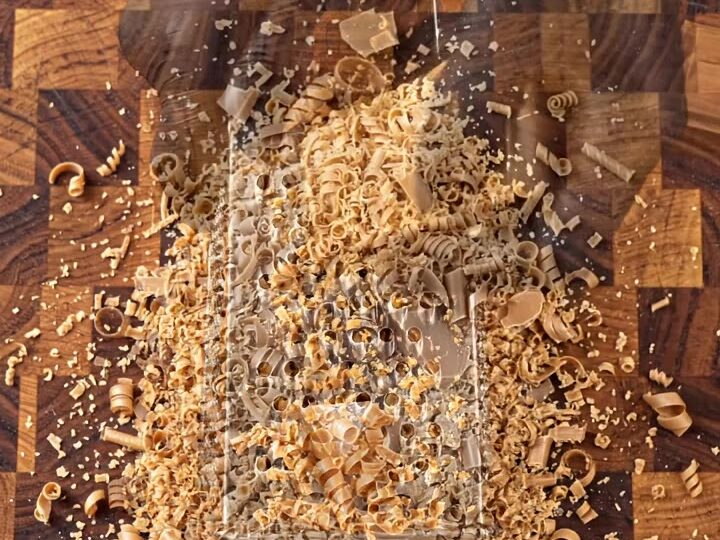
- Grate the blonde chocolateHold the blonde chocolate crunch bar against a metal box grater and grate it over the board. Let the fine golden shavings fall onto the chopped mixture.Look for Fine, golden shavings collect in a soft pile on the board.Tip Chill the bar for 10 minutes first so it grates cleanly without softening.
The almonds and biscuit pieces are chopped into a mix of fine crumbs and small chunks, and the chocolate shavings are fine and golden. The cookie butter spreads smoothly across the parchment in an even, glossy layer without tearing. Check that no large almond pieces remain whole and that the tray sits level on the counter before you add the toppings.
The mixture should look dry and free of clumps, which lets the toppings stick evenly when they are pressed into the warm base. If the cookie butter drags or tears, warm it briefly and spread again so the layer is continuous before you scatter anything on top. A smooth base at this stage gives a neat, professional-looking slab later.
Layer the bark
- Spread the cookie butter baseLine a baking tray with parchment paper. Spoon about two-thirds of the cookie butter across it in wavy streaks and spread it into an even layer with an offset spatula.Look for The cookie butter covers the parchment in an even, glossy layer.Tip Warm the cookie butter for 10 seconds in the microwave if it is too stiff to spread.
- Layer the almond and chocolate toppingSprinkle the chopped almond and biscuit mixture and the grated blonde chocolate evenly over the cookie butter. Drizzle the remaining cookie butter on top in thin streaks.Look for The surface is studded with almonds, crumbs and golden shavings.Tip Press the toppings gently into the base so they stick when the bark is cut.
- Chill until firmRefrigerate the tray for about 1 hour, or until the slab is completely firm and the chocolate has set. Keep the tray level so the layer stays even.Look for The slab feels firm and no longer shifts when the tray is tilted.Tip Do not cut the bark while it still feels soft, or the bars will crack and smear.
The surface is evenly covered with chopped almonds, biscuit crumbs and golden chocolate shavings, and the cookie butter drizzle sits in thin, visible streaks. Press the toppings lightly so they sit in the base rather than floating above it. Look for an even scatter with no bare patches of cookie butter or piles of chocolate in one corner. The slab should look rustic and marbled, with each element distinct. Before you move the tray, check that the drizzle has no blobs deep enough to bulge the surface, because uneven spots set unevenly and make cutting harder. The tray should move easily into the refrigerator with the toppings still in place and no sliding.
Chill and set the slab
- Cut the slab into long barsLift the parchment from the tray and set the slab on the board. Use a sharp knife to cut the slab into long rectangular sections, then cut each section into neat bars.Look for Each bar shows a clean edge with almonds and crumbs visible.Tip Wipe the knife between cuts with a warm, dry cloth for cleaner edges.
- Serve the glossy barsArrange the bars on a serving plate, with the blonde chocolate coating facing up. Serve them chilled or at cool room temperature.Look for The bars look thick, glossy and studded with almonds and biscuit pieces.Tip Let the bars rest 5 minutes out of the fridge for a softer bite.
After about an hour in the refrigerator, the slab feels firm to the touch, the blonde chocolate has a dull, matte set and the surface no longer shifts when you tilt the tray gently. Press a fingertip lightly on an edge; it should resist and spring back slightly without leaving a deep mark. If the surface still feels soft or the topping slides, return the tray for another 15 to 20 minutes before cutting. Cutting too early drags the almonds and crumbs and smears the chocolate coating. A fully set slab gives clean, thick bars with sharp edges and a glossy finish that holds its shape on the serving plate.
Common mistakes
The most common mistake is spreading the cookie butter when it is too cold and stiff, which tears the base and leaves gaps. Warm it slightly first so it moves like thick paste. Another frequent problem is grating the chocolate when it is too warm; it smears and clogs the grater instead of falling as fine shavings. Chill the bar before grating and work quickly.
Avoid piling the toppings unevenly, because heavy spots will not set flat and will crack when the bars are cut. Finally, do not cut the bark too early. A soft slab drags and loses its shape, so give it the full chilling time. Wiping the knife between cuts keeps the edges neat and prevents the cookie butter from smearing across the bars.
How to tell it’s done
The bark is done when the whole slab is firm and set throughout. Look for a dull, even surface on the blonde chocolate with no wet or shiny patches left from the cookie butter. Press an edge gently with a fingertip: it should feel firm and hold its shape. Lift one corner of the parchment; the bottom should not feel soft or sticky.
A fully set slab cuts cleanly into bars with sharp edges and no crumbling, and the almonds and biscuit pieces should stay fixed in place. If the bark is still soft in the centre, chill it for another 15 minutes before cutting. This recipe contains no raw meat, poultry, fish or eggs, so there is no protein temperature to reach. Keep the finished bars chilled until serving.
Up next · Part 3 of 3
4 variations · storage & make-ahead · 5 answers · printable card
Tips, FAQ & printable recipe (Part 3)← Back to the ingredients (Part 1)