Dinner · Part 2 of 3: Instructions
Birria Soup Dumplings with Melted Oaxaca Cheese Step-by-step instructions
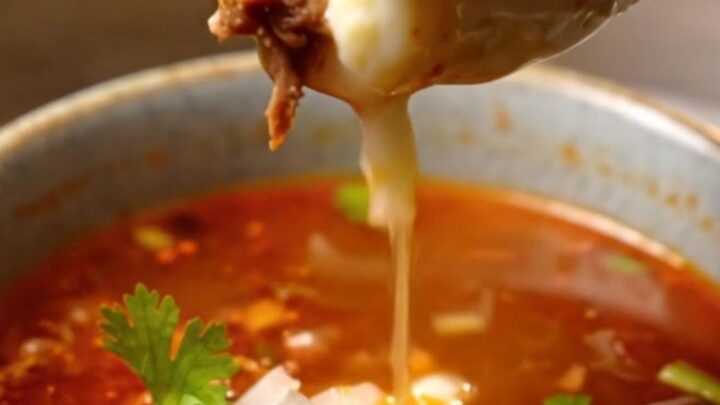
- Prep
- Cook
- Total
- Serves
- 4
Before you start
Before starting, ensure your shredded braised beef is cooled and that you have chopped the consommé gelatin into small, uniform cubes. Having your workstation clean and organized is vital, as the folding process requires precision.
Keep your dumpling skins covered with a damp towel to prevent them from drying out while you work, and have a small bowl of water nearby to help seal the edges properly. Preparation is the foundation of success when working with delicate dough and molten fillings.
Ingredients at a glance (5)
- 250 g shredded braised beef chuck
- 50 g cubed consommé gelatin
- 60 g grated Oaxaca cheese
- 12 dumpling skins
- 1 cup warm cilantro-onion birria consommé, for serving
Instructions
Filling Preparation
- Prepare the filling mixtureIn a medium mixing bowl, combine the shredded braised beef chuck, cubed consommé gelatin, and grated Oaxaca cheese. Mix gently until the ingredients are evenly distributed, ensuring the gelatin cubes remain intact as much as possible for the best texture.Look for The mixture should be well combined but still show distinct pieces of gelatin and cheese.Tip Keep the filling chilled until the moment you are ready to wrap to prevent the gelatin from melting prematurely.
The filling should be thoroughly mixed, with the beef, cheese, and gelatin evenly distributed throughout the bowl. It should look like a cohesive, slightly sticky mixture that is easy to scoop and portion into the center of your dumpling skins.
Ensure the gelatin is kept cold so it remains in distinct, manageable cubes that will melt only when exposed to the intense heat of the steamer, preserving the integrity of the filling.
Folding and Pleating
- Assemble the dumplingsPlace a portion of the beef and gelatin mixture onto the center of each dumpling skin. Carefully fold the edges, creating approximately 18 pleats around the perimeter to seal the filling completely. Ensure the seals are tight so no broth leaks out during steaming.Look for The dumplings should be neatly pleated and firmly sealed to contain the molten filling during cooking.Tip Dampen the edges of the skin with a tiny amount of water if they are too dry to stick together.
Each dumpling should look uniform with tight, even pleats. The seal at the top must be completely closed with no visible openings. The dumplings should feel sturdy and hold their shape well on the prep surface before being moved to the steamer. A well-sealed dumpling is the only way to ensure that the molten consommé stays trapped inside, ready to release that signature burst of flavor upon the very first bite.
Steaming Process
- Steam the dumplingsArrange the dumplings in a bamboo steamer basket lined with parchment paper. Place the basket over a pot of boiling water and steam for 7 minutes. The dumplings are fully cooked when the wrappers appear translucent and the filling reaches an internal temperature of 145°F (63°C). Let the dumplings rest for at least 3 minutes before serving to allow the internal juices to settle.Look for The wrappers will turn translucent and the dumplings will look plump as the consommé gelatin melts into a rich liquid.Safe temperature 145°F (63°C) internal temperature (steaks, chops and roasts)Tip Do not overcrowd the steamer basket to ensure even heat distribution and consistent cooking for every dumpling.
The steam should be steady and consistent. Once finished, the wrappers will appear soft, translucent, and plump. They should look slightly glossy and smell aromatic, indicating that the consommé has melted and the cheese has fully softened inside. Check for any signs of leakage; if the dumplings remain intact and plump, the process has been successful and they are ready to be removed from the heat and rested.
Common mistakes
A common mistake is overfilling the dumplings, which can cause them to burst during the steaming process. Use only the recommended amount of filling to ensure a perfect seal.
Another error is not sealing the pleats tightly enough; if there are any gaps, the delicious consommé will leak into the steamer, leaving you with dry dumplings instead of the juicy experience intended. Precision in pleating is the difference between a perfect soup dumpling and a collapsed, empty dough parcel.
How to tell it’s done
The dumplings are ready when the wrappers are visibly translucent and have a slightly shiny appearance. The filling inside should be piping hot, reaching an internal temperature of 145°F (63°C).
Because the filling contains beef, ensure the temperature is checked in the center of the largest dumpling to guarantee the meat is safely heated through before serving. The resting period of 3 minutes is essential for the juices to stabilize, ensuring the best texture for your final dish.
- Steaks, chops and roasts: 145°F (63°C) in the thickest part, then a 3-minute rest
Up next · Part 3 of 3
2 variations · storage & make-ahead · 3 answers · printable card
Tips, FAQ & printable recipe (Part 3)← Back to the ingredients (Part 1)