Dinner · Part 2 of 3: Instructions
Birria Cheesy Mac and Cheese Skillet Step-by-step instructions
- Prep
- Cook
- Total
- Serves
- 6
Before you start
Before starting, bring a large pot of salted water to a boil for the pasta. Grate the cheddar, Monterey Jack, and Oaxaca cheeses if you bought them in blocks. Measure out the milk and consommé. If the shredded beef birria is cold, let it sit at room temperature for about 15 minutes to take the chill off.
Preheat the broiler with a rack positioned about 6 inches from the heat. Have a cast iron skillet ready, along with a whisk and a spatula. This prep ensures the cooking process goes smoothly and the sauce comes together without rushing.
Ingredients at a glance (12)
- 12 oz elbow macaroni
- 3 tbsp butter
- 2 tbsp all-purpose flour
- 1 2/3 cups whole milk
- 2/3 cup birria consommé
- 1 1/2 cups sharp cheddar cheese, shredded
- 1 1/2 cups Monterey Jack cheese, shredded
- 1 cup Oaxaca cheese, shredded
- 2 cups shredded slow-cooked beef birria
- 2 tbsp chopped fresh cilantro
- 1 lime, cut into wedges
- diced white onions, for serving
Instructions
Build the Sauce and Pasta
- Cook the MacaroniBring a large pot of salted water to a boil. Add the elbow macaroni and cook according to package directions until al dente, about 7 to 8 minutes. Drain well and set aside. Do not rinse; the starch helps the sauce cling.Look for The pasta is tender but still has a slight bite at the center.Tip Cook the pasta 1 minute less than the package suggests; it will finish cooking in the broiler.
- Make the RouxIn a large cast iron skillet, melt the butter over medium heat. Sprinkle in the flour and whisk constantly for 1 to 2 minutes until the mixture turns light golden and smells nutty.Look for The roux is smooth and bubbly, with no raw flour lumps.Tip Keep the heat moderate to avoid browning the flour too quickly, which would darken the sauce.
- Add Milk and ConsomméSlowly pour in the whole milk and birria consommé while whisking constantly. Continue to whisk until the mixture thickens and comes to a gentle simmer, about 3 to 4 minutes. The sauce should coat the back of a spoon.Look for The sauce is smooth and has a light orange tint from the consommé.Tip Pour the liquid slowly to prevent lumps. If lumps form, whisk vigorously to smooth them out.
- Melt the CheesesReduce the heat to low. Add the shredded cheddar, Monterey Jack, and half of the Oaxaca cheese. Stir gently until the cheeses are fully melted and the sauce is silky and thick.Look for The sauce is glossy and coats the spoon without being stringy.Tip Grate the cheese yourself; pre-shredded bags contain anti-caking agents that can make the sauce grainy.
- Combine Pasta and Cheese SauceAdd the drained macaroni to the skillet and fold gently with a spatula until every piece is coated in the cheese sauce. The mixture will look very saucy; it will thicken as it bakes.Look for The pasta is evenly coated and the sauce is creamy, not runny.Tip Fold rather than stir to keep the pasta intact and the sauce smooth.
At the end of this phase, you have a thick, glossy cheese sauce that coats the back of a spoon, and the macaroni is fully coated. The sauce should be smooth, with no lumps, and the pasta should be al dente.
The skillet will look very saucy, but that is correct—the sauce will reduce and thicken as it bakes. Take a taste: it should be creamy, savory, and rich with cheese, with a subtle hint of birria from the consommé.
Layer, Top, and Broil
- Layer in the Beef BirriaScatter the shredded beef birria evenly over the mac and cheese. Use a fork to gently push some of the beef down into the sauce so it is distributed throughout, but leave some on top for texture. Let it rest for 3 minutes before slicing.Look for The beef is nestled into the sauce, with some pieces visible on the surface.Safe temperature 145°F (63°C) internal temperature (steaks, chops and roasts)Tip If the beef is cold, let it sit at room temperature for 15 minutes before adding to help it warm through.
- Top with Remaining OaxacaSprinkle the remaining Oaxaca cheese over the top, covering the beef and pasta evenly. This will create a blistered, golden crust during broiling.Look for The surface is completely covered with a layer of shredded cheese.Tip Use a generous hand; the top layer is what makes the skillet irresistible.
- Broil Until BlisteredPlace the skillet under a preheated broiler, about 6 inches from the heat. Broil for 5 to 7 minutes until the cheese is bubbly, blistered in spots, and caramelized at the edges. Watch closely to prevent burning.Look for The cheese is molten and browned in patches, with the edges starting to crisp.Tip If the skillet handle is not oven-safe, wrap it in foil before broiling.
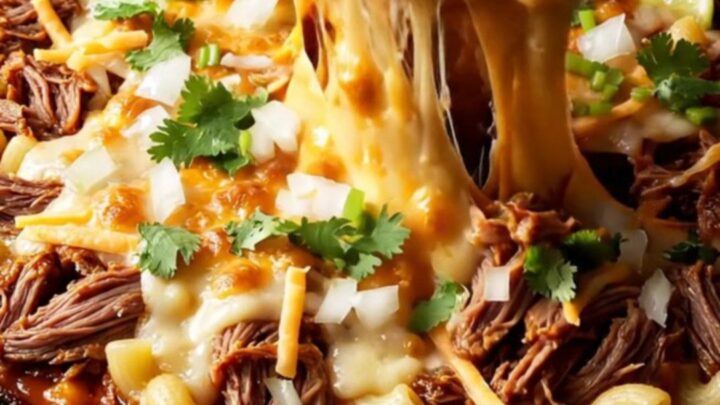
The beef is evenly distributed, the top is covered with a generous layer of Oaxaca cheese. After broiling, the cheese is bubbly, blistered in spots, and caramelized at the edges. The surface should have a beautiful golden-brown color with some darker charred spots for flavor. The edges of the skillet may have crispy bits of cheese—these are the best parts. The aroma is intensely cheesy and savory.
Garnish and Serve
- Garnish and ServeRemove the skillet from the broiler and let it rest for 2 minutes. Scatter the chopped cilantro and diced white onions over the top. Squeeze fresh lime juice over the whole skillet before serving.Look for The cilantro and onions add color and freshness against the golden cheese.Tip Serve directly from the skillet for maximum visual appeal, with extra lime wedges on the side.
The finished skillet is garnished with fresh cilantro, diced white onions, and a squeeze of lime. The bright green and white colors contrast with the golden cheese. When you scoop into it, the cheese stretches and the beef is tender. The lime adds a tangy brightness that cuts through the richness. Serve immediately while it is hot and bubbly.
Common mistakes
A common mistake is overcooking the pasta, which makes it mushy after broiling. Cook it al dente and undercook slightly if in doubt. Another pitfall is adding the cheese to a sauce that is too hot or too cold: if it is too hot, the cheese can separate and become greasy; if too cold, it will not melt smoothly.
Keep the heat low when adding the cheese and stir gently. Finally, do not skip the broiler step—it is what creates the addictive blistered top. Watch it closely to avoid burning.
How to tell it’s done
The dish is done when the cheese on top is bubbly and blistered in spots, with the edges starting to caramelize and crisp.
The internal temperature of the beef should reach at least 145°F (63°C) if it was not already fully cooked; but since the birria is already slow-cooked and tender, the main indicator is visual: the cheese is molten and golden, and the sauce is bubbling around the edges. Let the skillet rest for a few minutes before serving to allow the sauce to set slightly, making it easier to scoop.
- Steaks, chops and roasts: 145°F (63°C) in the thickest part, then a 3-minute rest
Up next · Part 3 of 3
4 variations · storage & make-ahead · 5 answers · printable card
Tips, FAQ & printable recipe (Part 3)← Back to the ingredients (Part 1)