Dinner · Part 2 of 3: Instructions
Barolo Red Wine Short Ribs for the Slow Cooker Step-by-step instructions
- Prep
- Cook
- Total
- Serves
- 6
Before you start
Before you begin, remove the short ribs from the refrigerator and let them sit at room temperature for about 30 minutes. Pat them dry with paper towels, then season generously with salt and pepper. Prep the vegetables: dice the carrots, celery, and shallots into uniform pieces.
Measure the tomato paste and wine, and have the rosemary sprigs ready. Set out your slow cooker and a large skillet. If you plan to serve the dish with polenta, you'll also want a medium saucepan and the remaining polenta ingredients within reach.
Ingredients at a glance (13)
- 4 lb bone-in beef short ribs, trimmed of excess fat
- 2 medium carrots, diced
- 2 stalks celery, diced
- 3 medium shallots, chopped
- 45 g tomato paste
- 375 ml Italian Barolo red wine
- 3 sprigs fresh rosemary
- kosher salt, to taste
- black pepper, to taste
- 2 tbsp olive oil, for searing
- 1 cup coarse polenta
- 1/2 cup grated Parmigiano-Reggiano
- 2 tbsp unsalted butter
Instructions
Phase 1: Sear and Layer
- Sear the Short RibsPat the short ribs dry with paper towels and season generously with salt and pepper. Heat the olive oil in a large skillet over medium-high heat until shimmering. Working in batches, sear the ribs on all sides until deeply browned, about 6 to 8 minutes per batch. Transfer the seared ribs to a plate and set aside. Let it rest for 3 minutes before slicing.Look for The ribs should have a deep mahogany crust, not just a light brown color.Safe temperature 145°F (63°C) internal temperature (steaks, chops and roasts)Tip Do not crowd the pan; searing in batches ensures a proper crust.
- Layer the VegetablesPlace the diced carrots, celery, and shallots in the bottom of the slow cooker. Spread them into an even layer. This creates a bed for the ribs and adds aromatic flavor to the braising liquid.Look for The vegetables should cover the bottom of the slow cooker evenly.Tip Cut the vegetables into uniform dice for even cooking.
- Add the Ribs and AromaticsPlace the seared short ribs on top of the vegetables in a single layer, bone-side down if possible. Add the tomato paste, spreading it over the ribs. Tuck the rosemary sprigs among the ribs. Pour the Barolo wine over everything, ensuring the ribs are partially submerged.Look for The wine should come about halfway up the ribs, not fully cover them.Tip If the ribs are too large, nestle them snugly; they will shrink as they cook.
At the end of this phase, the short ribs should be deeply browned on all sides with a rich crust. The slow cooker should have a layer of diced vegetables covering the bottom, with the seared ribs nestled on top.
The tomato paste, rosemary, and wine should be added, creating a fragrant, wine-soaked mixture. The wine should come about halfway up the ribs, not fully submerge them. The aroma should be intensely savory with notes of wine and herbs.
Phase 2: Slow-Cook and Rest
- Slow-Cook on LowCover the slow cooker and cook on LOW for 8.5 hours. Do not lift the lid during cooking, as this releases heat and extends cooking time. The wine will reduce and meld with the beef juices and marrow to create a rich, glossy sauce. Let it rest for 3 minutes before slicing.Look for After 8 hours, the meat should be fork-tender and nearly falling off the bone.Safe temperature 145°F (63°C) internal temperature (steaks, chops and roasts)Tip Resist the urge to peek; keep the lid on to maintain a steady temperature.
- Check for TendernessAfter 8.5 hours, test the ribs by piercing the meat with a fork. The fork should slide in with almost no resistance, and the meat should be easily pullable. If not, continue cooking for another 30 minutes and check again. Let it rest for 3 minutes before slicing.Look for The meat should be so tender that it begins to shred with gentle pressure.Safe temperature 145°F (63°C) internal temperature (steaks, chops and roasts)Tip If the meat is still tough, it needs more time; low and slow is the key.
- Rest the RibsUsing tongs, carefully transfer the short ribs to a platter and tent loosely with foil. Let them rest for at least 10 minutes. This allows the juices to redistribute, ensuring moist, flavorful meat.Look for The meat will relax and become even more tender during the rest.Safe temperature 145°F (63°C) internal temperature (steaks, chops and roasts)Tip Do not skip the rest; it prevents the meat from drying out when sliced.
After 8.5 hours on low, the kitchen should smell of rich, concentrated beef and wine. The meat should be fork-tender, with the bones easily slipping out. The sauce should be dark and glossy, with a layer of fat on top. The ribs should be transferred to a platter and rested, allowing the juices to redistribute. The sauce should be skimmed and then reduced to a syrupy consistency that clings to a spoon.
Phase 3: Finish and Serve
- Skim and Simmer the SauceSkim excess fat from the surface of the cooking liquid with a spoon. Transfer the liquid to a saucepan and bring to a simmer over medium heat. Cook until reduced by about half, until it coats the back of a spoon, about 10 to 15 minutes. Discard the rosemary sprigs.Look for The sauce should be glossy and thick enough to coat a spoon.Tip Skim the fat for a cleaner, more intense wine flavor.
- Make the PolentaWhile the sauce simmers, bring 4 cups of salted water to a boil in a medium saucepan. Slowly whisk in the polenta. Reduce heat to low and cook, stirring frequently, until thick and creamy, about 20 to 25 minutes. Stir in the butter and Parmigiano-Reggiano until melted.Look for The polenta should pull away from the sides of the pan and be creamy.Tip Whisk constantly to prevent lumps from forming.
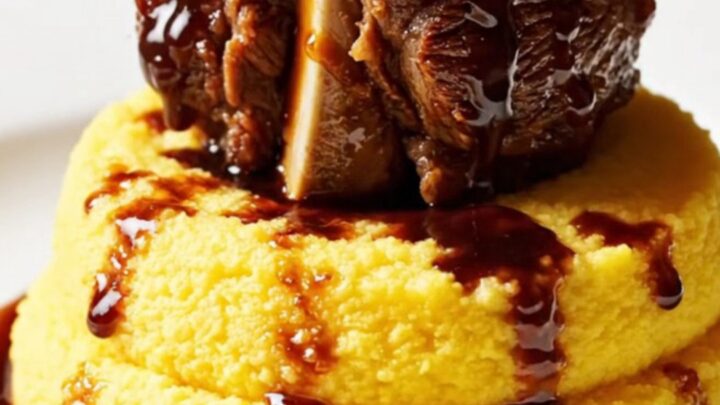
- Serve the RibsSpoon a generous portion of polenta onto each plate. Place a short rib on top, bone-in if desired. Spoon the reduced Barolo sauce over the meat and polenta. Serve immediately, with extra sauce on the side.Look for The rib should be glistening with the dark, glossy sauce.Tip For a restaurant-style finish, drizzle a little extra sauce around the plate.
The reduced sauce should be glossy and coat the back of a spoon. The polenta should be creamy, with the butter and Parmigiano melted in, and it should hold its shape when spooned onto a plate. The short ribs should be placed atop the polenta, with the sauce spooned over, creating a beautiful, glistening presentation. The dish should be served hot, with the meat nearly falling off the bone and the sauce pooling around the polenta.
Common mistakes
One common mistake is skipping the searing step—this robs the dish of deep flavor. Another is lifting the slow cooker lid repeatedly, which lets out heat and prolongs cooking time. Also, be sure to trim excess fat from the ribs; while some fat is desirable, too much can make the sauce greasy.
Finally, when reducing the sauce, skim the fat first for a cleaner, more intense wine flavor. If the sauce is too thin, simmer it longer; if too thick, add a splash of beef broth or water.
How to tell it’s done
The short ribs are done when the meat is fork-tender and easily pulls away from the bone. Insert a fork into the thickest part of the meat; it should slide in with almost no resistance. For food safety, the internal temperature of the meat should reach at least 145°F (63°C) when checked with an instant-read thermometer.
Because the meat is braised for 8.5 hours, it will far exceed this temperature, but the low heat ensures it remains moist and tender. The sauce should be reduced until it coats the back of a spoon, and the polenta should be creamy and thick.
- Steaks, chops and roasts: 145°F (63°C) in the thickest part, then a 3-minute rest
Up next · Part 3 of 3
4 variations · storage & make-ahead · 5 answers · printable card
Tips, FAQ & printable recipe (Part 3)← Back to the ingredients (Part 1)